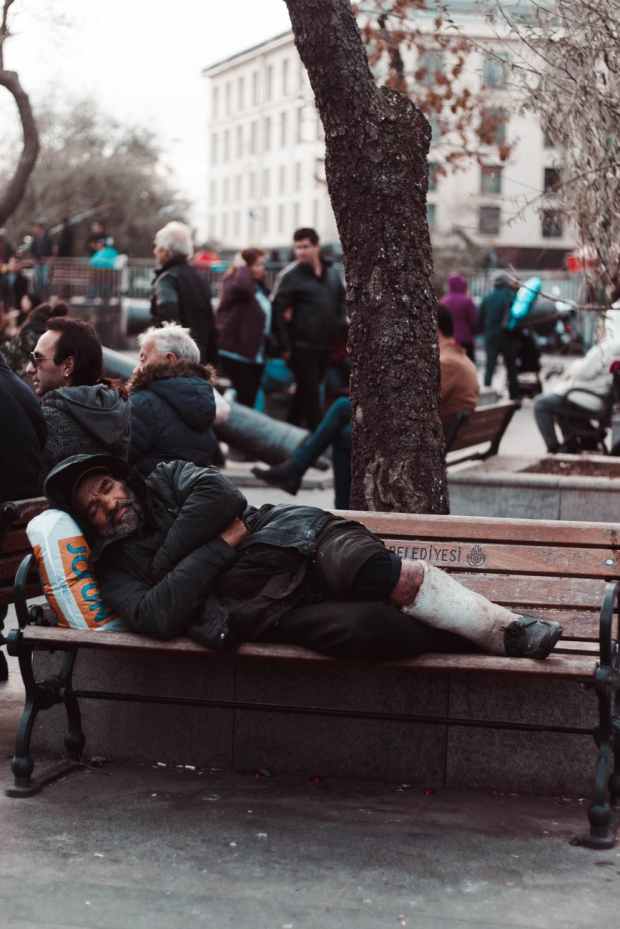
According to the United Nations, every person has a basic right to adequate, safe, secure, and affordable housing. However, the volume of homeless citizens in Australia has been steadily increasing over the past two decades. Rising rates of homelessness continues to occur due to successive governments justifying the use of neoliberal ideology to lay the foundation of previous and present housing policies implemented by the Welfare State, which is making housing a market commodity and reducing people to consumers. Successive Federal Governments are seen to be addressing homelessness with various initiatives and strategies, yet the measures applied are counterproductive because with every change of government housing policies and funding changes. The majority of which have been creating financial incentives for investors and new or existing homeowners. Realistically these policies do not assist housing affordability for those unable to procure their own home. Further, increased median property values and house prices have occurred, pushing private market rental costs up exponentially, beyond the reach of many low and middle range income earners. As a consequence, a widening class gap between the homed and the homeless has been occurring due to people being treated by the Welfare State as consumers, not citizens. It is, after all, the hegemonic neoliberal principle to minimise the expenditure offered by the Welfare State to areas of society where the Welfare State previously played a significant role in the provision of services.
As a co-signatory to The United Nations (UN) Universal Declaration of Human Rights and the United Nations International Covenant on Economic, Social and Cultural Rights, Australia has a duty and obligation to ensure adequate housing exists for all citizens (United Nations 1948; Marston, McDonald & Bryson 2014; Australian Legal Information Institute 1976; Australian Human Rights Commission 1976; Human Rights and Equal Opportunity Commission 1996). According to the UN, citizens have the right ‘to a standard of living adequate for the health and well-being of himself and his family, including … housing’ (United Nations 1948, Article 25). This fundamental right forms part of international law yet governing neo-liberal ideology and globalization is proving to be a major detriment to alleviating homelessness rates in Australia (Bullen 2015; Hartman & Darab 2017; McRae & Nicholson 2017; Nicholls 2014; Hall 1993; Morris 2010; Francis-Brophy & Donoghue 2013).
Market-based policies enable easier ownership and housing investment for those on higher incomes, whereas, low to middle range income earners reliance on the private rental market has increased, rather than the Welfare State providing them with homeownership opportunities (Nicholls 2014; Francis-Brophy, E & Donoghue, J 2013). Overall, a situation has been created whereby low and middle-income renters are struggling to afford adequate, safe, and secure housing, and due to neoliberal governance infiltrating social housing policy, depleting stocks of public housing are occurring (Nicholls 2014; Francis-Brophy & Donoghue 2013). As cited in Nicholls (2014) the Australian Institute of Health and Welfare (AIHW) (2007) indicated that public housing stocks in 1996 stood at approximately 372,00, decreasing to 340,00 by 2007.
Neoliberal ideology consists of economic policies which delivers limited involvement by the government to provide services, prioritising the deregulation of markets (Allan, Briskman & Pease 2009). Such ideology is concerned with growing the economy and serves to aid rather than challenge or address the circumstances which create a lack of housing security (Willse 2010). Further, Neoliberal ideology consists of a framework of policies which emphasises movement away from the Welfare State to create competitiveness within the international market (Allan, Briskman & Pease 2009). Neoliberal ideology backs global capitalism and creates a societal environment of individual responsibility, competition and consumerism (Allan, Briskman & Pease 2009).
As a consequence, there is a reduction of expenditure in social welfare, whilst tax exemptions and tax incentives are offered to homeowners and investors (Marston, McDonald & Bryson 2014). Neoliberal governing, as revealed by the Australian Bureau of Statistics Census, indicates that in 2016 116,427 Australians were homeless compared to 95,314 enumerated as homeless in 2011 (Australian Bureau of Statistics 2017). That is a 14% increase of homeless Australian persons in five years (Pawson & Purcell 2018). These figures included the marginally housed or those who were living in overcrowded or temporary accommodation (Australian Bureau of Statistics 2017). Neoliberal governing does not reduce the rising numbers of homeless Australians, despite Australia’s obligations as a co-signatory to the aforementioned United Nations Human Rights documents.
Multiple policies and factors have created rising homelessness in Australia which can be understood via Marx’s conflict theory in relation to capitalism. Marxist conflict theory reveals an ideology which explains exploitation and oppression are created by the bourgeoisie or capitalist class as the owners of ‘productive property’, who strive to create and procure capital profit by reducing wages paid to the working class or proletariat (Coakley 2009; Yuill & Gibson 2011). The proletariat on the other hand ‘possesses no productive wealth or property’ (Yuill & Gibson 2011, p.30). As Marx’s theory claimed, a capitalist society which sets out on a quest to increase profits by relying on paying low wages for labour, industrialisation and free trade markets creates two opposing classes (Dominelli & Campling 1997). Marx saw that via exploitation of the proletariat by the bourgeoisie, the Westernised capitalism system creates conflict and inequality between the two classes (Seidman 2017).
This view of opposing classes, inequality and inequity can be seen within the Australian housing situation. Some neo-liberal policies that assist existing and new homeowners have included lucrative tax subsidies for owner-occupiers and investors such as the changes made by the Howard government in 1999 to Capital Gains Tax legislation which had been established by the Hawke Keating government in 1985 (Reinhardt & Steel 2006). Negative gearing, which began being widely used by housing investors in the 1980s offsets all housing-related expenditure against personal income for those who are renting their properties (Thompson & McDonald 2018; Australian Government 2020a, n.p.). The Australian Government (2020a, n.p.) states that in the financial year of 2012 to 2013 ‘over 1.9 million people earned rental income in Australia’, 1.3 million of those investors also claimed a loss on their rental investments. These policies, combined with the implementation of the First Homeowners Grant, which is a joint initiative between Federal and State governments, funded and run by State governments according to their respective legislation, and the deregulation of the finance sector in the 1970s have all contributed to soaring property values and rents (Australian Government, 2000; Battellino 2007: Marston; Marston, McDonald & Bryson 2014). This has led to the present-day increase in Australian citizens who cannot secure affordable housing (Battellino 2007: Marston, McDonald & Bryson 2014).
More recently, to assist with the economic recovery of the residential building market due to COVID shutdowns and restrictions, the Federal government has provided funding for building a new home or for renovating existing homes for those singles who earnt $125,000.00 or couples who earnt $200,000.00 in the financial year 2018 to 2019 (Australian Government 2020b). From the perspective of Marx’s conflict theory, capitalist class structures and domination by those holding power in the ruling class comes into play as high-income earners receive the incentives and funding from the Welfare State to procure more resources than those who are on low or middle-range incomes (Frances 2018; Van Krieken et al. 2014). Thus, Neoliberal capitalism is creating an ever-widening class gap in Australia between those who can afford secure, safe adequate housing and those who cannot procure basic housing security.
The Welfare State has implemented various policies and funding to provide for homeless services and public housing over the past three decades. Three of these policies are the Commonwealth Rent Assistance (CRA), the National Housing and Homeless Agreement (NAHA), and The National Rental Affordability Scheme (NRAS) (Australian Government 2019a; Marston, McDonald & Bryson 2014). The CRA scheme was introduced for those receiving social security benefits from the Welfare State as part of the Commonwealth-State Housing Agreement (CSHA) during the mid-80s. Bob Hawke sought to address the housing affordability issue which had arisen since the 1950s when it was seen by the Welfare State that providing public housing was more expensive than supporting homeownership and reliance by citizens on the private rental market (Morris 2010). Hawke acknowledged rising inflation and unemployment was creating a situation where an ever-increasing percentage of Australians were experiencing housing stress and were unable to become homeowners.
From 1984-85 to 1994-95 under the Hawke/Keating Government ‘one-quarter of CSHA expenditure’ towards CRA increased by ‘approximately one and half times’ (McIntosh & Phillips 2001). When the Howard Government came into power between 1996 and 2007, funding for public housing was slashed and as cited in Morris (2010) the AIHW (2005) stated that public housing stock plunged from 388,000 in 1995 to 335,00 in 2005. This decline was also due to the Howard Government demolishing public housing or selling stock to developers and tenants (Arthurson 2004). These changes to public housing stock were offset by increased CRA expenditure and also by community housing; however, those measures only achieved minimal impact in alleviating homelessness (Morris 2010). CRA calculations encompass no variation geographically, so a person receiving maximum benefit in an area of high rental costs will acquire the same CRA as a person entitled to maximum benefit in a low rental cost area (Morris 2010). As of September 2020, CRA is calculated at .75c given per $1 paid in rent with criteria regarding cost of rent in various circumstances and the highest rate of support being $185.36 per fortnight (Australian Government 2020c). According to the Queensland Government (2020), the current median rent per week for a 3-bedroom house on the Sunshine Coast is $450. The fortnightly maximum jobseeker payment, excluding the recently implemented Coronavirus supplement as per Australian Government (2020d) is $612.00. Combined with CRA the maximum an unemployed person usually receives is $797.36 per fortnight to cover rent and other living expenditure and with increasing unemployment rates, there becomes an increase in homelessness rates.
In addition to CRA, NRAS was also introduced to address homelessness. In 2008, the Council of Australian Governments recognised housing affordability and homelessness was ‘an issue of community concern’ (Australian Government 2011, p.3). NRAS was established to address those concerns by providing private rental assistance to low and middle range income earners (Australian Government 2020e, n.p.). A commitment was given by the Federal and State Governments under NRAS to ‘provide financial incentives’ which would ‘increase the supply of affordable rental housing’, ‘reduce the rental costs for low to moderate income households’ and ‘encourage the large-scale investment and innovative delivery of affordable rental housing’ within the private rental market (Australian Government, 2020e, n.p.). Property developers, not for profit organisations and community housing providers were targeted with those financial incentives and with a change of Government came another change of policy when the Rudd/Gillard/Rudd Government lost the election in 2013 and the Abbott Government was formed (Australian Government, 2020e, n.p.). It was announced in the 2014-15 budget that NRAS would cease to operate in 2026 (Australian Government, 2020e, n.p.).
In 2009, the Rudd Government replaced the CSHA with the NAHA to ‘improve Australians’ access to secure and affordable housing across the housing spectrum’ (Thomas 2017; Australian Government 2019b). As cited in Marston, McDonald and Bryson (2014, p.115) according to the Council of Australian Governments (2012, p.3) the NAHA was implemented to ensure that supported housing also contributed to ‘social and economic participation’. Placing prominence in the area of ‘social and economic participation’ is seen by Marston, McDonald and Bryson (2014, p.115) to be a reflection of the Welfare State attempting to align ‘housing and employment policy’ which weakens the fundamental right of all to acquire adequate housing. During the period 2009-10 to 2012-13 the Welfare State, via the NAHA, committed $800 million towards services for the homeless (Marston, McDonald & Bryson 2014, p.115). In 2009, the Rudd/Gillard Government also established the ‘Prime Minister’s Council on Homelessness’ who reported to the Prime Minister regarding the progress being made to ‘end homelessness’ (Parsell & Jones 2014, p.431). This Council was ‘disbanded in 2013’ when the Abbott Government came into power (Parsell & Jones 2014, p.431). Despite a 14% increase in the number of homeless persons between 2011 and 2016, in 2019-20 the Morrison Government only allocated $125 million towards services for the homeless (Pawson & Purcell 2018; Australian Government, 2019b). Notwithstanding that the Welfare State has implemented various policies and funding to improve housing affordability and alleviate homelessness in Australia over the past three decades, whenever there is a change of Government previous housing policies, funding and schemes are disregarded and new ones implemented.
The housing affordability and homelessness experience in Australian has been developed on Neoliberal based policies. These policies do nothing to alleviate the homelessness situation which continues to rise as unemployment figures and housing affordability costs rise. Neoliberal ideology has changed housing from being a fundamental basic human right to a market commodity with the Welfare State treating people as consumers, not citizens. As per Marx’s conflict theory, with capitalism and globalisation has come an ever-widening class gap between high, middle and low range income earners, and the homed and homeless. Despite attempts by various Australian Governments to respond effectively in decreasing the rising rates of homelessness, they have failed.
Copyright C. O’Connor November 2020.
References
Allan, J, Briskman, L, & Pease, B 2009, Critical social work: theories and practices for a socially just world, 2nd ed., Allen & Unwin, Crows Nest, N.S.W.
Australian Government 2000, First Home Owner’s Grant’ viewed 5 October 2020 http://www.firsthome.gov.au/
Australian Bureau of Statistics 2017, 2016 Census, viewed 5 October 2020 https://www.abs.gov.au/websitedbs/censushome.nsf/home/2016
Australian Government, 2011, NRAS Policy Guidelines-Affordable Housing Consulting, viewed 20 October 2020, https://www.nras.com.au/uploads/2/4/3/3/24335326/nras_policy_guidelines_fahcsia_1.pdf
Australian Government 2019a, Department of Social Services, Housing Support, Programs and Services, viewed 20 October 2020, https://www.dss.gov.au/housing-support
Australian Government 2019b, Department of Social Services, Housing Support, National Housing and Homelessness Agreement, viewed 20 October 2020, https://www.dss.gov.au/housing-support-programs-services-homelessness/national-housing-and-homelessness-agreement
Australian Government 2019c, Department of Social Services, Housing Support, Commonwealth Rent Assistance, viewed 20 October 2020, https://www.dss.gov.au/housing-support/programmes-services/commonwealth-rent-assistance
Australian Government 2020a, The Treasury, Negative Gearing, viewed 5 October 2020 https://treasury.gov.au/review/tax-white-paper/negative-gearing
Australian Government, 2020b, The Treasury, Economic Response to the Coronavirus, HomeBuilder Fact Sheet, viewed 6 October 2020 https://treasury.gov.au/coronavirus/homebuilder
Australian Government, 2020c, How much you can get, viewed 20 October 2020, https://www.servicesaustralia.gov.au/individuals/services/centrelink/rent-assistance/how-much-you-can-get
Australian Government, 2020d, How much can you get, viewed 20 October 2020, https://www.servicesaustralia.gov.au/individuals/services/centrelink/jobseeker-payment/how-much-you-can-get
Australian Government, 2020e, About the National Rental Affordability Scheme (NRAS), viewed 20 October, 2020, https://www.dss.gov.au/housing-support-programs-services-housing-national-rental-affordability-scheme/about-the-national-rental-affordability-scheme-nras
Australian Human Rights Commission 1976, International Covenant on Economic, Social and Cultural Rights, viewed 5 October 2020, https://humanrights.gov.au/our-work/commission-general/international-covenant-economic-social-and-cultural-rights-human-rights
Australian Legal Information Institute, Australian Treaty Series 1976, No 5, Department of Foreign Affairs, International Covenant on Economic, Social and Cultural Rights, United Nations, New York, viewed 5 October 2020,http://www.austlii.edu.au/au/other/dfat/treaties/1976/5.html
Arthurson, K 2004, ‘From stigma to demolition: Australian debates about housing and social exclusion’, Journal of Housing and the Built Environment, vol. 19, no. 3, pp. 255–270, doi: 10.1007/s10901-004-0692-1.
Batellino R 2017, ‘Australia’s experience with financial deregulation’,Reserve Bank of Australia, viewed 5 October 2020 https://rba.gov.au/speeches/2007/sp-dg-160707.html#:~:text=One%20of%20the%20first%20major,pay%20on%20some%20wholesale%20deposits.&text=As%20noted%2C%20this%20began%20in,effectively%20for%20deposits%20and%20loans
Bullen J 2015, ‘Governing Homelessness: The Discursive and Institutional
Construction of Homelessness in Australia’, Housing, Theory and Society, 32:2, 218-239, doi:10.1080/14036096.2015.1024886
Coakley, J 2009, Sports in society:issues and controversies, 10th ed., McGraw-Hill, New York.
Dominelli, L & Campling, J 1997, Sociology for social work, Macmillan, Houndmills England.
Eslake S 2013, Australia Housing Policy: 50 Years of Failure, Submission to the Senate Economics References Committee, viewed 5 October 2020.
Francis-Brophy, E & Donoghue, J 2013, ‘Social Housing Policy Challenges in Tasmania’ Australian Journal of Social Issues, vol. 48, no. 4, pp. 435–454,495, doi: 10.1002/j.1839-4655.2013.tb00292.x.
Frances, M 2018, Theories of Homelessness, viewed 6 October 2020 https://sites.chapman.edu/capstoneprojectsinpeacestudies/2018/02/15/theories-of-homelessness/
Hall, PA 1993, ‘Policy Paradigms, Social Learning, and the State: The Case of Economic Policymaking in Britain’, Comparative Politics, vol. 25, no. 3, pp. 275–296, doi: 10.2307/422246.
Hartman, Y & Darab, S 2017, ‘The housing pathways of single older non-home owning women in a rural region of Australia’, Journal of Rural Studies, vol. 54, pp. 234–243, doi:10.1016/j.jrurstud.2017.07.003.
Human Rights and Equal Opportunity Commission 1996, Housing as a human right, viewed 5 October 2020, https://humanrights.gov.au/sites/default/files/content/pdf/human_rights/housing.pdf
Marston, G, McDonald, C & Bryson, L 2014, The Australian welfare state: who benefits now?, Palgrave Macmillan, South Yarra.
McIntosh, G & Phillips, J 2001, The Commonwealth-State Housing Agreement, Parliament of Australia, viewed 20 October 2020,https://www.aph.gov.au/about_parliament/parliamentary_departments/parliamentary_library/publications_archive/archive/statehouseagree#:~:text=The%201989%20CSHA&text=Joint%20Commonwealth%2DState%20assistance%20plans,Rent%20Assistance%20(RA)%20scheme.
McRae, R & Nicholson, D 2004, ‘No place like home: homelessness in Australia and the right to adequate housing’, Australian Journal of Human Rights: Symposium: Housing, Homelessness and Human Rights, vol. 10, no. 2, pp. 27–58, doi:10.1080/1323238X.2004.11910781.
Morris, A 2010, ‘The lack of a right to housing and its implications in Australia’, Journal of Australian Political Economy, vol. 65, pp. 28–57, ISSN:01565826.
Nicholls, S 2014, ‘Perpetuating the problem: neoliberalism, commonwealth public policy and housing affordability in Australia’, Australian Journal of Social Issues, vol. 49, no. 3, pp. 329–347, doi:10.1002/j.1839-4655.2014.tb00316.x.
Parsell, C & Jones, A 2014, ‘Bold reform or policy overreach? Australia’s attack on homelessness: 2008-2013’, International Journal of Housing Policy, vol. 14, no. 4, pp. 427–443, doi: 10.1080/14616718.2014.967923.
Pawson H & Parcell C 2018, Homelessness: Australia’s shameful story of policy complacency and failure continues, The Conversation, viewed 5 October 2020, https://theconversation.com/homelessness-australias-shameful-story-of-policy-complacency-and-failure-continues-95376
Queensland Government, Residential Tenancy Authority 2020, 2020 Median Rents Quarterly Data, viewed 20 October 2020, https://www.rta.qld.gov.au/forms-resources/median-rents-quick-finder/median-rents-quarterly-data/2020-median-rents-quarterly
Reinhardt S & Steel L 2006, ‘A Brief History of Australia’s Tax System’, Australian Government, The Treasury, viewed 5 October 2020.
Seidman, S 2017, Contested Knowledge: Social Theory Today, Sixth Edition, John Wiley & Sons, Ltd., Chichester, West Sussex.
Thomas, M 2017, Social Housing and Homelessness Budget Review 2017-18 Index, Parliament of Australia, viewed 20 October 2020,https://www.aph.gov.au/About_Parliament/Parliamentary_Departments/Parliamentary_Library/pubs/rp/BudgetReview201718/Social_housing_and_homelessness#:~:text=The%20NAHA%20was%20introduced%20by,governments%2C%20provided%20funding%20for%20housing
Thompson G & McDonald A 2018, ‘Negative gearing changes ‘could tip Australia into recession’ warns John Symond’, ABC News 2018, viewed 5 October 2020 https://www.abc.net.au/news/2018-12-12/housing-industry-insiders-issue-negative-gearing-warning/10602484#:~:text=Negative%20gearing%20has%20been%20available,than%20is%20earned%20from%20rent.
United Nations 1948, Universal Declaration of Human Rights, viewed 5 October 2020, https://www.un.org/en/universal-declaration-human-rights/index.html
Van Krieken, R, Habibis, D, Smith, K & Martin, G 2014, ‘What is Sociology?’, in Sociology:themes and perspectives, 5th edn, Pearson Australia, Frenchs Forest, pp.1-25.
Willse, C 2010, ‘Neo-liberal biopolitics and the invention of chronic homelessness’, Economy and Society, vol. 39, no. 2, pp. 155–184, doi:10.1080/03085141003620139.
Yuill, C & Gibson, A 2011, Sociology for social work: an introduction, Sage, Los Angeles, Calif, London.

 Cheryl O'Connor