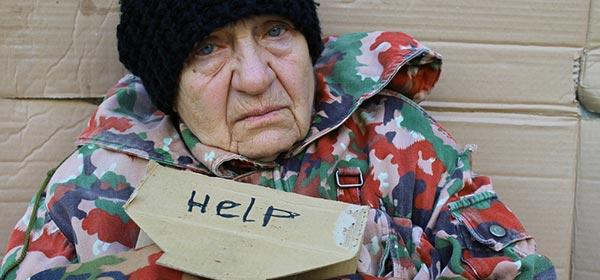
Older single women in Australia are at high risk of facing a crisis. One brought on by neoliberal ideologies and policies which intersect with gender and wage bias, along with the historical marginalisation of women in a patriarchal society. This crisis is homelessness and why it is exponentially growing can be understood through the lens of feminist standpoint theory and neoliberalism.
Like all theories, feminist standpoint theory has its limitations and uses. It assists with analysing and understanding this particular social justice issue because feminist standpoint theory considers the individual experiences of the women involved. It also takes into consideration women’s historical roles in society. Standpoint theory emerged from Marxism wherein it was seen that members of society who were oppressed were privy to knowledge the privileged class were not aware of (Borland 2020). In 1983 when Nancy Hartsock published her book “Money, Sex and Power” she provided a theoretical method which took into consideration women’s unique perspectives within society (Hekman 1997, p. 341). This theory also justified feminist claims regarding women being oppressed members of society and feminist standpoint theory as a methodology began (Hekman 1997). During the 80s and 90s other contributors to this theory included Sandra Harding, Merrill Hintikka, Patricia Hill Collins and Dorothy Smith (Hekman 1997; Borland 2020). Harding was of the view that even though scientific researchers claimed to be neutral, their research methods and results were sexist (Borland 2020, p.1).
Harding saw that by implementing standpoint theory, it would reveal the power held within ‘scientific authority’ and would create ‘knowledge that is embodied, self-critical and coherent’ (Borland 2020, p.1). Patricia Hill Collins contributed an African American feminist perspective arguing that race, gender, class oppression and lack of privilege for African American women also provided a unique perspective to the feminist landscape which needed to be seen (Borland 2020). Whilst standpoint theory can be seen as essentialist due to the implied belief that a universal female standpoint exists, theorists utilising feminist standpoint theory have chosen to focus on the ‘political aspects of social position’ from a feminist view rather than speaking for all women (Borland 2020, p.1). Use of feminist standpoint theory and practice, however, has come under scrutiny as it appears to challenge the more recent feminist theories which have emerged from ‘postmodernism and poststructuralism’ (Hekman 1997, p.342).
Nonetheless, Hekman (1997, p.342) argues that feminist standpoint theory is based on the understanding that “knowledge is situated and perspectival, and that there are multiple standpoints from which knowledge is produced.” Hawkesworth (1999) sees feminist standpoint theory not as an epistemology but as an analytical tool. Both Hawkesworth (1999) and Hekman (1997) posit there are various types of competing feminist standpoints and that by critically examining those, problems can be illuminated which Hawkesworth (1997, p.152) states …’empirical research must engage’.
When looking at the issue of older single homeless women in Australia some of the specific gender-based factors for this cohort are that their earlier lives have been shaped by the societal norm they would marry and their husband would provide for them in their roles as homemakers, child-bearers and predominantly mothers (Darab & Hartman 2013; Hartman & Darab 2017). According to McFerren & Laverty (2010),a high percentage of older single homeless women have suffered domestic violence or experienced adverse tragedy in their earlier lives. Common themes found in various studies concerning lack of housing security available to these women both now and into the foreseeable future, are cited as being systemic issues; domestic violence; age, wage, employment and gender discrimination; and relationship breakups (McFerren & Laverty 2010;Darab & Hartman 2013; Hartman & Darab 2017; Irwin & Leeson 2016; Sharman 2017; Faulkner & Lestner 2020). Invisibility via research and media representation of this group of women, which results in a lack of service provision specifically tailored for them, along with housing unaffordability, are also cited as being factors which are contributing to the increasing number of older women who are, or are becoming, homeless (McFerren & Laverty 2010; Darab & Hartman 2013; Hartman & Darab 2017; Irwin & Leeson 2016; Sharman 2017; Faulkner & Lestner 2020).
In 2017 Hartman & Darab conducted a qualitative research project using feminist standpoint theory regarding older homeless women and pathways to housing in the rural area of the Northern Rivers, New South Wales. They found intersectionality was occurring between gender, relationship status, aging and lack of home ownership (Hartman & Darab 2017). The absence of employment opportunities combined with minimal public transport were also cited as factors contributing to older single women becoming homeless in the region (Hartman & Darab 2017). Reasons Sharman (2017) gives for the rise in numbers of older single homeless women in her Victorian study are that these women, due to the roles they played earlier in their lives were locked out of the labour market and as such were prevented from accumulating superannuation and savings. Sharman (2017, p.51) also cites ‘adverse critical life experiences’ which are ‘non-normative’, as being a factor. For example, the unexpected death of a partner, ill health, sick children, unemployment or disability all can impact on an individual’s ability to function as they would normally expect to (Sharman 2017).
Other critical life events which Sharman (2017) states have impacted on older single women have been rental increases, mortgagee repossessions, evictions and housing stress brought on by increasing costs where 30 per cent or more of household income is required to secure housing. In addition to the aforementioned factors women’s work is often undervalued, unpaid or underpaid (Sharman 2017; Healy & Kidd 2013). Many women’s working lives are interrupted by children and they are often pushed into the dominant female industries of health, teaching and retail (Sharman 2017). Mostly relying on less pay than male counterparts along with part-time or casual work to meet family responsibilities results in less savings and less superannuation being accumulated by the time they retire (Sharman 2017; Healy & Kidd 2013). Recent research by Faulkner and Lestner (2020) estimated “240,000 women aged 55 or older and another 165,000 women aged 45-54 are at risk of homelessness” in Australia.
Whilst no government is responsible for exceptional individual life experiences, under the United Nations agreements Australia is privy to, the State is responsible for the provision of certain basic human rights to all citizens, which it does not appear to be adhering to. In 1976 Australia ratified the United Nations International Covenant on Economic, Social and Cultural Rights. At Article 11, 1., it states that adequate housing is a fundamental human right (Marston, McDonald & Bryson 2014; Australian Legal Information Institute 1976; Australian Human Rights Commission 1976; Human Rights and Equal Opportunity Commission 1996). The Universal Declaration of Human Rights, which Australia was a founding contributor to in 1948 and signatory of, at Article 25, states, “Everyone has the right to a standard of living adequate for the health and well-being of himself and his family, including … housing” (United Nations 1948).Despite these signed agreements, according to the Australian Bureau of Statistics 2016 Census, there were an estimated “6,866” homeless older women and “5,820” older women who were “living in marginal housing” and “may be at risk of homelessness” (Australian Bureau of Statistics 2017; Australian Human Rights Commission 2019a).
Further, older women are seen to be “the fastest-growing cohort of homeless Australians” evidenced by a 31 per cent increase occurring between 2011 and 2016. (Australian Human Rights Commission 2019a; Australian Human Rights Commission 2019b). Dominant neo-liberal ideology and practices which have been occurring in Westernised countries for the past 30 years are a major factor which impacts on homelessness (Bullen 2015; Hartman & Darab 2017). Neo-liberalism is a mode of governing which emphasises free markets, individuals being solely responsible for themselves and market like modes of service provision (Bullen 2015; Hartman & Darab 2017).
As a consequence of neoliberalism, there has been a shift away from discourses of homelessness being a social issue brought about by unemployment, poverty, domestic violence and disadvantage, to being one of a personal issue (Bullen 2015; Sharman 2017). This has consequently had a detrimental impact on service provision and created negative feelings of self-worth, blame and exclusion for homeless persons (Bullen 2015). Policies implemented, which included the reduction of capital gains tax in 1999 and negative gearing in the late 1980s, have resulted in decreased housing affordability as house prices, compared to available income during the past 15 years, has increased sharply (Hartman & Darab 2017). Further, there has been a decline in public housing availability since the 1990s as the State’s focus has been on offering financial support for low-income earners via rent assistance within the private rental market, as well as implementing the first home owner’s grant, rather than providing public housing (Hartman & Darab 2017).
These policies have resulted in a rental market which favours investors and landlords (Hartman & Darab 2017). Media representation based on neo-liberal principles presents a perspective of homelessness, generally speaking, that some are deserving and undeserving of State assistance (Lyons & Smedley 2020). Those who are considered deserving are those who through no personal fault suddenly find themselves homeless and those who are classed as undeserving are often stereotyped as being slack due to the perception that they are incompetent (Lyons & Smedley 2020). What is missing from media representation regarding homelessness in Australia is a discussion concerning the growing number of single older women who are unable to secure a home (Lyons & Smedley 2020).
Whilst there is not a lot of research available regarding this sector of homelessness specifically, research does validate that a looming crisis is pending. Many factors are contributing to single older women becoming homeless in Australia, not the least of which are neoliberal ideology and practices that are proving to not only be detrimental to a whole generation of women currently but potentially also for women in the future.
Copyright C. O’Connor, November 2021.
References
Australian Bureau of Statistics 2017, 2016 Census, viewed 23 August 2020 https://www.abs.gov.au/websitedbs/censushome.nsf/home/2016
Australian Human Rights Commission 2019a, Older Women’s Risk of Homelessness: Background Paper, viewed 20 August 2020, https://humanrights.gov.au/sites/default/files/document/publication/ahrc_ow_homelessness2019.pdf
Australian Human Rights Commission 2019b, Risks of Homelessness in older women, viewed 20 August 2020, https://humanrights.gov.au/our-work/age-discrimination/projects/risk-homelessness-older-women
Australian Human Rights Commission 1976, International Covenant on Economic, Social and Cultural Rights, viewed 20 August 2020, https://humanrights.gov.au/our-work/commission-general/international-covenant-economic-social-and-cultural-rights-human-rights
Australian Legal Information Institute, Australian Treaty Series 1976, No 5, Department of Foreign Affairs, International Covenant on Economic, Social and Cultural Rights, United Nations, New York, viewed http://www.austlii.edu.au/au/other/dfat/treaties/1976/5.html
Borland E 2020, Standpoint theory, viewed 20 August 2020, https://www.britannica.com/topic/standpoint-theory
Bullen J 2015, ‘Governing Homelessness: The Discursive and Institutional
Construction of Homelessness in Australia’, Housing, Theory and Society, 32:2, 218-239, doi:10.1080/14036096.2015.1024886
Darab, S & Hartman Y 2013, ‘Understanding Single Older Women’s Invisibility in Housing Issues in Australia’, Housing, Theory and Society, vol. 30, no. 4, pp. 1–20, doi:10.1080/14036096.2012.746944
Faulkner D & Lester L 2020, ‘400,000 women over 45 are at risk of homelessness in Australia’ The Conversation, viewed 23 August 2020https://theconversation.com/400-000-women-over-45-are-at-risk-of-homelessness-in-australia-142906
Hartman, Y & Darab, S 2017, ‘The housing pathways of single older non-home owning women in a rural region of Australia’, Journal of Rural Studies, vol. 54, pp. 234–243, doi:10.1016/j.jrurstud.2017.07.003.
Hawkesworth, M 1999, ‘Analyzing backlash: Feminist standpoint theory as analytical tool’, Women’s Studies International Forum, vol. 22, no. 2, pp. 135–155, doi:10.1016/S0277-5395(99)00003-5.
Healy, J & Kidd, M 2013, ‘Gender-based undervaluation and the equal remuneration powers of Fair Work Australia’, Journal of Industrial Relations, vol. 55, no. 5, pp. 760–782, doi: 10.1177/0022185613491683.
Hekman, S 1997, ‘Truth and Method: Feminist Standpoint Theory Revisited’, Signs, vol. 22, no. 2, pp. 341–365, doi:10.1086/495159.
Human Rights and Equal Opportunity Commission 1996, Housing as a human right, viewed 20 August 2020 https://humanrights.gov.au/sites/default/files/content/pdf/human_rights/housing.pdf
Irwin P & Leeson G 2016, ‘Late Middle-Aged Single Women and The Risk of Homelessness in Rural Australia’, The Gerontologist, vol. 56, no. Suppl3, pp. 719–719, doi:10.1093/geront/gnw162.2932.
Lyons G & Smedley C (2020) ‘The new face of homelessness? Examining media representations of women’s homelessness in five Australian news sources’, Journal of Social Distress and Homelessness, doi:10.1080/10530789.2019.1709269
McFerran, L & Laverty, S 2010, ‘It could be you: female, single, older and homeless’, Parity, vol. 23, no. 7, ISSN:1032-6170
Marston, G, McDonald, C & Bryson, L 2014, The Australian welfare state: who benefits now?, Palgrave Macmillan, South Yarra.
Petersen, M 2015, ‘Addressing older women’s homelessness: service and housing models’ Australian Journal of Social Issues, vol. 50, no. 4, pp. 419–438,458, doi:10.1002/j.1839-4655.2015.tb00358.x.
Sharman A 2017, The Voices of Midlife Women Facing Housing Insecurity in Victoria, Australia, Social Policy & Society, Vol 16, No. 1, pp.49-63, doi:10.1017/S1474746415000603
United Nations 1948, Universal Declaration of Human Rights, viewed 23 August 2020, https://www.un.org/en/universal-declaration-human-rights/index.html

 Cheryl O'Connor