The Origins, History, and Benefits of Reiki and Seichim
Energy healing has been practiced across cultures for centuries, weaving spiritual, physical, and emotional wellbeing into a holistic tapestry of care. Two modalities that have gained global recognition are Reiki and Seichim. Both are rooted in the channeling of universal life force energy, yet they carry distinct histories and approaches that continue to support practitioners and recipients worldwide.
The Origins of Reiki
Reiki, meaning “universal life energy” in Japanese, was founded by Mikao Usui in the early 20th century. Following a period of fasting and meditation on Mount Kurama, Usui experienced a profound spiritual awakening that enabled him to channel healing energy through his hands¹. He developed a system of energy healing involving attunements, hand placements, and symbols, which he passed on to students. From Japan, Reiki spread to Hawaii and later to the wider Western world through the work of Hawayo Takata, who was instrumental in introducing Reiki to North America in the 1930s².
The Origins of Seichim
Seichim (also spelled Sekhem or Seichem) is often described as the “mother energy” of Reiki, with roots that are said to extend back to ancient Egypt³. Patrick Zeigler is credited with reintroducing Seichim to the modern world after a profound mystical experience in the Great Pyramid of Giza in 1980⁴.
Seichim carries both fierce and compassionate aspects. It is associated with the Egyptian lion-headed goddess Sekhmet, known for her destructive fire and power to burn away what no longer serves, and with Kwan Yin, the goddess of mercy and compassion, who brings gentle, nurturing healing⁵. Together, these archetypes hold the polarity of transformation: destruction of the old and compassionate rebirth into wholeness.
My Journey with Reiki and Seichim
For me, these modalities have not only been practices but life-changing pathways of healing. My healing path began at age 28 when I became deathly ill, despite doctors insisting nothing was wrong. In my 30s, I began attunements in Reiki and Seichim. Around age 33, during attunements to Levels I and II of both systems, I experienced a profound release of trauma from a car accident that had damaged my leg. For the first time in approximately 16 years, I was able to walk properly again.
In 1999, I became a Reiki Master, and in 2000, a Seichim Master. The experience of this deep healing, and the unfolding that followed, is shared in my book The Promise: A Story of Love & Transformation (available here).
The History and Spread
Reiki gained official recognition in Japan, particularly during times of war, when it was used to support soldiers’ recovery⁶. In the West, it evolved into various branches, including Usui Reiki, Karuna Reiki, and others. Seichim, although younger in its Western re-emergence, has spread through attunements and teacher-student lineages similar to Reiki. Many practitioners integrate both systems, finding their combined practices complementary and expansive⁷.
Benefits of Reiki and Seichim
Reiki and Seichim work together like two waves of energy. Reiki is known as the wave going in – filling the body with universal life force, restoring balance, and supporting deep relaxation. Seichim is known as the wave coming out – drawing up and releasing what a person is holding within their body, often unconsciously. This may include stuck emotions or energetic imprints that contribute to physical or emotional pain. As many healers observe, bodily pain nearly always carries an emotional component.
Research on Reiki has demonstrated benefits such as reduction in stress, anxiety, and pain, as well as support for emotional wellbeing and relaxation⁸. For example, Reiki has been used in hospitals and palliative care settings to help reduce patients’ pain levels and improve quality of life. Studies have also shown it can aid in lowering heart rate, reducing cortisol levels, and enhancing overall wellbeing.
Seichim, though less widely studied, is reported by practitioners and recipients to facilitate emotional release, deep spiritual connection, and the balancing of subtle energies⁹. Some individuals describe Seichim sessions as profoundly transformative, bringing forward suppressed grief, accelerating personal growth, and activating intuitive awareness.
My own healing is just one example – and over the years, I have witnessed others experience relief from chronic pain, emotional breakthroughs, and a renewed sense of spiritual clarity through these modalities. Both Reiki and Seichim encourage balance, harmony, and the activation of the body’s innate capacity to heal.
Distance Healing
A unique aspect of both Reiki and Seichim is that they are not limited by physical proximity. Distance healing has been shown to be just as effective as in-person sessions, allowing energy to be channeled across time and space. Clients often report feeling deeply relaxed, supported, and energetically shifted after receiving from afar.
At present, I am offering distance healing sessions only. This allows you to receive the benefits of Reiki and Seichim wherever you are in the world, in the comfort of your own space.
Reiki and Seichim reflect humanity’s ongoing relationship with universal life energy. Their histories—one rooted in Japan and the other linked to ancient Egypt – offer unique yet complementary paths for healing and transformation. Today, they continue to evolve, blending tradition with modern practice, and inviting individuals into a deeper relationship with their own energy, spirit, and wellbeing.
About the Author
Cheryl O’Connor (Cheoco) is a Reiki Master (since 1999) and Seichim Master (since 2000), writer, and dreamwork practitioner based in Queensland, Australia. Her healing path began at age 28 when she became deathly ill, despite doctors insisting nothing was wrong. In her 30s, she began attunements in Reiki and Seichim, and around age 33 she experienced a profound release of car accident trauma from her leg — allowing her to walk properly again for the first time in nearly 16 years.
Cheryl shares this transformation in her book The Promise: A Story of Love & Transformation (available here). Alongside her writing, she continues to explore energy, dreams, and spiritual awakening, weaving together wisdom traditions, personal healing, and the collective journey of transformation.
References
Hiroshi, D. (1997). The Reiki Handbook: Traditional Usui Reiki methods. Tokyo: Reiki Institute.
Rand, W. L. (2011). Reiki: The healing touch. Southfield, MI: Vision Publications.
Barnett, S., & Chambers, T. (1996). Healing energy: Unlocking the secrets of Reiki and Seichim. London: Aquarian Press.
Zeigler, P. (1984). Seichim: The doorway to ancient healing wisdom. Giza: Pyramid Press.
Petter, F. A. (1999). Reiki Fire: New information about the origins of the Reiki power. Twin Lakes, WI: Lotus Press.
Becker, C. (2004). Reiki in clinical practice: A new paradigm in patient care. Complementary Therapies in Nursing & Midwifery, 10(3), 142–148.
Baldwin, A. L., Wagers, C., & Schwartz, G. E. (2008). Reiki improves heart rate homeostasis in laboratory rats. Journal of Alternative and Complementary Medicine, 14(4), 417–422.
Honervogt, T. (2002). Seichim and Reiki: Healing energy for the new millennium. London: Thorsons.
Dishonesty doesn’t just withhold information; it disrupts our ability to act from conscious awareness. It undermines our sovereignty. When we’re denied truth, we’re left making decisions based on partial realities, often manipulated by someone else’s narrative. It’s like walking through a fog someone else created.
Truth may sting, but dishonesty chains. One liberates; the other entangles. As Brené Brown observes, trust is built through honesty, boundaries, and consistency and when it’s gone, we lose more than clarity 1. We lose our sense of stability and self-trust.1
And the soul always knows.
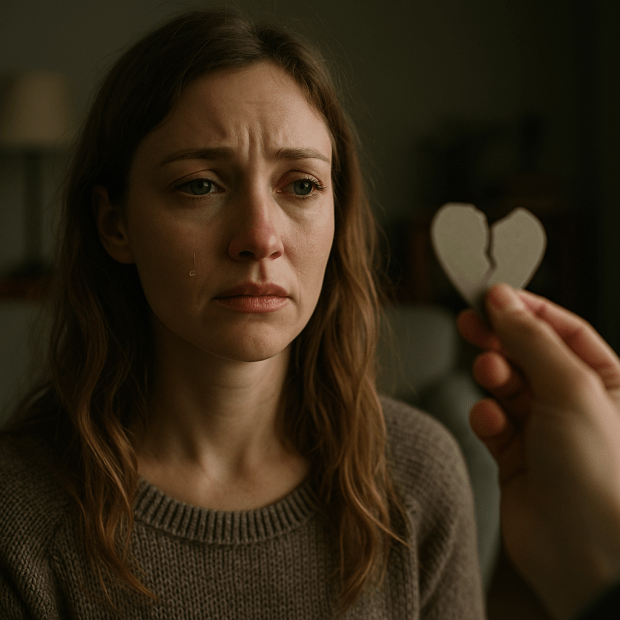
Have you ever looked into the eyes of someone you loved and trusted, only to feel like you were staring into the face of a stranger? It’s a haunting kind of grief. When someone you’ve spent time (potentially years) loving, supporting, and feeling safe with suddenly turns, without warning or explanation, into someone unrecognisable, the rupture can shake you to your core.
When Trust Shatters
In the aftermath, impossible questions surface.
Did I unknowingly trigger a wound too deep to be healed? Did I get too close and activate a protective response? Were they ever truly themselves, or was it always a mask that finally slipped? Perhaps most painfully: What does this say about me?
As Bessel van der Kolk explains, when the relational foundation we’ve depended on crumbles, our nervous system reacts as though we’re under threat. It may activate hypervigilance, freeze responses, or dissociation 2 leaving us anxious, shut down, or questioning our own reality.
Without clear communication, we’re left with guesswork. The mind spins, “maybe it was this, maybe it was that”, but deep down, we know. The body knows. The intuition knows and ultimately all we can truly trust is our intuition, even when the mind wants or hopes to believe otherwise.
Coping or Reclaiming
So what do we do when trust breaks?
Some harden. They vow never to trust again. Others build walls so high no one can climb them, not even themselves. Many turn to coping strategies, overthinking, self-silencing, numbing, or doubting their worth. Gabor Maté reminds us that these patterns, while protective, often come at a cost to our emotional and physical wellbeing. 3
When we suppress pain to maintain connection, we betray ourselves.
And yet, betrayal can serve as a teacher. Terry Real suggests that relational pain often becomes a gateway to transformation. While one person learns the cost of disconnection, the other may reclaim their voice, their clarity, their truth. 4
When deception enters the field, both souls receive lessons.
For the one who hides truth, the lesson is clear: dishonesty costs more than it gains (usually the relationship). What once seemed like a clever avoidance ends up breaking the very thing they hoped to protect, connection, respect, intimacy and trust.
For the one on the receiving end of the lie or betrayal, the gift is sovereignty. To see clearly. To feel the fracture and still remain standing. To declare silently a firm boundary of truth or nothing. One learns the cost of deceit. The other embodies the power of truth.
The pain of betrayal can sharpen our ability to notice red flags sooner or sense when something doesn’t add up. Harriet Lerner encourages us to reclaim our voice after rupture, not through confrontation alone, but by choosing clarity, boundaries, and grounded presence. 5 Still, trust, once broken, rarely returns to its original form.
The Sacred Fracture
To me, trust is like a porcelain plate, fragile, beautiful, and meaningful. But once smashed, it never feels the same, no matter how carefully you piece it back together. And yet, there’s something sacred in the fracture. Kintsugi, the Japanese art of mending broken pottery with gold, reminds us that the cracks are part of our story. They don’t need to be hidden. They can shine. Because we are not broken. We are remade. Wiser. Clearer. And more sovereign than ever before.
Reflection invitation: Where in your life are you choosing sovereignty over illusion? And can you trust yourself enough to follow through?
References
1. Brown, B. (2021). Atlas of the heart: Mapping meaningful connection and the language of human experience. Random House.
2. van der Kolk, B. (2014). The body keeps the score: Brain, mind, and body in the healing of trauma. Viking.
3. Maté, G. (2003). When the body says no: Exploring the stress-disease connection. Vintage Canada.
4. Real, T. (2022). Us: Getting past you and me to build a more loving relationship. Cornerstone.
5. Lerner, H. (2001). The dance of connection: How to talk to someone when you’re mad, hurt, scared, frustrated, insulted, betrayed, or desperate. HarperCollins.
For many of us, simply being present, fully here, right now, is one of the greatest challenges we face. In Western culture especially, we’re conditioned to think in linear terms: past, present, future. We track what has been, plan what’s next, and often measure our lives by where we’re going and what we hope to achieve. We make lists, set goals, and feel comforted by having a plan. But underneath it all, we may be reacting not to what’s real, but to a story we’ve told ourselves about how things should go.
My mum, bless her, was the Queen of Organisation. With four children and a job, she had to be. Each of us had assigned chores, and our weeks were structured down to the minute. I grew up knowing exactly what I’d be doing, and when. While life still threw curveballs, I found the predictability comforting. When I became a mother myself, I quickly saw how being organised helped ease stress, and that habit carried over into my work life.
Over three decades in the legal industry only reinforced that rhythm. Planning ahead, meeting deadlines, staying in routine, all of it created a sense of order in what was often a stressful environment. But over time, the rhythm became a rut. I began to feel stuck, drained of joy, and quietly suffocated by the very structure that once kept me afloat. I also realised that when organisation becomes too rigid, it stops being helpful. It becomes control.
As I deepened in awareness, I started to sense that time, at least as we know it, might not actually exist. That all time is now. That things unfold not when we want them to, but when the energy aligns. And from that perspective, life became gentler. I stopped expecting things to go a certain way, and with that, emotional reactions softened. I found myself detaching, from outcomes, from expectations, from old habits of control.
I made fewer plans. “Going with the flow” evolved into being the flow. I became more spontaneous. I let things go if they weren’t working, and trusted that something better might be waiting to fall into place. The most I now plan is a basic outline, one day at a time. As for those job interview questions like, “Where do you see yourself in five years?”, I’ve come to see them as part of a cultural story that often robs us of presence, creativity, and possibility. How can we know what five years will bring? Sometimes, we don’t even know what the next five minutes will bring.
I learned the hard way: plans rarely go according to plan.
Now, if something I want to do just isn’t flowing, I don’t push it. If the energy is not aligned, I let it be. I’ve noticed how stressed people get when things don’t go “according to plan”, the frustration, the disappointment, the tension it can cause in relationships. But often, those delays or disruptions are gifts. Protection. Rearrangements. Or just not the right time yet. The puzzle pieces aren’t in place. And when they are, everything clicks.
I thought I had this all sorted. Skeletal plan? Check. Present moment awareness? Check. Calendar reminders so I didn’t forget the essentials? Check. It was working beautifully, until one day when I found myself in a situation where communication had been unclear, and I didn’t know what I was “meant” to be doing next. I’d been told one thing, then it suddenly changed. I felt confused, unprepared, and frustrated.
Old habits kicked in: irritation, storytelling, the mental narrative of how it should have been communicated differently. And underneath it all, discomfort. My little comfort zone, small as it was, had been nudged.
Then came the gentle wisdom of another: Does it really matter what you are doing next?
In that moment, I had to laugh. Who was creating the confusion? The person who hadn’t communicated clearly? Or me, reacting to a story in my head, projecting into the future, and leaving the present moment behind?
It was such a simple lesson, offered in such an effective way: Just show up. Be present. Do what’s needed in the moment of now. Let go of the rest.
Social struggles throughout history have been instrumental in implementing human rights legislation, changing existing laws, and shaping societal thinking about personal freedoms. One of the longest and most contested of these struggles is the fight for women’s reproductive and contraceptive rights. The debate surrounding women’s autonomy over their bodies and their right to access abortion services has persisted for centuries, driven by ethnocentric, patriarchal, and religious moral perceptions, as well as by gendered stereotypes and legislative control.
The issue of abortion rights has repeatedly highlighted the tension between personal autonomy and state, religious, and medical authority. Despite advancements in women’s rights movements and international human rights frameworks, such as the Universal Declaration of Human Rights (United Nations n.d.a) and the Convention on the Elimination of All Forms of Discrimination against Women (CEDAW) (UN Women 2000-2009), barriers to reproductive freedom remain entrenched in many societies. The historical and ongoing struggle for reproductive rights, particularly the right to safe and legal abortion, reveals the enduring power dynamics that seek to control women’s bodies and choices, and demonstrates that achieving genuine gender equality remains an unfinished global challenge.
The Overturning of Roe v. Wade: A Landmark Moment
Women’s autonomy over their bodies has caused an ongoing heated societal debate for centuries. The latest major event occurred in 2022 with the overruling of the 1973 Roe v. Wade decision by the United States Supreme Court on 24 June 2022 (Clough 2022; Lewandowska 2022). The outcome of Roe v. Wade was that the “Fourteenth Amendment’s concept of personal liberty and restrictions upon state action . . . is broad enough to encompass a woman’s decision whether or not to terminate a pregnancy” (Roe v. Wade 1973, at 153). Abortion could now occur in other circumstances (Ehrlich 2018; Ginsberg 1985). Previous law stated termination could only occur if a woman were pregnant due to rape or incest, where there were fetal anomalies, or where the mother’s life was at risk (Ehrlich 2018; Ginsberg 1985).
The overruling of the Roe v. Wade precedent in 2022 has global implications concerning women’s health. It is an attack on human reproductive rights as it removes “the constitutional right to bodily autonomy from over half the United States population” (Clough 2022, p.160; Lewandowska 2022; Cherminsky 2022; The Lancet 2022). As Clough (2022, p.160) states, “it serves as a stark reminder of the need to defend human rights; it is not enough to assume that, once granted, they cannot be taken away.”
Historical Context: Slavery and Early Abortion Legislation
To understand the abortion debate, changes to legislation, and the struggle for women to access abortion services, we need to revisit the 1800s when white people owned Black slaves and relied upon slaves for cheap labour and economic growth (Murray 2021). The prohibition of the importation of slaves into America in January of 1808 (Murray 2021) resulted in slave owners concerning themselves with the “reproductive capacities of enslaved women” because the source of their labour and economy now needed to be procured from slaves’ children (Murray 2021, p.2034). Enslaved women were aware that any child they bore was not rightfully theirs and could be sold (Murray 2021). Therefore, women used various techniques to inhibit conception or abort their unborn child (Murray 2021).
As a consequence, “slave owners sought to deter and punish efforts to prevent or terminate pregnancies” (Murray 2021, p. 2035). Abortion began to be criminalised, and legislation was passed that banned the distribution of contraceptives and abortifacients, which had not been banned prior to the aforementioned 1808 legislation (Murray 2021; Siegal 1992).
Medical Campaigns and the Criminalisation of Abortion
The campaign to enact anti-abortion legislation was primarily organised by white male physicians who considered contraceptive information provided to all women and actions by female Black and Indigenous women as dangerous (Goodwin 2020; Joffe, Weitz & Stacey 2004). Further, these physicians perceived abortions, if allowed to continue, as a disruption of the American social order of motherhood, family, and white dominance due to birth rates amongst white women decreasing (Beisel & Kay 2004; Murray 2021; Ehrlich 2018).
In 1857, Dr. Horatio Storer, a “Harvard-educated gynaecologist,” spoke at a “meeting of the Suffolk District Medical Society” (Ehrlich 2018, p. 182). He addressed the issue of an “alarming frequency of induced abortions among respectable Protestant women…” (Ehrlich 2018, p. 182). Storer convinced “the Boston medical society and the then recently founded American Medical Association (AMA) to establish investigative committees to look into ‘criminal abortion’ to suppress what he perceived to be ‘the slaughter of countless children now perpetuated in our midst’” (Ehrlich 2018, p. 182). Storer believed women’s physiological makeup rendered “her incapable of self-management” (Ehrlich 2018, p.185).
The AMA’s campaign to criminalise abortion was based on “a paternalistic and racialized code of white-male moral authority over women’s reproductive bodies” (Ehrlich 2018, p.183). The campaign resulted in abortion becoming a statutory crime in all states of America by the end of the nineteenth century unless certification by a doctor occurred that the procedure would “save the life of the pregnant woman” (Ehrlich 2019, p.183). Abortion laws now existed that mirrored eugenic concerns regarding controlling reproductive rights due to fear-based perceptions that white women were not producing offspring as rapidly as immigrants and non-whites (Murray 2021; Ehrlich 2018).
Contemporary Efforts to Restrict Abortion Rights
The racially motivated and gendered paternalistic and religious views regarding abortion reveal the true impetus for criminalisation and explain, to some degree, why efforts still remain globally by men to legally control women’s bodies and choices as per the following examples:
2017 America: “Unprecedented attacks on reproductive health rights” resulted in 19 states adopting “63 new restrictions on abortion rights, service provision, and patient access” (Espey, Dennis & Landy 2018, p. 67).
2018 Argentina: A bill to decriminalize and legalize abortion was debated in Congress for the first time but did not pass through the Senate (Sutton 2020, p.1).
Access to abortion in America since 1976 has undergone further restrictions with increased waiting periods, biased counselling, and a mandate regarding parental involvement for minors (Joffe, Weitz & Stacey 2004; Grossman et al. 2014a; Grossman et al. 2014b; Minkoff, Diaz-Tello & Paulk 2021; Askola 2018).
Texas, May 2013 to November 2013: A decrease by half in the facilities where medical abortion was available (Grossman et al. 2014a; Grossman et al. 2014b).
Australia: While surgical abortion has been provided as a health service “since the early 1970s,” medical abortion utilising Mifepristone “was deliberately obstructed” by the Federal Government via legislation concerning its authority over pharmaceutical drug importation, and it was not until 2006 that the legislative restriction was removed (Baird 2015, p.169). It took until 2012 for Mifepristone to be approved by the Australian Federal Government as a commercial import, and it was not until 2013 that it became a listed subsidised medicine (Baird 2015).
Reproductive Healthcare and Rights in Queensland: A Complex Landscape
Reproductive healthcare in Queensland is shaped by a complex interplay of legal, ethical, and social factors. The state has seen significant changes, particularly in the areas of abortion rights, fertility treatments, and workplace reproductive rights. These issues reflect broader societal debates around personal autonomy, healthcare access, and the role of government in regulating reproductive choices. However, despite legislative progress, significant barriers remain, especially for those in rural and remote areas.
Decriminalisation of Abortion
In Queensland in 2018 a pivotal step occurred in recognising reproductive autonomy, aligning the state with the broader Australian movement to treat abortion as a healthcare issue rather than a criminal matter (Storry, 2018). While the legal framework shifted, practical access to abortion services remains uneven. Women in rural and remote areas face considerable obstacles, such as long distances to clinics, financial barriers, and a lack of available healthcare professionals (Sexual Health, 2022).
The Termination of Pregnancy in Queensland Post-Decriminalisation Study (2022) indicates that while decriminalisation aimed to improve access, stigma surrounding abortion remains a significant challenge. In smaller, more conservative communities, social pressures often prevent women from seeking services. According to Deveny (2023), these social and cultural factors, combined with logistical challenges, continue to hinder women’s access to reproductive health services.
Workplace Reproductive Rights
Workplace protections for pregnant employees have been a subject of continued evolution in Queensland. The state’s legislative changes concerning maternity leave, workplace discrimination, and the prevention of gender-based discrimination provide a more supportive framework for women. However, Deveny (2023) highlights that discrimination in the workplace remains a persistent issue, and women often face barriers to achieving full reproductive rights in the workplace, particularly in industries that are male-dominated or conservative.
The Queensland Government, under Premier David Crisafulli, has recently implemented a significant policy regarding abortion legislation. In December 2024, Premier Crisafulli introduced a parliamentary motion that effectively bans any changes to the state’s abortion laws until at least October 2028. This action was taken to uphold his election promise of no alterations to abortion laws and to prevent potential legislative challenges from within his own party. The motion passed despite opposition from the Labor Party, which voted against it, expressing frustration over the move (The Australian, 2024).
This policy has been met with criticism from various quarters. Opponents argue that it undermines the democratic process by restricting Members of Parliament from debating and introducing bills on the subject, thereby limiting legislative scrutiny and public discourse on reproductive rights (Courier-Mail, 2024).
Additionally, for a critical analysis of Premier Crisafulli’s decision to restrict parliamentary debate on abortion, you may find the article “The deeper issue behind Premier’s move to gag abortion” from The Courier-Mail insightful (Courier-Mail, 2024).
The decriminalisation of abortion in Queensland in 2018 marked a significant step in recognizing reproductive autonomy (Storry, 2018). However, practical access to abortion services remains uneven, with women in rural and remote areas facing considerable obstacles such as long distances, financial barriers, and a lack of healthcare professionals (Sexual Health, 2022).
Recent discussions in Queensland have also focused on the need for reproductive health leave to support women undergoing fertility treatments or coping with miscarriage (McKell Institute, 2024). The introduction of such leave would improve employee retention and reduce workplace discrimination, though it has not yet been widely implemented in Australia.
Regulation of IVF and Assisted Reproductive Technologies (ART)
In a related issue, the regulation of ART remains contentious in Queensland, particularly concerning ethical issues related to donor anonymity and the rights of donor-conceived children. The lack of a national donor registry has led to inconsistent standards and raised ethical questions about how embryos and donor information are handled (Messenger, 2024).
Global Influences and Local Impacts
Global trends in reproductive rights, such as the overturning of Roe v. Wade in the United States, have sparked concerns in Queensland about the potential erosion of local reproductive rights, especially in rural areas with entrenched conservative values (Murray, 2021). This highlights the need for continued vigilance in defending reproductive rights, both locally and globally (Clough, 2022).
International Implications: A Global Struggle
While the fight for reproductive rights is deeply embedded in Australia’s political landscape, the battle rages on beyond our borders, particularly in the United States. Under the current administration of Donald Trump, the reproductive rights of women have once again become a political battleground, mirroring the long history of male-driven control over women’s bodies.
In his first 100 days of a second term, Trump has enacted a series of controversial measures that significantly restrict access to reproductive healthcare. Among these, pardoning anti-abortion activists and reinstating the Mexico City Policy—which restricts foreign aid to organizations that provide or promote abortion—are just the beginning. These actions have ignited fierce opposition from reproductive rights groups who argue that such moves are an affront to women’s autonomy (Harrington, 2023; International Planned Parenthood Federation, 2023).
The administration’s decision to revoke policies supporting military travel for reproductive services and freeze critical funding for low-income patients, particularly affecting Title X clinics, reflects a deliberate rollback of essential healthcare provisions (Guttmacher Institute, 2023). Adding to the growing alarm, the Trump administration has been accused of failing to support families through comprehensive, family-friendly policies, while paradoxically championing pro-natalist stances (Smith, 2023).
Perhaps most concerning, however, is the increasing possibility of restrictions on abortion medications, such as mifepristone, which could have far-reaching consequences for women seeking access to safe and legal abortion care (American Medical Association, 2023). For many in the United States, these policies are a painful reminder of the historical attempts to control women’s reproductive choices. The echo of past struggles—of rights denied, and freedoms curbed—is unmistakable.
The response from American reproductive rights groups is growing louder, as they seek to not only protect access to healthcare but to remind the world of the consequences of turning back the clock on women’s bodily autonomy (Planned Parenthood, 2023). These developments serve as a stark reminder that the struggle for reproductive rights is ongoing, not just in the halls of power in Australia, but across the globe.
International Human Rights and the Struggle for Reproductive Rights
Beyond Debate: Reproductive Rights Are Human Rights
It is frankly incomprehensible that in the 21st century, women still have to fight for their reproductive rights. The fact that the United Nations had to establish a convention affirming these rights — as if women’s autonomy over their own bodies needed external validation — underscores how deeply ingrained patriarchal control remains. Under Article 12 of the Convention on the Elimination of All Forms of Discrimination Against Women (CEDAW 1979), all State Parties, including the United States, Australia, and Argentina, are obligated to ensure women have access to health services, including those related to family planning, on the basis of equality.
In conclusion, the very existence of a United Nations Convention on the Elimination of All Forms of Discrimination Against Women (CEDAW) raises a confronting question: why was such a Convention even necessary? Are women not human? Shouldn’t their rights be inherently protected as human rights? The answer lies in centuries of systemic inequality and the ongoing disregard for women’s autonomy, dignity, and agency.
Even today, despite many nations ratifying CEDAW, its principles are too often ignored or selectively applied. Unfortunately, many political leaders and pro-life groups continue to undermine women’s rights, placing personal beliefs and ideological agendas above the basic rights to health, autonomy, and equality. These groups and individuals are not the ones who will endure pregnancy, give birth, or raise a child. While some men may contribute to these responsibilities, the physical, emotional, and social realities of these experiences overwhelmingly fall to women. Those who seek to control women’s reproductive choices — including decisions around accessing termination services — have no place dictating healthcare policy or harassing women at clinics. It is particularly reprehensible when those women being harassed may not even be attending for a termination.
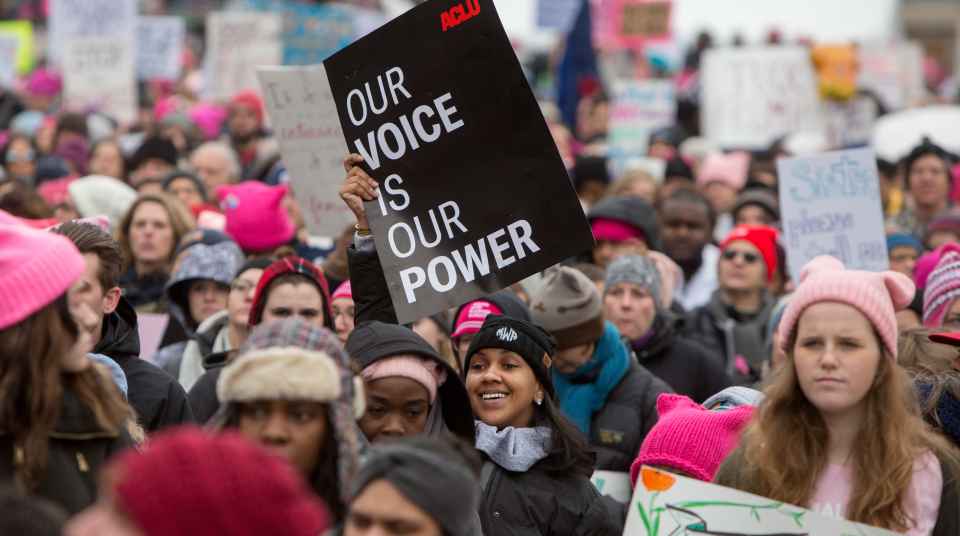
These ongoing struggles — where women’s voices are disregarded, silenced, or treated as secondary — make it painfully clear that, despite what should be a simple truth, women’s rights are still viewed by many as negotiable. The very fact that we need a global framework like CEDAW to attempt to safeguard these rights is a stark reminder of how far we have yet to go. Until all women are treated as equal, autonomous human beings — with full control over their bodies, lives, and choices — the fight for equality and dignity remains not just necessary, but urgent.
However, the lived reality is one where women’s reproductive autonomy is continuously undermined and politicised by politicians in positions of patriarchal governance, alongside pro-life advocates who, while not making the political decisions, relentlessly harass women who choose to terminate a pregnancy. These politicians, who will never bear the physical, emotional, social, or financial consequences of pregnancy and childbirth, continue to make decisions on behalf of women — often based on the influence of votes from pro-life groups whose members stalk and harass women seeking services, regardless of whether they are attending a clinic for a termination or another medical reason. This persistent disregard for women’s right to choose and control their own reproductive health must be recognised for what it is: a denial of basic human rights.
American Medical Association, 2023. Mifepristone Restrictions: The Impact on Women’s Health. [online] Available at: https://www.ama-assn.org/2023-mifepristone [Accessed 1 May 2025].
Baird, M. (2015) ‘Obstacles to abortion access in Australia: The case of Mifepristone’, Australian Health Review, 39(2), pp. 168-172.
Beisel, N., and Kay, A. (2004) ‘The social construction of abortion: Race, class, and the politics of women’s rights’, Gender and Society, 18(2), pp. 123-139.
Cherminsky, V. (2022) ‘The United States Supreme Court’s overturn of Roe v. Wade: A profound setback for women’s reproductive rights’, The Journal of Constitutional Law, 34(1), pp. 45-63.
Clough, M. (2022) ‘The end of Roe v. Wade: A world of reproductive injustice’, The Journal of Women’s Health, 31(1), pp. 156-162.
Ehrlich, J.S., (2018) ‘Abortion in America: The history of reproductive rights and their legislative battles’, Journal of Gender Studies, 29(2), pp. 180-195.
Espey, E., Dennis, A., and Landy, R. (2018) ‘Unprecedented attacks on reproductive health rights in the United States’, American Journal of Public Health, 108(1), pp. 67-72.
Goodwin, S. (2020) ‘The criminalization of reproductive autonomy: History and impact of anti-abortion legislation’, International Journal of Reproductive Rights, 5(1), pp. 112-118.
Ginsberg, A. (1985) ‘The impact of Roe v. Wade on the reproductive rights movement’, Reproductive Health Journal, 22(3), pp. 25-33.
Grossman, D., et al. (2014a) ‘The impact of restricted abortion access in Texas’, American Journal of Public Health, 104(3), pp. 466-472.
Grossman, D., et al. (2014b) ‘Effect of reduced abortion access in Texas: The influence of restrictions on reproductive healthcare’, Reproductive Health Matters, 22(44), pp. 78-85.
International Planned Parenthood Federation, 2023. Mexico City Policy: The Global Effects of Trump’s Abortion Restrictions. Available at: https://www.ippf.org/mexico-city-policy [Accessed 1 May 2025].
Joffe, C., Weitz, T., and Stacey, C. (2004) ‘Abortion access: The limits of legal reform’, Social Science & Medicine, 58(10), pp. 1991-2000.
Lewandowska, M. (2022) ‘The rise of reproductive injustice: A critique of Roe v. Wade’s overturn’, Global Feminist Review, 24(1), pp. 139-146.
Minkoff, H., Diaz-Tello, F., and Paulk, S. (2021) ‘Abortion laws: A global comparative analysis of reproductive health policies’, Journal of International Women’s Health, 38(2), pp. 210-220.
Murray, J. (2021) ‘The intersection of race, gender, and reproductive justice in 19th century America’, Women’s Studies Quarterly, 49(4), pp. 2030-2040.
Roe v. Wade (1973) U.S. Supreme Court Case, 410 U.S. 113.
Siegal, R. (1992) ‘The erosion of abortion rights in America: The history and politics of anti-abortion movements’, American Political Science Review, 86(1), pp. 50-65.
Smith, D., 2023. Trump’s Pro-Natalist Agenda: The Contradiction in Family and Reproductive Policies. The New York Times. Available at: https://www.nytimes.com/2023/trump-pro-natalist [Accessed 1 May 2025].
Sutton, L. (2020) ‘Abortion law in Argentina: The fight for reproductive justice continues’, Journal of Latin American Politics, 41(2), pp. 1-8.
The Lancet (2022) ‘The implications of the end of Roe v. Wade for reproductive rights’, The Lancet, 399(10337), pp. 1609-1612.
After seven years away, I’m so pleased to be returning to Dreamwork — a practice that has always held a special place in my heart and soul. While life called me in other directions for a time, the world of dreams, symbolism, and inner landscapes remained a constant, reassuring presence that helped me navigate those years.
During this time, I obtained my Social Work degree, cared for a loved one, and reconnected with my previous career in the legal world. Each of these experiences has continued to shape me, broadened my understanding of human experience, and further deepened my appreciation for the quiet, profound wisdom our dreams offer.
Dreamwork has long been a source of insight, healing, and creative exploration for me and those I’ve worked with. It’s a space where our unconscious speaks in rich images, emotions, and metaphor — and where we can gently unravel meaning, find clarity, and reconnect with parts of ourselves we may have forgotten.
Returning to this practice and sharing dream wisdom feels like coming home. With new skills, fresh perspectives, and a deepened sense of empathy, I am excited to be offering Dreamwork sessions once again, both for those new to exploring their dreams and for those looking to pick up where they may have left off. I am once again available to work with individuals through online consultations via email, phone or Microsoft Teams. Whether you’re looking to explore recurring dreams, uncover deeper meanings, or simply gain clarity from your inner landscape, I would be honoured to assist you in your transformative process.
Thank you for your support, your encouragement, and your presence. I look forward to seeing what this next chapter of Dreamwork holds for all of us.







 Cheryl O'Connor