Well Being

Australia’s Homeless Crisis: Detrimental Impacts on Older Women

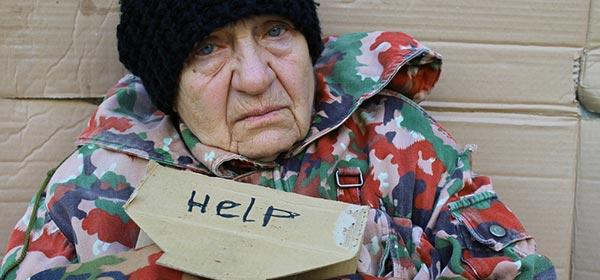
Older single women in Australia are at high risk of facing a crisis. One brought on by neoliberal ideologies and policies which intersect with gender and wage bias, along with the historical marginalisation of women in a patriarchal society. This crisis is homelessness and why it is exponentially growing can be understood through the lens of feminist standpoint theory and neoliberalism.

Like all theories, feminist standpoint theory has its limitations and uses. It assists with analysing and understanding this particular social justice issue because feminist standpoint theory considers the individual experiences of the women involved. It also takes into consideration women’s historical roles in society. Standpoint theory emerged from Marxism wherein it was seen that members of society who were oppressed were privy to knowledge the privileged class were not aware of (Borland 2020). In 1983 when Nancy Hartsock published her book “Money, Sex and Power” she provided a theoretical method which took into consideration women’s unique perspectives within society (Hekman 1997, p. 341). This theory also justified feminist claims regarding women being oppressed members of society and feminist standpoint theory as a methodology began (Hekman 1997). During the 80s and 90s other contributors to this theory included Sandra Harding, Merrill Hintikka, Patricia Hill Collins and Dorothy Smith (Hekman 1997; Borland 2020). Harding was of the view that even though scientific researchers claimed to be neutral, their research methods and results were sexist (Borland 2020, p.1).

Harding saw that by implementing standpoint theory, it would reveal the power held within ‘scientific authority’ and would create ‘knowledge that is embodied, self-critical and coherent’ (Borland 2020, p.1). Patricia Hill Collins contributed an African American feminist perspective arguing that race, gender, class oppression and lack of privilege for African American women also provided a unique perspective to the feminist landscape which needed to be seen (Borland 2020). Whilst standpoint theory can be seen as essentialist due to the implied belief that a universal female standpoint exists, theorists utilising feminist standpoint theory have chosen to focus on the ‘political aspects of social position’ from a feminist view rather than speaking for all women (Borland 2020, p.1). Use of feminist standpoint theory and practice, however, has come under scrutiny as it appears to challenge the more recent feminist theories which have emerged from ‘postmodernism and poststructuralism’ (Hekman 1997, p.342).

Nonetheless, Hekman (1997, p.342) argues that feminist standpoint theory is based on the understanding that “knowledge is situated and perspectival, and that there are multiple standpoints from which knowledge is produced.” Hawkesworth (1999) sees feminist standpoint theory not as an epistemology but as an analytical tool. Both Hawkesworth (1999) and Hekman (1997) posit there are various types of competing feminist standpoints and that by critically examining those, problems can be illuminated which Hawkesworth (1997, p.152) states …’empirical research must engage’.

When looking at the issue of older single homeless women in Australia some of the specific gender-based factors for this cohort are that their earlier lives have been shaped by the societal norm they would marry and their husband would provide for them in their roles as homemakers, child-bearers and predominantly mothers (Darab & Hartman 2013; Hartman & Darab 2017). According to McFerren & Laverty (2010),a high percentage of older single homeless women have suffered domestic violence or experienced adverse tragedy in their earlier lives. Common themes found in various studies concerning lack of housing security available to these women both now and into the foreseeable future, are cited as being systemic issues; domestic violence; age, wage, employment and gender discrimination; and relationship breakups (McFerren & Laverty 2010;Darab & Hartman 2013; Hartman & Darab 2017; Irwin & Leeson 2016; Sharman 2017; Faulkner & Lestner 2020). Invisibility via research and media representation of this group of women, which results in a lack of service provision specifically tailored for them, along with housing unaffordability, are also cited as being factors which are contributing to the increasing number of older women who are, or are becoming, homeless (McFerren & Laverty 2010; Darab & Hartman 2013; Hartman & Darab 2017; Irwin & Leeson 2016; Sharman 2017; Faulkner & Lestner 2020).

In 2017 Hartman & Darab conducted a qualitative research project using feminist standpoint theory regarding older homeless women and pathways to housing in the rural area of the Northern Rivers, New South Wales. They found intersectionality was occurring between gender, relationship status, aging and lack of home ownership (Hartman & Darab 2017). The absence of employment opportunities combined with minimal public transport were also cited as factors contributing to older single women becoming homeless in the region (Hartman & Darab 2017). Reasons Sharman (2017) gives for the rise in numbers of older single homeless women in her Victorian study are that these women, due to the roles they played earlier in their lives were locked out of the labour market and as such were prevented from accumulating superannuation and savings. Sharman (2017, p.51) also cites ‘adverse critical life experiences’ which are ‘non-normative’, as being a factor. For example, the unexpected death of a partner, ill health, sick children, unemployment or disability all can impact on an individual’s ability to function as they would normally expect to (Sharman 2017).

Other critical life events which Sharman (2017) states have impacted on older single women have been rental increases, mortgagee repossessions, evictions and housing stress brought on by increasing costs where 30 per cent or more of household income is required to secure housing. In addition to the aforementioned factors women’s work is often undervalued, unpaid or underpaid (Sharman 2017; Healy & Kidd 2013). Many women’s working lives are interrupted by children and they are often pushed into the dominant female industries of health, teaching and retail (Sharman 2017). Mostly relying on less pay than male counterparts along with part-time or casual work to meet family responsibilities results in less savings and less superannuation being accumulated by the time they retire (Sharman 2017; Healy & Kidd 2013). Recent research by Faulkner and Lestner (2020) estimated “240,000 women aged 55 or older and another 165,000 women aged 45-54 are at risk of homelessness” in Australia.

Whilst no government is responsible for exceptional individual life experiences, under the United Nations agreements Australia is privy to, the State is responsible for the provision of certain basic human rights to all citizens, which it does not appear to be adhering to. In 1976 Australia ratified the United Nations International Covenant on Economic, Social and Cultural Rights. At Article 11, 1., it states that adequate housing is a fundamental human right (Marston, McDonald & Bryson 2014; Australian Legal Information Institute 1976; Australian Human Rights Commission 1976; Human Rights and Equal Opportunity Commission 1996). The Universal Declaration of Human Rights, which Australia was a founding contributor to in 1948 and signatory of, at Article 25, states, “Everyone has the right to a standard of living adequate for the health and well-being of himself and his family, including … housing” (United Nations 1948).Despite these signed agreements, according to the Australian Bureau of Statistics 2016 Census, there were an estimated “6,866” homeless older women and “5,820” older women who were “living in marginal housing” and “may be at risk of homelessness” (Australian Bureau of Statistics 2017; Australian Human Rights Commission 2019a).

Further, older women are seen to be “the fastest-growing cohort of homeless Australians” evidenced by a 31 per cent increase occurring between 2011 and 2016. (Australian Human Rights Commission 2019a; Australian Human Rights Commission 2019b). Dominant neo-liberal ideology and practices which have been occurring in Westernised countries for the past 30 years are a major factor which impacts on homelessness (Bullen 2015; Hartman & Darab 2017). Neo-liberalism is a mode of governing which emphasises free markets, individuals being solely responsible for themselves and market like modes of service provision (Bullen 2015; Hartman & Darab 2017).

As a consequence of neoliberalism, there has been a shift away from discourses of homelessness being a social issue brought about by unemployment, poverty, domestic violence and disadvantage, to being one of a personal issue (Bullen 2015; Sharman 2017). This has consequently had a detrimental impact on service provision and created negative feelings of self-worth, blame and exclusion for homeless persons (Bullen 2015).  Policies implemented, which included the reduction of capital gains tax in 1999 and negative gearing in the late 1980s, have resulted in decreased housing affordability as house prices, compared to available income during the past 15 years, has increased sharply (Hartman & Darab 2017). Further, there has been a decline in public housing availability since the 1990s as the State’s focus has been on offering financial support for low-income earners via rent assistance within the private rental market, as well as implementing the first home owner’s grant, rather than providing public housing (Hartman & Darab 2017).

These policies have resulted in a rental market which favours investors and landlords (Hartman & Darab 2017). Media representation based on neo-liberal principles presents a perspective of homelessness, generally speaking, that some are deserving and undeserving of State assistance (Lyons & Smedley 2020). Those who are considered deserving are those who through no personal fault suddenly find themselves homeless and those who are classed as undeserving are often stereotyped as being slack due to the perception that they are incompetent (Lyons & Smedley 2020). What is missing from media representation regarding homelessness in Australia is a discussion concerning the growing number of single older women who are unable to secure a home (Lyons & Smedley 2020).

Whilst there is not a lot of research available regarding this sector of homelessness specifically, research does validate that a looming crisis is pending. Many factors are contributing to single older women becoming homeless in Australia, not the least of which are neoliberal ideology and practices that are proving to not only be detrimental to a whole generation of women currently but potentially also for women in the future.

Copyright C. O’Connor, November 2021.

References

Australian Bureau of Statistics 2017, 2016 Census, viewed 23 August 2020 https://www.abs.gov.au/websitedbs/censushome.nsf/home/2016 

Australian Human Rights Commission 2019a, Older Women’s Risk of Homelessness: Background Paper, viewed 20 August 2020,  https://humanrights.gov.au/sites/default/files/document/publication/ahrc_ow_homelessness2019.pdf

Australian Human Rights Commission 2019b, Risks of Homelessness in older women, viewed 20 August 2020, https://humanrights.gov.au/our-work/age-discrimination/projects/risk-homelessness-older-women  

Australian Human Rights Commission 1976, International Covenant on Economic, Social and Cultural Rights, viewed 20 August 2020, https://humanrights.gov.au/our-work/commission-general/international-covenant-economic-social-and-cultural-rights-human-rights 

Australian Legal Information Institute, Australian Treaty Series 1976, No 5, Department of Foreign Affairs, International Covenant on Economic, Social and Cultural Rights, United Nations, New York, viewed http://www.austlii.edu.au/au/other/dfat/treaties/1976/5.html  

Borland E 2020, Standpoint theory, viewed 20 August 2020, https://www.britannica.com/topic/standpoint-theory

Bullen J 2015, ‘Governing Homelessness: The Discursive and Institutional

Construction of Homelessness in Australia’, Housing, Theory and Society, 32:2, 218-239, doi:10.1080/14036096.2015.1024886

Darab, S & Hartman Y 2013, ‘Understanding Single Older Women’s Invisibility in Housing Issues in Australia’, Housing, Theory and Society, vol. 30, no. 4, pp. 1–20, doi:10.1080/14036096.2012.746944

Faulkner D & Lester L 2020, ‘400,000 women over 45 are at risk of homelessness in Australia The Conversation, viewed 23 August 2020https://theconversation.com/400-000-women-over-45-are-at-risk-of-homelessness-in-australia-142906

Hartman, Y & Darab, S 2017, ‘The housing pathways of single older non-home owning women in a rural region of Australia’, Journal of Rural Studies, vol. 54, pp. 234–243, doi:10.1016/j.jrurstud.2017.07.003.

Hawkesworth, M 1999, ‘Analyzing backlash: Feminist standpoint theory as analytical tool’, Women’s Studies International Forum, vol. 22, no. 2, pp. 135–155, doi:10.1016/S0277-5395(99)00003-5.

Healy, J & Kidd, M 2013, ‘Gender-based undervaluation and the equal remuneration powers of Fair Work Australia’, Journal of Industrial Relations, vol. 55, no. 5, pp. 760–782, doi: 10.1177/0022185613491683.

Hekman, S 1997, ‘Truth and Method: Feminist Standpoint Theory Revisited’, Signs, vol. 22, no. 2, pp. 341–365, doi:10.1086/495159.

Human Rights and Equal Opportunity Commission 1996, Housing as a human right, viewed 20 August 2020 https://humanrights.gov.au/sites/default/files/content/pdf/human_rights/housing.pdf

Irwin P & Leeson G 2016, ‘Late Middle-Aged Single Women and The Risk of Homelessness in Rural Australia’, The Gerontologist, vol. 56, no. Suppl3, pp. 719–719, doi:10.1093/geront/gnw162.2932.

Lyons G & Smedley C (2020) ‘The new face of homelessness? Examining media representations of women’s homelessness in five Australian news sources’, Journal of Social Distress and Homelessness, doi:10.1080/10530789.2019.1709269

McFerran, L & Laverty, S 2010, ‘It could be you: female, single, older and homeless’, Parity, vol. 23, no. 7, ISSN:1032-6170

Marston, G, McDonald, C & Bryson, L 2014, The Australian welfare state: who benefits now?, Palgrave Macmillan, South Yarra. 

Petersen, M 2015, ‘Addressing older women’s homelessness: service and housing models’ Australian Journal of Social Issues, vol. 50, no. 4, pp. 419–438,458, doi:10.1002/j.1839-4655.2015.tb00358.x.

Sharman A 2017, The Voices of Midlife Women Facing Housing Insecurity in Victoria, Australia, Social Policy & Society, Vol 16, No. 1, pp.49-63, doi:10.1017/S1474746415000603

United Nations 1948, Universal Declaration of Human Rights, viewed 23 August 2020, https://www.un.org/en/universal-declaration-human-rights/index.html

Multicultural Australia. A reality or a myth?

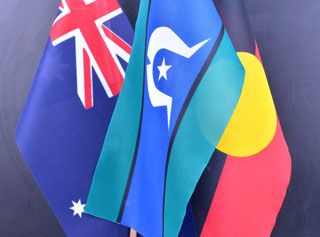
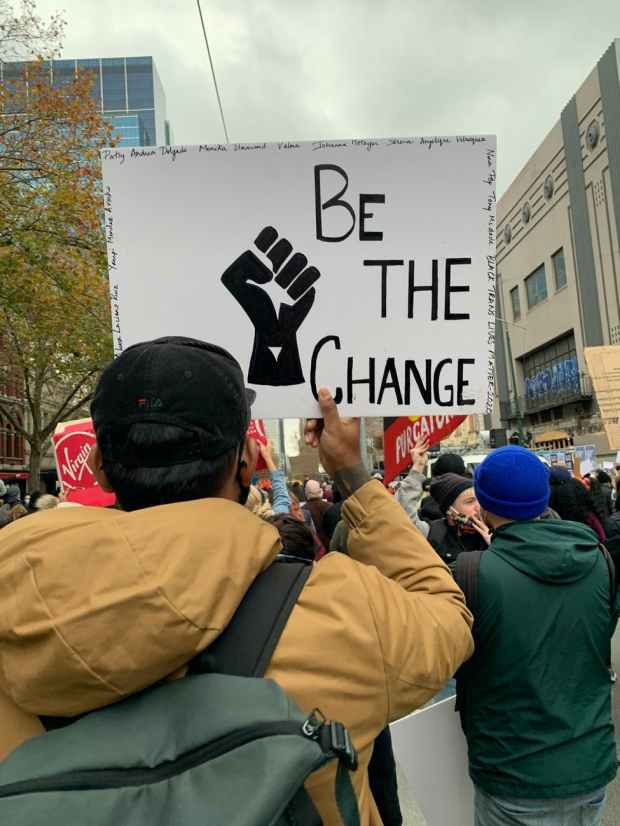
Australia is a country of polarity and diversity which purports a political ideology of all-inclusive multiculturalism. Yet at the core of the nation lays a foundation of institutional systems built on implicit and explicit conditioning which have their roots in the social construct of ethnocentric racism. The racialisation and othering of those who are not white has emanated from Australian Governments and through media commentary into every aspect of life for Aboriginal and Torres Strait Islander peoples since colonisation. Creating disadvantage, ill-health, intergenerational trauma and a lack of social equity for Indigenous Australians. An example of this racialisation and othering occurred during the public debate surrounding Adam Goodes stance against racism. A situation which could have been better understood and avoided if viewed through the lens of white habitus, cultural responsiveness and anti-racist practice.  

Historically, the Social Work profession is not exempt from creating catastrophic racist damage for Indigenous Australians. Issuing an apology to Indigenous Australians in 2004 for the profession’s role in creating inter-generational trauma, it was 2010 before the profession’s Code of Ethics was re-worded to include the ethical principles of social justice, human rights, respect for diversity, and provision of culturally competent, safe and sensitive practice which encompasses a commitment to valuing Indigenous Australians’ knowledge, experience, skills and relationships (International Federation of Social Workers 2018; Australian Association of Social Workers 2010; Green Bennett & Betteridge 2016). The Social Work profession, therefore, have a critical role to play in assisting with the de-colonisation of institutionalised racism.  

Since invasion by the British in 1788 ethnocentric implicit and explicit racism, originally based on social Darwinism, has permeated life for Aboriginal and Torres Strait Islander peoples. Racist behaviours have been foundational to the nation’s identity (Sherwood, Osmond & Phillips 2020). Aboriginals were seen by British colonisers to be a dying primitive race who were inferior to the British in culture, biology and morality (Hollinsworth 2006; Sherwood, Osmond & Phillips 2020; Bennett & Green 2019). Racist conditioning occurred by way of social Darwinism being taught to ‘successive generations of non-indigenous (and indeed indigenous) Australians’ resulting in institutionalised racism becoming both explicit and implicit within the Australian psyche (Hollinsworth 2006, pp. 83-84). This type of conditioning and its’ ongoing perpetuation can be understood and also eradicated when viewed from the concepts of Bourdieus’ habitus theory and also Whiteness theory, which when combined create the theory of White habitus (Walter, Taylor & Habibis 2011). Habitus, as seen by Bourdieu involved how people were socially conditioned via habits, dispositions and skills which determine their understanding of a situation and how they respond to it based on the cultural norms they have been exposed to (Emirbayer & Williams 2005; Walter, Taylor & Habibis 2011).

Whiteness theory focusses on and calls for the critical reflection of how white people do not normally see themselves as a race which holds power and dominance over other races (Walter, Taylor & Habibis 2011; Vanidestine & Aparicio 2019). When utilising White habitus, focus is moved away from othering and brought back to self, whilst also revealing how power relations and discourses are racially formed (Walter, Taylor & Habibis 2011; Young 2008). Explicit racism utilised by various Australian governments to maintain white ‘racial homogeneity’, originally involved extensive discursive efforts and repressive legislation to eradicate the country of the existing Aboriginals and their cultures (Sherwood, Osmond & Phillips 2020, p.98; Bennett & Green 2019). For example, in Queensland, legislation was implemented in 1897 via the Aboriginals Protection and Restriction of the Sale of Opium Act which served to codify beliefs that Aboriginals were a dying race, whilst asserting Australia as a white space in which Aboriginals did not belong (Sherwood, Osmond & Phillips 2020). Legislation such as this Act governed every aspect of Aboriginal life; their health, education, employment, housing, the justice system and welfare (Hollinsworth 2006; Briskman 2014; Bennett & Green 2019).

Australia’s institutionalised racism still exists, as was apparent in 2007 when the Howard Government implemented the Northern Territory Intervention, contravening international law in the process (Springer 2007). The Australian Bureau of Statistics (2016) states 2.8 per cent of the Australian population identify as Aboriginal or Torres Strait Islanders and in 2015 to 2016, according to the Australian Human Rights Commission (2017), 54 per cent of the complaints received concerning racism under The Racial Discrimination Act were received by Indigenous Australians. Racist practices, policies and media discourses have had and continue to have a major detrimental impact on Indigenous Australians’ health and wellbeing (Hollinsworth 2006; Briskman 2014). As the 2020 Closing the Gap Report indicates, current life expectancy for Aboriginal Australians involves the intersectionality of social determinants in which they are disadvantaged such as income, housing, education and employment, all of which are ‘estimated to be responsible for at least 34 per cent of the health gap between Indigenous and non-Indigenous Australians’ (Briskman 2014; Australian Government 2020 n.p.).

Statistics released in 2018 indicated the mortality rate for Indigenous Australians is approximately 1.7 times greater than for non-Indigenous Australians and the initiatives implemented by the Federal Government to close the mortality gap between the two groups is not on target to reach its’ objectives by 2031 (Australian Government 2020). Disadvantage created by institutionalised racism since colonisation concerning Aboriginal and Torres Strait Islanders is apparent in every area of Australian life and is often exacerbated by changing political policies and media discourses.

The Australian conservative media still perpetuate racist thinking, which would not exist if cultural responsiveness, white habitus and anti-racist practice was occurring across the board. The media provoked controversial public debate, involving the proud, highly accomplished Indigenous Australian Football League (AFL) player; Adnyamathanha man, Australian of the Year in 2014, Adam Goodes, divided the nation when between 2013 and 2015 he publicly stood against racism and freely expressed his indigeneity. Several examples of institutionalised racism from non-Indigenous media commentators Adam Bolt, Sam Newman and Alan Jones occurred, and as Waleed Aly pointed out facts were altered to support their racist views (Begone Abbott 2015; The Weekly 2015; Whoknowsuknow 2015). Various media outlets touted Goodes as a ‘sook’, ‘whinger’, ‘cry baby’ and it was stated he was ‘playing the race card’ (Guatum 2019, p. 17). When, in the AFL Indigenous Round, which recognises and celebrates Indigenous culture, Goodes performed a celebratory war cry dance, the situation escalated to the extreme where every time he played football he was loudly booed by the crowd in what de Souza (2018, p. 460) described as a ‘sonic barometer that measures who is accepted and who is rejected.’ Acting within a model of cultural responsiveness requires critical self-reflection, recognition of the impact social structures have on individuals, asks questions, allows for critical examination of the structures which create oppression and permits the challenging of those structure (Green, Bennett & Batteridge 2016).

A culturally responsive approach therefore would have de-escalated the situation by commentators asking questions in order to perceive the situation from Goodes perspective, whilst critically reflecting on their own behaviour, thereby showing respect and affirming the multicultural diversity which exists in Australia. Instead, inflammatory, derogatory, racist and ignorant statements were made which impacted on Goodes’ health (BBC HARDtalk 2020). A culturally safe response would have also encompassed being aware not only of Aboriginal history but of Goodes’ personal history because when he was racially vilified by a young girl and then subjected to the persistent media coverage and booing from crowds it all not only shocked him but triggered racist traumatic memories of childhood experiences (Green, Bennett & Betteridge 2016; BBC HARDtalk 2020). Whilst Eddie MacGuire, in his role as media commentator and Collingwood Football Club president, initially supported Goodes, both MacGuire and former Victorian Premier, Jeff Kennett publicly criticised Goodes’s dance as being deliberately provocative and defended the crowd’s booing as being an acceptable response (de Souza 2018). The persistent booing and various criticisms which surrounded Goodes created a toxic workplace which pushed Goodes into a deep depression, resulting in him walking away from the sport he loved in 2015, for the sake of his mental health (BBC HARDtalk 2020).

In 2016 Australians spoke 300 languages and whilst the country purports to embrace multiculturalism, ongoing debate has occurred for decades amongst the media, politicians and academics concerning the concept and implementation of a multicultural society (Australian Bureau of Statistices 2016; Koleth 2010). Fear-based conservatives like John Howard and Pauline Hansen have been concerned that a true multi-cultural Australia will undermine the existing social structures and they have wanted to continue ‘preserving constructions of Australian nationhood and culture’ (Koleth 2010, n.p.). Yet, science has proven race is not a biological fact, but a social construct designed to have power over others who are different to the white majority (California Newsreel 2003), which is why anti-racist practice is useful in relation to dismantling institutional racism. Stemming from Critical Race Theory there is agreement that racism is a widespread oppressive social construct (Ladhani & Sitter 2020; Constance-Huggins 2019).

Anti-racist practice respects individual agency, whilst challenging and resisting injustices as it involves a commitment to creating ongoing equal opportunities for all that aligns with ‘equity of outcome’ (Berman & Paradies 2009, p.218). Given the multitude of culturally diverse individuals existing in Australia today, Australian society, as an evolving entity, needs to move beyond colonial based institutionalised racism due to the damage it has and continues to create.  By utilising white habitus, cultural responsiveness and anti-racism to eliminate the racialisation of people and the othering that white Australians in powerful public positions currently use, all Australians can move into a future which is more dignified, respectful and equitable. As Social Work now holds the previously mentioned principles, values and ethics at its’ core, all Social Workers have a duty, responsibility and obligation to assist in educating, challenging and changing institutionalised racism in this country because whilst multiculturalism is something Australians claim to embody, statistically and historically speaking multiculturalism and embracing cultural diversity, is a concept, not a reality.

Copyright C. O’Connor, November 2021.

References

Australian Association of Social Workers, 2010, Code of Ethics, viewed 4 November 2020, https://www.aasw.asn.au/document/item/1201

Australian Bureau of Statistics 2016, Cultural Diversity in Australia:2016 Census Data Summary: What is Cultural Diversity?, viewed 4 November 2020, https://www.abs.gov.au/ausstats/abs@.nsf/Lookup/by%20Subject/2071.0~2016~Main%20Features~Cultural%20Diversity%20Data%20Summary~30#:~:text=WHAT%20IS%20CULTURAL%20DIVERSITY%3F,descent%2C%20and%20their%20religious%20affiliation.

Australian Government 2020, Closing The Gap Report, viewed 31 October 2020 https://ctgreport.niaa.gov.au/

Australian Human Rights Commission, 2017, Fact sheet: Racism, It stops with me: Community services announcements 2017, viewed 4 November 2020, https://humanrights.gov.au/our-work/race-discrimination/publications/fact-sheet- racism-it-stops-me-community-service

BBC HARDtalk 2020, Adam Goodes, Former Australian rules footballer – BBC HARDtalk, viewed 4 November 2020, https://www.youtube.com/watch?v=q9M6IiAvl4U

Begone Abbott 2015, Racist Liars Rewriting History to Boo Adam Goodes, viewed 3 November 2020, https://www.youtube.com/watch?v=Vo9S2k1RaxM

Bennett, B & Green, S 2019, Our voices: Aboriginal social work, Second edition., Red Globe Press, London.

Berman, G & Paradies, Y 2010, ‘Racism, disadvantage and multiculturalism: towards effective anti-racist praxis’, Ethnic and Racial Studies, vol. 33, no. 2, pp. 214–232, doi: 10.1080/01419870802302272.

Briskman, L 2014, Social work with indigenous communities: a human rights approach, 2nd ed., The Federation Press, Annandale, NSW. 

California Newsreel 2003, Episode One – The Difference Between Us; Video 1 of playlist “Race – The Power of an Illusion”, viewed 4 November 2020, https://usc.kanopy.com/video/race-power-illusion-0

Constance-Huggins, M 2019, ‘Critical Race Theory in Social Work Education’, Critical Social Work, vol. 13, no. 2, doi:10.22329/csw.v13i2.5861.

de Souza, P 2018, ‘What does racial (in)justice sound like? On listening, acoustic violence and the booing of Adam Goodes’, Continuum (Mount Lawley, W.A.), vol. 32, no. 4, pp. 459–473, doi: 10.1080/10304312.2018.1488524.

Emirbayer, M & Williams, E 2005, ‘Bourdieu and Social Work’ Social Service Review, vol. 79, no. 4, pp. 689–724, doi:10.1086/491604. 

Gautam, A 2019, ‘The monstrous other: Adam Goodes and the colonial legacy of “terra nullius”’ Social Alternatives, vol. 38, no. 4, pp. 16–20. ISSN: 0155-0306

Green, S, Bennett B & Betteridge S 2016, ‘Cultural Responsiveness and Social Work – a Discussion’ Social Alternatives, vol. 35, no. 4, pp. 66–72, viewed 4 November 2020, http://search.proquest.com/docview/1918326828/.

Hollinsworth, D 2006, ‘Race and Racism in Australia’, 3rd ed., Thomson Social Science Press, South Melbourne. 

International Federation of Social Workers 2018, ‘Global Social Work Statement of Ethical Principles’, viewed 31 October 2020, https://www.ifsw.org/global-social-work-statement-of-ethical-principles/

Koleth, E 2010, ‘Multiculturalism: a review of Australian policy statement and recent debates in Australia and overseas’, Parliament of Australia 2010, Research Paper no. 6 2010-2011, viewed 4 November 2020, https://www.aph.gov.au/About_Parliament/Parliamentary_Departments/Parliamentary_Library/pubs/rp/rp1011/11rp06

Ladhani S & Sitter K 2020, ‘The Revival of Anti-Racism’, Critical Social Work, vol. 21, no. 1, pp. 55-65, doi:10.22329/csw.v21i1.6227.

Shepherd, M 2020, ‘Adam Goodes’, Encyclopaedia Britannica, viewed 4 November 2020, https://www.britannica.com/biography/Adam-Goodes

Sherwood, C, Osmond, G & Phillips M 2020, ‘Aboriginality, Racial Discourse and Football Media in 20th-century Queensland’, Journal of Australian Studies, vol. 44, no. 1, pp. 97–113, doi: 10.1080/14443058.2019.1668821.

Springer, R 2007, ‘A Nightmare of the Neocolonial Kind: Politics of Suffering in Howards’ Northern Territory Intervention, Borderlands e-journal, vol. 6, no. 2, Nuclear Territory News, viewed 4 November 2020, http://www.borderlands.net.au/vol6no2_2007/stringer_intervention.htm

The Weekly 2015, ‘Adam Goodes Controversy’, viewed 4 November 2020, https://www.youtube.com/watch?v=vydY1UmWzAM

Vanidestine, T & Aparicio, E 2019, ‘How Social Welfare and Health Professionals Understand “Race,” Racism, and Whiteness: A Social Justice Approach to Grounded Theory’ Social Work in Public Health, vol. 34, no. 5, pp. 430–443, doi:10.1080/19371918.2019.1616645.

Walter, M, Taylor, S, & Habibis, D 2011, ‘How White is Social Work in Australia?’ Australian Social Work: On Australian Indigenous Social Work and Social Policy Part 1, vol. 64, no. 1, pp. 6–19, doi:10.1080/0312407X.2010.510892.

Whoknowsuknow 2015, ‘Sam Newman on Adam Goodes acting like a jerk’, viewed 4 November 2020, https://www.youtube.com/watch?v=J2g1ow2j_E0

Young S 2008, ‘Indigenous Child Protection Policy in Australia: Using Whiteness Theory for Social Work’, Sites: New Series, vol 5, no 1, viewed 4 November https://doi.org/10.11157/sites-vol5iss1id82 

Acknowledgement to Country

Ancient Land, Timeless Land,

Where once stood boulders,

Now grains of sand.

A Land of Myth, Legend and Story,

Of Ancient Peoples, who have been treated poorly.

A land within which, for those who can see,

The Spirits of Ancestors, all around us they be.

In rock, in branch, in mountain or tree,

Still part of this landscape they all be.

A Land once managed with love and care,

Now calls out to us in despair,

As fires unleash their raging passion

To cleanse this land of ignorance, arrogance and lack of compassion.

Like a Phoenix from the ashes rising,

It’s really not very surprising

New growth then comes with the rains,

And growth is never without its’ pains.

As healing begins, the land is washed clean,

And once again the landscape’s vibrant green.

A far cry, from the barren, brown, stagnant and dry.

The winds of change are blowing strong

And I often wonder just how long

It will take for all of Humanity to see

Not separate from nature and each other we be.

Copyright C. O’Connor, March 2020.

Coming into One’s Own Power

Last week I shared some of the wisdom to be garnered from Dreams if we have obtained the knowledge and skills to use their guidance.  This week the story continues by illustrating just how powerful dreams can be in relation to uncovering the depth of a situation, assisting us to shed and heal conditioned patterns of behaviour we can repeatedly subconsciously attract to us, whilst also transforming our reactive behaviours into responses.

In Dreaming, a male I have known for over a decade approaches me, he has a blonde woman with him. I know they are here to tell me they are wanting to be together, and then he says so.  He appears intoxicated as a consequence of either alcohol or perhaps some type of drugs. It is obvious he is not thinking or acting clearly in his normally lucid non-reactive, kind and empathetic manner.  His aggressiveness in this situation creates a huge argument between us, the first ever, and to end it as I have no time or energy for arguing with anyone, I tell him that’s fine, off you go then, but don’t say I haven’t warned you about the woman you are choosing to involve yourself with. 

Then the woman in the dream is suddenly holding both my wrists and will not let go.  I feel infuriation at this violation and bondage.  I start screaming at her, using expletives, to let go of my wrists.  I struggle with her and eventually break free.  Her grip had been tight and left its’ mark.  Having freed myself, I am right in her face, screaming at her that if she EVER does that to me again, I will knock her out cold and kick her arse to the kerb.  I can’t recall feeling so enraged and explosive, in a very long time.

The scene shifts and I am now in “Observer Mode”.  My awareness is looking at the scene of the three of us. Paths appear, one to my left and one to my right.  The left leads towards a dark, murky, icky feeling place and the right to a space of brightness, vibrancy, colour, peace and love.  My friend and this woman take the left path together and as I am deciding which path I will take, the lines from Stairway to Heaven,

“Yes, there are two paths you can go by
But in the long run
There’s still time to change the road you’re on”

come to mind.

I do not follow my friend and this woman, for I choose, at that moment, to take the right path and see myself walking away in that direction.

For me left is symbolic of past, of what is needing to be left behind, is coming from the past or what type of behaviour is needing to be let go of if a symbolic aspect of Self moves in that direction.  Right is future and forward movement because all that yet awaits us is there on our “right” path.

Emerging from this experience, I felt clarity and peace regarding the action I now knew I needed to take, which I previously hadn’t been experiencing. A parting of the ways was coming between this friend and me and it was up to me to cut the ties after a month of retreating and putting together the puzzle pieces.  For the sake of both our continued growth and learning and perhaps even healing purposes, there was nothing more of value, for now, we could bring into each other’s lives. I knew whatever now awaited both of us, I would need some alone time and ultimately, we would both need different people in our lives to accomplish it with.  If subconsciously, or perhaps consciously, the obnoxious manner in which I felt I had been treated, was being done deliberately to push me away it was working effectively but it really was not necessary. An honest conversation would have been much more preferable but that is how he appeared to be choosing to deal with it. 

The dream’s messages and what this waking reality was showing me revealed that once again I was dealing with masculine energy I had been attracting since childhood. It was exactly the same energy as my two main male role models had been, unavailable in one form or another and/or abusive and disrespectful.  The woman symbolised the part of me who had been holding me back, keeping me feeling loyal to my friend and hopeful of the various things we had discussed we would like to do together, which never came to pass. Synchronicity began coming into play also with numbers and other symbols/signs that were coming my way.  The final confirmation arrived when I heard the song “Time to move on”, by Tom Petty, for the first time. 

The path before me was clear as were the underlying reasons for my friend’s behaviour.  The gift they were freely giving me was that I was in yet another, and I highly suspect and hope the last, process of freeing myself from this unfulfilling energy that I had always given my all to where others were concerned and in return I would be ultimately shocked by their behaviour, brought down, abused and held back.  

Events then occurred which showed me clearly those who try to fool me, only truly fool themselves as all I had intuitively known, came to pass.  I cannot say the process was painless, even though I acted swiftly, not dissimilar to the Queen of Swords energy in the Tarot, once I knew the time was right to state my intention to walk away and leave the pair of them to it.  So whilst my friend was busy reactively blowing up long-standing bridges to smithereens with myself and my family, thanks to my inner guidance and wisdom, I was able to fully grieve the loss of this longstanding friendship and walk away calmly, with peace and acceptance, grace, integrity and gratitude, taking many beautiful and funny memories with me. 

The only permanent aspect of life is impermanence and when I know intuitively, something is going on that just doesn’t make any logical sense I take extra notice of what my dreams are telling me. If I need to make a change in my life, regardless of how painful I know it will be for me, I will do so because if I don’t, I am just putting off the inevitable.  It’s a futile exercise and a total waste of what precious little time I have left of my life, as it just creates more pain and suffering for myself and others, the longer I put it off.  If I delay for too long, life situations will arise that historically have made the situation even worse, created very unpleasant memories, some of which have been traumatic and are akin to a Universal kick up the backside or clip around the ear, in order to keep me moving, changing, growing, learning and evolving.

The past six months or so have been ones of great change where my intrinsic values and boundaries of how I want to be treated by others have become a lot clearer and firmer. Many folk have fallen by the wayside as a result and the dynamics in some other relationships has also altered for the better.  To those who did fall by the wayside I wish you all well and am grateful for all the known and unknown love and support you have gifted me with, in my journey towards stepping back into my own power more fully after three decades, so far, of healing from the abusive and dishonest and unkind behaviour, I had been attracting most of my life, until recently, in one form or another.  Inner growth: It never stops.

© Cheryl O’Connor, February 2020.

Race and Racism in Australia.

Race as a social construct came into being alongside capitalism.  When European colonists arrived in Australian with their ethnocentric ideology, racist foundations became the building blocks upon which inequity and institutions were built. As a result, the trauma and inequality created for Aboriginal and Torres Strait Islanders by colonialism has, and continues to, impact detrimentally on their health and well-being despite Governments expending large sums of money on programs and services to close the gap between Indigenous and non-Indigenous outcomes in relation to health. The colonialist mentality of racism in Australia towards Aboriginal and Torres Strait Islander people is maintained by three main forms of racism; institutionalised, interpersonal and internalised. Institutionalised racism, particularly within the health system, is creating a plethora of inequity issues which are resulting in high mortality rates amongst Aboriginal and Torres Strait Islander communities.

The publication of The Origin of Species, written by biologist and philosopher Charles Darwin in 1859, led to eugenics, phrenology, ethnocentricity and Social Darwinism, and subsequently race and racism began.  Darwin’s theory of evolution and natural selection proposed that differences between human beings, such as skin colour, equated to different races of human beings existing and therefore those who did not have the same attributes as Europeans were classified as being of a different species, or race (Hollinsworth 2006, p.32). His theory added scientific credence to, and fueled the fire of, the political, social and medical discourses being espoused by Herbert Spencer, an English sociologist, biologist and prominent liberal political theorist (Hollinsworth 2006, p.32). Darwin’s theory led to Social Darwinism being established within European society (Hollinsworth 2006, p.32). Race and racism was therefore founded on the politics of eugenics and the medical and political discourses which spread globally during the end of the nineteenth century and into the twentieth century (Bastos, Harnois & Paradies 2016, p.209). Eugenics is the science of controlling breeding within populations so there is an increasing manifestation of the required genetic characteristics (Galton 1904, p.1). Indigenous Australians were seen by European colonists to be situated at the very bottom of a hierarchical ladder which Europeans existed at the summit of (Germov & Poole 2007, p. 284). This mentality was known as ethnocentricity which is when a belief exists that your own culture or ethnic group is superior to another (Bizumic & Duckitt 2012, p.887). It was also seen by Europeans that Indigenous people were inferior biologically due to the pseudo-scientific theory of phrenology which equated skull size and shape as being able to determine a person’s character (Germov & Poole 2007, p. 284).  With eugenics, phrenology and ethnocentricity firmly implanted in the minds of the colonists who invaded Australia, it takes little sociological imagination to understand why European colonists behaved as they did towards Aboriginal and Torres Strait Islander people.

When the invasion of Australia by the British occurred in 1770 they brought with them fixed mindsets of capitalism and Social Darwinism and the colonisation of Australia began. Colonialism relates to a system being implemented whereby an individual or group of individuals seek to dominate others (Horvath 1972, p.46). Sociological theorist Pierre Bourdieu referred to colonialism as a forceful system of oppression based on racist beliefs which seeks to reorganise social kinships and at the same time establish a crossbred society (Go 2013, p. 49).Colonialism is also a powerful and aggressive action taken by people to possess land and exploit it, along with the Indigenous people who occupy that land, with no regard to the original inhabitants, their culture or their existing laws (Horvath 1972, p. 46). Karl Marx believed this type of domination occurs out of an economic basis and is a symptom of capitalism (Horvath 1972, p.46). Horvath states colonisation creates and perpetuates social injustice (Horvath 1972, p.46). Colonists were of the fear-based view that Aboriginal and Torres Strait Islander people were savages who were dangerous, yet childlike (Hollinsworth 2006, p.33).As such, great measures to establish and maintain superior paternalistic power and control over Indigenous Australians began because of unconsciously based scientific racist beliefs (Hollinsworth 2006, p. 34). This fear-based power and control continued to have a stronghold in Australia into the later part of last century (Hollinsworth 2006, p. 34). Because of Darwin’s theory of natural selection, Indigenous Australians were seen to be a separate race of people who colonists believed were destined to die out anyway (Hollinsworth 2006, p. 35).It was often the situation that anyone who protested the horrendous treatment Indigenous people received whilst colonisation was occurring, were met with rebuttal (Hollinsworth 2006, p. 35).It was also seen to be worthy of celebration by colonists, not lamentation, that the extinction of an inferior race was occurring, with their help (Hollinsworth 2006, p. 35).  The attempted assimilation which occurred of trying to change the genetics of Indigenous Australians was a direct result of eugenics. It was these underlying beliefs colonisers held which established Australia’s institutions and created the systemic racism which still exists within those institutions today.

Institutionalised racism lays at the core of all of Australia’s systems and is closely linked with capitalism. Race and racism in Australia can be understood as being maintained institutionally when looked at through the sociological lens of Foucault’s theory that governmental control occurs via the power maintained in institutional systems, which then becomes internalised normality within society (Germov & Poole 2007, p. 287).From a Marxists perspective Governments would not want to change the existing institutionalised racism because to do so would alter the balance of power which would no longer serve the interests of capitalism (Germov & Poole 2007, p. 287).  Racism is defined as a discriminatory dispersal of chances, assistance or capital implemented by the dominant culture over minority groups of different race or ethnicity (Paradies, 2018, 0.42 – 1.44). Institutionalised racism has been defined as having its basis in historical social scenarios which continues due to frameworks that preserve prior discriminations (Jones 2001, p.1212). Institutionalised racism is often seen to be legalised and lays within the policies and practices of institutions, whilst also being apparent when procrastination occurs, instead of action, in relation to needs not being met (Jones 2001, p.1212). Evidence shows that racism, whilst not a set target in the Close the Gap Report 2008 (Parliament of Australia undated, p. n/a), has been recognised by the Federal Government in the Close the Gap Report Review 2018 (Australian Human Rights Commission 2018, p.3) and in the National Aboriginal and Torres Strait Islander Health Plan 2013-2023 (Australian Government Department of Health 2013, p.8). Due to institutionalised racism, which has become the societal norm, many Australians do not see their unconsciously conditioned biases perpetuate not only the racism the country’s systems were built on, but also that they serve to maintain the inequality between Indigenous and non-Indigenous Australians which began over two hundred years ago.

Interpersonal racism, along with institutionalised racism and deficit discourses within politics and the media are having an adverse effect on the mental and physical health of Indigenous Australians. Interpersonal racism can be conscious or unconscious and appears in society by way of stereotyping, lack of service, ignoring, lack of respect and devaluation (Jones 2001, p.1213).Institutionalised racism, combined with interpersonal racism lead to internalised racism, which involves taking on the limiting beliefs about oneself which have been projected by the dominant culture onto the minority group (Jones 2001, p. 1213).Internalised racism can also lead to a lack of self-worth, lack of belief in peers and in one’s self (Jones 2001, p. 1213).  The general dominant political and media discourse in Australia is increasing the inequality many minority groups encounter from the dominant culture (Hollinsworth 2006, p. 246). Since 1996, when the Howard Government came into power, there has been a steadily growing manufactured erosion of social justice and equal rights occurring in Australia via an official discourse being implemented through laws based on fear and envy (Hollinsworth 2006, p 246). This stance will only lead to increasing inequality, endangering existing social structures and possibly result in an increase in violence occurring (Hollinsworth 2006, p. 246). Combined with these deficit discourses created by non-indigenous media and politicians in Australia towards Indigenous Australians, racism has been found to be detrimental to Aboriginal and Torres Strait Islanders health as they all impact adversely psychologically, emotionally and in relation to their overall social wellbeing.

Perceptions of race and racism within Australian have been shown, through a variety of micro and macro level methods, to reveal health care barriers exist for Indigenous Australians which do not exist for non-Indigenous Australians. Systemic racism not only has detrimental outcomes such as depression, suicide, anxiety and post-traumatic stress disorder for Indigenous Australians, but it also creates significant economic impacts on society (Paradies 2016, p.1). In 2016 it was estimated that racial discrimination cost the Australian economy approximately 37.9 billion dollars per annum (Paradies 2016, p.1). A study conducted during 2012 and 2013 revealed thirty percent of Aboriginal and Torres Strait Islander people suffer from extreme psychological and emotional occurrences of depression or anxiety (Australian Institute of Health and Welfare 2015, p. 71). This figure is extraordinarily high when one considers that Indigenous Australians make up only three percent of the national population (Bastos, Harnois & Paradies 2016, p.211). Further, it was revealed in 2012 that Indigenous Australians experience higher rates of suicide than non-Indigenous Australians with deaths being predominantly higher for males between the ages of twenty-five and twenty-nine (Australian Bureau of Statistics 2012, p. n/a). The statistics of deaths based on a scale of one hundred thousand per population for this age group show that non-Indigenous male deaths by suicide peak at twenty percent and Indigenous males peak at ninety percent (Australian Bureau of Statistics 2012, p. n/a). In 2014 a General Social Survey was conducted to determine the degree racial discrimination intersects with other areas of discrimination such as, gender, sexuality, class and age within Australia, in creating access barriers to health care (Bastos, Harnois & Paradies 2016, p.209). The results concluded perceived racism was a major factor creating a barrier in accessing health care, particularly mental health (Bastos, Harnois & Paradies 2016, p.216). There is ample available research which indicates that the social construct of race is responsible for the ongoing high mortality rates occurring within Aboriginal and Torres Strait Islander communities. Racism in its various forms is not only creating barriers to accessing health care but creating ongoing psychological and emotional distress for a large percentage of Indigenous Australians.

According to sociologists, Australia has moved into a time of post-modernity and post-colonialism, but the evidence clearly shows the social construct of race and the racism which stems from it continues to be maintained by way of institutionalised racism. Post-colonialism came into being late in the twentieth century (Eagleton 2011, p. 222).It is defined as a time when physical violence is no longer being perpetrated to take land (Hollinsworth 2006, p.246). This may be the situation; however, it appears that a new form of racism has taken the place of the past brutal dispossession, assimilation and genocide. Known as new racism, this form revolves around the structure and appearance of racism in relation to pecuniary and socio-traditional variances which exist between the overriding and minority cultures within a country (Germov & Poole 2007, p. 287).Post-colonialism studies look at the relationships between oppressors and oppressed existing in countries that have been colonised (Germov & Poole 2007, p. 287).Indigenous identity, which post-colonialism also concerns itself with, has been revealed via various institutional policies to have been manipulated to implement and validate dominant policies (Germov & Poole 2007, p. 288).Colonialism was rooted in racism and whilst many perceive both exist historically and are no longer apparent, both still exist within capitalism as the Western thinking of those in power continues to be based on the taking of other people’s land who are not in positions to stop them (Jureidini & Poole 2003, p.246). It is in the continuation of institutionalised racism and subsequent racist policies and practices, by those in power within the Westernised political system, that inequity continues to grow and create an ever-widening gap between capitalist politicians and those who they deem to be inferior.

Race and racism are social constructs designed by the political upper class in Europe in the late 1800s based on ethnocentricity. Institutionalised racism has created discrimination, exploitation, distress and inter-generational trauma which is still impacting on Aboriginal and Torres Strait Islander people. Whilst State and Federal Governments have spent voluminous sums of money on programs and services to bring about more equality between non-Indigenous and Indigenous Australians in relation to health, they have failed. Up until 2013 they did not recognise that systemic racism within Australian institutions is responsible for the lack of equity, agency, health issues, self-governance and self-determination Aboriginal and Torres Strait Islanders have been and still are experiencing.

Copyright: C. O’Connor, November 2018.

Reference List

Australian Bureau of Statistics 2012, Aboriginal and Torres Strait Islander suicide deaths overview, viewed 21 October 2018, http://www.abs.gov.au/ausstats/abs@.nsf/Products/40080452773CE5D5CA257A4500045E5F?opendocument

Australian Government Department of Health 2013, National Aboriginal and Torres Strait Islander Health Plan 2013-2023, p. 8, viewed 18 October 2018 http://www.health.gov.au/natsihp

Australian Human Rights Commission 2018, A ten-year review: The Closing the Gap Strategy and Recommendations for Reset: Close the Gap 2018 – Human Rights, p. 3 viewed 16 October 2018 https://www.humanrights.gov.au/sites/default/files/document/publication/CTG%202018_FINAL-WEB.pdf

Australian Institute of Health and Welfare 2015, The health and welfare of Australia’s Aboriginal and Torres Strait Islander people’s, viewed 22 October 2018, https://www.aihw.gov.au/getmedia/584073f7-041e-4818-9419-39f5a060b1aa/18175.pdf.aspx?inline=true\

Bastos, J, Harnois, C & Paradies, Y 2018, ‘Health care barriers, racism, and intersectionality in Australia’, Social Science & Medicine, vol. 199, pp. 209 – 218. doi: 10.1016/j.socscimed.2017.05.010

Bizumic, B & Duckitt, J 2012, ‘What Is and Is Not Ethnocentrism? A Conceptual Analysis and Political Implications’, Political Psychology, vol. 33, no. 6, pp.887–909. doi:10.1111/j.1467-9221.2012.00907

Eagleton, T 2011, Why Marx was right, Yale University Press, New Haven.

Elias, A & Paradies, Y 2016, ‘Estimating the mental health costs of racial discrimination’ BMC Public Health, vol.16, no. 1(1), p.n/a, doi: 10.1186/s12889-016-3868-1

Galton, F 1904, ‘Eugenics: Its Definition, Scope, and Aims’, American Journal of Sociology, vol. 10, no. 1, pp.1–25. doi: 10.1086/211280

Germov, J & Poole, M 2007, Public sociology: an introduction to Australian society, Allen & Unwin, Crows Nest, N.S.W..

Go, J, 2013, ‘Decolonizing Bourdieu: Colonial and Postcolonial Theory in Pierre Bourdieu’s Early Work’, Sociological Theory, vol. 31, no. 1, pp.49–74. doi: 10.1177/0735275113477082.

Hollinsworth, D 2006, Race & racism in Australia 3rd ed., Thomson Social Science Press, South Melbourne.

Horvath, R 1972, ‘A Definition of Colonialism’, Current Anthropology, vol. 13, no. 1, pp.45–57. doi:10.1086/201248

Jones, C 2000, ‘Levels of racism: A theoretic framework and a gardener’s tale’, American Journal of Public Health, vol. 90, no. 8, pp.1212–1215. Doi:10.2105/AJPH.90.8.1212

Jureidini, R. & Poole, M 2003. Sociology: Australian connections, 3rd edn, Allen & Unwin, Crows Nest, N.S.W.

Paradies, Y 2013. ‘A Culturally Respectful and Non-Discriminatory Health System’, Viewed 26 August 2018, https://vimeo.com/11864669

Parliament of Australia, Social Policy, undated, viewed 20 October 2018, https://www.aph.gov.au/About_Parliament/Parliamentary_Departments/Parliamentary_Library/pubs/BriefingBook44p/ClosingGap

(more…)

RECONNECTING WITH OUR INNER CHILD

Within the confines of being told we have to “grow up,” we lose ever so much. Our conditioning is such that as children we begin to learn to fear the world and just about everything and everyone in it, hearing more often “don’t,” than “do.”

The inner child begins to shut down and off to a world that was once magical, full of adventure, imagination, play, fun, beauty, excitement and sheer delight. Just watch any child as they start to explore the world – all is new and exciting. The feel of grass underfoot, the raindrops dripping, the love of singing, dance, water play, mud, creativity and laughter just because they are happy and want to have fun.

When expressing anger or frustration they are often told don’t behave like that and are these days sent to the naughty corner. When parents fear they will fall from the tree they are climbing or fear whatever else they do, or tell them what they experience is not “real,” when they are taught to seek approval from others at such a young age, are told things about themselves and the world by adults they fully believe because the adults said so, are yelled at, hit, abused and so it goes on, all that joy, excitement and sheer delight with just the pure magic of being alive seems to disappear. Lost and seemingly gone forever as life becomes nothing more than a “job” full of adult responsibilities, concerns, worries, anxiety, conformity and fear which then leads to illness, addiction, depression, reckless behaviour, more abuse and sadly in some situations the taking of one’s own life.

I was once told as a child, only children can enter “The Kingdom of Heaven.” This terrified me at that time because I figured once I became an adult – straight to “Hell” I would go, forever. In many ways, we do go to Hell though because due to the adult behaviour around us and the beliefs and projections which shape us we lose conscious awareness of all that is childlike.  Yet we are also told we need to be childlike to enter the Kingdom of Heaven.

The ability to make friends easily, to trust, to have fun unless we are drunk, stoned or participating in other activities that bring momentary pleasure from outside ourselves all goes. If we were feeling joyous and broke out in song on the morning train commute, for example, we would be given strange looks like something was “wrong” with us. So we conform, we play the game the adults around us play and we do indeed lose a huge part of ourselves along the way.  Many become miserable and bitter, negative, resentful, spiteful, manipulative, greedy, needy, liars and haters who try to desperately control others around them. Each day becomes a chore to drag oneself through and many literally start looking like robotic walking dead.

For myself I had to “grow up” very quickly, leaving home at only 14, and life for me became a matter of survival for many decades. Survive I did, ever so much, but it was just that – surviving, not thriving.

We speak of “The Journey Home” and how we are all on the same journey back to conscious awareness of all we once knew before it was shut down because of fear and conformity.  For myself, it took decades of Self work and inner child work to reach where I am at within myself now, which feels like “home” to me

Some of the tools I used along the way which can help are:

  • Pay attention to what your dreams and daily synchronicity are telling you.   If you don’t know – learn.
  • Spend time alone in nature.
  • Use your dominant writing hand to ask your inner child a question, swap hands and wait for the answer to be written.  Go with the very first thing that comes, do NOT think oooh that’s just nonsense.
  • Do not doubt what others told you was “just your imagination” – whatever you experience is real for you because it is YOUR experience.
  • Try to remember things you used to LOVE to do as a child and MAKE time to do them on a regular basis.
  • Run with your gut feelings about anything and everything – don’t pay attention to your logical doubts and fears which have been instilled in you by others.
  • Pay attention to any memories or feelings that come – especially those which create an emotional reaction and ask yourself “Where is this TRULY coming from?”  Wait patiently for the answer to come to you.
  • Parent your own inner child.  Most of our inner children are scared, lost, angry, hurt and confused and often feel like they have been abandoned, which they have been. Mine was SO angry and hurt it took months of solid work for her to even feel safe enough again to just start dialoguing with me.
  • Don’t blame, hate or punish your parents for the damage done – they did the best they could with the awareness they had, they still are and at some stage we all have to actually accept responsibility for ourselves and start to parent our own inner child.

As a child, I wanted desperately to live “Somewhere over the Rainbow.” It was however quite literally a journey into,  through and out the other side of Hell to follow my own yellow brick road, but it was worth every single step to reach “home” and the “Kingdom of Heaven.” That isn’t some place in the sky as so many of us were told it was, but is within each of us and fully accessible to all of us by reconnecting with our own inner child.

Cheers, Cheryl.

© Cheryl O’Connor 2014.

•*´☾☆☽`*•

Get your free Dreamwork Booklet at bit.ly/CheocoNews when you sign up for my monthly Newsletter. Cheers, Cheryl.

#Cheryl O’Connor. #Cheoco
#Holistic #Counsellor, #Author & #Writer.

* #Cognitive & Body Based #Counselling.
* #Creative & #Artistic #Therapies.
* Specialising in #Dream #Analysis, #Conscious #Dreaming & #Shamanic #Journeying.
* #Reiki #Seichim #Treatments & #Attunements.
* #Isis #Meditation.

http://bit.ly/FBCheoco – Facebook.
http://bit.ly/CreationsbyCheoco – Etsy
http://bit.ly/CheocoNews – Newsletter Subscription.
http://bit.ly/pinterestcheryloconnor – Pinterest.
http://bit.ly/Googlepluscheryloconnor – Google Plus.
http://bit.ly/linkedincheryloconnor – LinkedIn.
http://bit.ly/wordpresscheryloconnor – WordPress.
http://bit.ly/cheocoenterprises – Website.

Twitter:  @cheoco99

Proud Member of The Wellness Universe www.TheWellnessUniverse.com
#WUVIP

Visit www.TheWellnessUniverse.com for people supporting

Emotional Wellness http://goo.gl/Z3EQcy
Environmental Wellness http://goo.gl/BO6qLP
Intellectual Wellness http://goo.gl/R1v1dc
Occupational Wellness http://goo.gl/QFF2xM
Physical Wellness http://goo.gl/aGfYU6
Social Wellness http://goo.gl/oYZALZ
Spiritual Wellness http://goo.gl/TyXSbQ

Join Us if you contribute to a Better World! http://goo.gl/PQyzFA

Are we truly busy?

“The most common thing I hear folk say these days when asked how they are is “Busy”.

Today’s technology was essentially designed to make things easier, give us all more “time” and yet it appears to me it has failed to do that.  If anything we all seem to be way busier than we were a couple of decades ago, with seemingly never-ending to-do lists, copious emails that flood our inboxes, umpteen “notifications” by way of social media, errands to run and so it goes on. This influx of things to be attended to is often overwhelming and creates stress, for we are now living in a time where we think we need to attend to ever so much immediately.
I’ve been pondering this standard comment we all seem to be giving these days of I’m busy or you are busy.  I have a huge variety of activities in my life simply because I do not do boring and mundane well at all and abhor being stuck in any sort of rut.  Variety is indeed my spice in life and to have any two days spent doing exactly the same thing is my worst case scenario.  Many interpret that as me being busy.
I spoke in my last article about living in NOW.  Such a hard thing for so many of us to achieve and yet, once you do get the hang of it, it is very easy.  As I looked back on all my years of being unconsciously busy, rushing here and there, achieving this and that, the stress that comes with always being busy and the many comments I hear of “busy” I had an epiphany of sorts.  When we are fully present in right here and now “busy” is totally eliminated.  How so?
Well, I saw that busyness lives in our heads and only occurs when we move out of now and think “a head” too far.  Often we become overwhelmed with how much we think we need to do or must do, which in fact, we are all choosing to do for no-one is making us do anything.  When we are so busy we miss the moment of now for always we are thinking I need to do this, then that, then that and on it goes, usually ticking things off either in our heads or lists as we go. Often not even fully focussed on whatever it is we are doing right now, due to thoughts of once this is done then the next thing needs to be done.
I also saw that much stress lies in the busyness of our minds and the things we choose to do that we perceive “make” us all so busy.  I saw that being in the moment of now with absolutely no thought of what is next until I got to what is next, does indeed and quite miraculously not create a feeling of being busy at all.   As I was pondering this whole busy aspect of life, another crossed my path who shared that we create busy to avoid being in now.  Synchronicity?  Well of course.
When we live in each moment of now, fully, we are just being and we are all essentially, beings, not doings. Many think we have to go and have a vacation and do absolutely nothing to avoid the stress of being busy, to wind down and “get away from it all”.
Personally I find life far more interesting, way less stress full and not at all busy, to just do the things I feel I want and need to do, when I want and need to do them. I also find that things don’t go “wrong”, I don’t hit brick walls nor do I experience any of the elements that once brought frustration, stress, major muck-ups, accidents or rushing around like a lunatic when I am just focussed on and fully present in NOW.   Another miraculous aspect of living in NOW – I have more “time”.
Try it, you may just be very surprised by what happens when you stop thinking “a head” and actually become one with the flow of life.
Cheers, C.

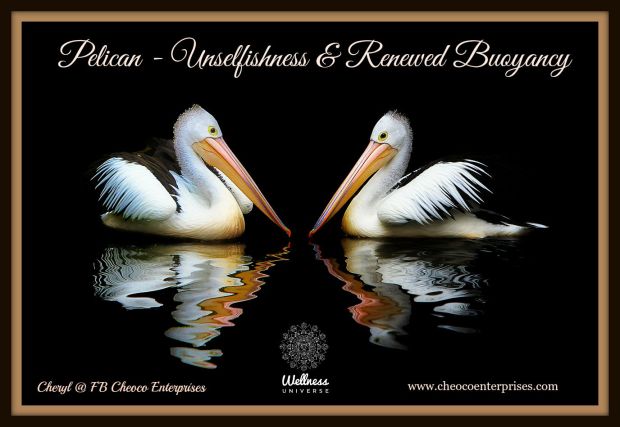
PELICAN – UNSELFISHNESS & RENEWED BUOYANCY

Pelicans were once considered to be very magical and powerful birds. Contrary to some beliefs they do not store fish in their bills, they simply use their bills to scoop fish up. Should Pelican be a bird that is crossing your path it may be prudent to reflect on how that may provide you with some insight into your own behaviour. Are you one who stores anything you do not really need to be storing? Are you using what you already have? Are you digesting that which you are given or are you storing it? There was once a story told of how a Pelican harmed its own breast with its bill in order to feed its own blood to its young. This is where the unselfish self-sacrifice symbolised in this bird has come from and it also contains a Christian connotation.

Pelicans always make room for others of their kind and will nest in such a way that there is room for all. They also work together when fishing. As a team they manoeuvre fish into shallower water so all may enjoy a meal.

Pelicans are very large birds and whilst they appear heavy due to their size they float exceptionally well and are buoyant. Often they will descend into the water from a great height at speed and then magically pop up on the surface of the water. Air sacs which are located under their skin assist them to do this and they are totally unsinkable due to those air sacs.

These birds speak to us of the ability to bounce back, become buoyant ourselves and to rest regardless of what may appear to be the weight of life circumstances. Pelican teaches us that no matter how heavy or difficult some situations may be in our lives and no matter how deeply we plunge or fall we are all able to rise to the surface again. Their medicine is that of knowing how to rise above life’s trials and tribulations.   Another story about Pelican speaks of how they once lived in the desert and they adapted by feeding upon Snakes.   Whilst they may appear to have difficulty taking off at times from the water they succeed and this relates to us having the ability to free ourselves from emotions that might otherwise weigh us down. Pelican medicine is also showing us how we can avoid being overcome by our emotions to the point they debilitate us.

Grab your free copy of my Dreamwork Booklet at http://bit.ly/CheocoNews when you sign up for my monthly Newsletter.

*´☾☆☽`*•

#Cheryl O’Connor.
#Holistic #Counsellor, Author & Writer.

* Cognitive & Body Based Counselling.
* Creative & Artistic Therapies.
* Specialising in #Dream #Analysis/#Conscious #Dreaming & #Shamanic Journeying.
* #Reiki/#Seichim Treatments & Attunements.
* Isis #Meditation.

Website @ http://www.cheocoenterprises.com

My book The Promise, Skype & Email Consultations Available – bit.ly/Cheocoshop

Facebook: http://bit.ly/FBCheoco
Online Shop: http://bit.ly/Cheocoshop
LinkedIn: http://bit.ly/linkedincheryloconnor
Pinterest: http://bit.ly/pinterestcheryloconnor
Google+: http://bit.ly/Googlepluscheryloconnor

Proud member of The Wellness Universe: www.thewellnessuniverse.com #WUVIP

Image credit: Pixabay.

© C. O’Connor 5 August 2015.

BADGER MEDICINE

Someone recently asked me about the symbolism of Badger. As many will know I don’t partake in the this definitely means that scenario like Dream Dictionaries and the like do. There is however very generalised information floating around based on other’s perceptions of what a particular symbol means which, if you are experiencing that particular animal or thing crossing your path you can have a read of. The danger with Dream Dictionaries and the like is that NOTHING will mean exactly the same thing for every single person on the planet.

The information I share in relation to the “Symbolism of Animals” comes from personal experience either in ordinary or non-ordinary reality, or, if that particular symbol/animal/energy/medicine has not yet crossed my path sources I use for info that I share with you, which I write in my own words, having read all the info I have access to, come from people like Jamie Sams and Ted Andrews.

It is not enough to just look at the symbolism of one particular thing or animal, it is about actually integrating the qualities of that symbol – for all that exists is energy and to “carry medicine” of an animal it HAS to consciously become part of who you are.

We are all, at the core, connected to all that exists but there is a massive difference between knowing something theoretically/symbolically and actually experiencing and also bringing the energy of particular traits or your own personal “medicine” by way of your totem animal/s or Spirit animals, into being by way of literally becoming one with that animal’s particular medicine.

If anyone has questions about all that, if it is not making sense to you, I am more than happy to answer your questions as best I can.

Today’s animal is Badger. Enjoy the read – Cheers, C.

BADGER – AGGRESSIVENESS.
Badgers may look cute but they are far from being meek and mild. Notoriously vicious animals they will attack with powerful aggression. They are easy and quick to anger and will pounce with great speed. Their “medicine” is of being aggressive and the ability, along with the willingness, to fight for whatever it is they want.

They have been known to tear their opponents to shreds if that opponent doesn’t have an equal amount of aggressiveness. Many powerful Medicine Women contain Badger Medicine as Badger is also the one who has the responsibility to be the caretaker/keeper of medicine roots for in Badger’s home burrows they are aware of all the roots which are Mother Earth’s healing herbs.

Roots ground “negative” energy by way of allowing and transforming illness to pass through the physical body into the earth as neutral energy, thereby healing the body. Folk who contain Badger medicine are very apt and quick to act should a crisis occur as they are not prone to panic.

Those who contain Badger medicine very easily and quickly express their feelings not caring what the consequences may be for doing so. They may also be aggressive healers due to the courage they contain to facilitate healing by unconventional methods for it is the result that matters, not the process. They will use whatever means necessary to ensure healing occurs, even in relation to the critically ill.

They can be vicious gossips and they may also appear to others to have a chip on their shoulder when they are out of balance. They contain perseverance and will not give up in relation to what they want to achieve. They are often the “boss” as they get the job done and they are certain of what they are doing.

Badger’s appearance could indicate that you are not being confident/aggressive enough but it is a balanced aggressiveness that is required. It is not necessary to rip other folk to shreds. It could be an indicator that you need to aggressively assert yourself in relation to your own healing by removing any and all barriers that are impeding your progress. Further it may be a sign that you need to cut the dead wood out of your life. Badger appearing may also be an indicator that you need to become more grounded and centred in your body/in your life.

Badger could also be relating to expressing your anger in an unhealthy way. It can be a reminder that all anger directed at you from other folk is really anger towards Self which is being dumped onto others. Anger also stems from fear and usually behind fear is pain and so if you are angry it is prudent to ask yourself why am I angry and what am I afraid of. It could be necessary for you to engage in reflection and uncover any feelings or thoughts of helplessness as well.

Badger medicine can be about a need to heal the physical body with roots and herbs. It speaks of a need to find proper balance, to be more aggressive if you have been too shy and have been letting others walk all over you.

It can, generally speaking, be about you needing to take control of your life and to take action as inaction usually leads to pain being experienced. If you are feeling angry it calls for a time for you to do whatever is needed, without harming others or self, to release your angry feelings. These feelings can also relate to jealousy and envy.

Essentially contrary Badger is trying to teach you about some of the holes you can fall into in relation to shyness or insecurity as well as projected and vicious aggressiveness towards others which you really need to stop projecting onto others and deal with, within yourself. Badger medicine always calls for action to be taken, whatever the present situation is you are dealing with.

Copyright. C. O’Connor. 1 August 2015.

Grab your free copy of my Dreamwork Booklet at http://bit.ly/CheocoNews when you sign up for my monthly Newsletter.

*´☾☆☽`*•

#Cheryl O’Connor.
#Holistic #Counsellor, Author & Writer.

* Cognitive & Body Based Counselling.
* Creative & Artistic Therapies.
* Specialising in #Dream #Analysis/#Conscious #Dreaming & #Shamanic Journeying.
* #Reiki/#Seichim Treatments & Attunements.
* Isis #Meditation.

Website @ http://www.cheocoenterprises.com

My book The Promise, Skype & Email Consultations Available – bit.ly/Cheocoshop

Facebook: http://bit.ly/FBCheoco
Online Shop: http://bit.ly/Cheocoshop
LinkedIn: http://bit.ly/linkedincheryloconnor
Pinterest: http://bit.ly/pinterestcheryloconnor
Google+: http://bit.ly/Googlepluscheryloconnor

Proud member of The Wellness Universe: www.thewellnessuniverse.com #WUVIP

Image credit: Pixabay.

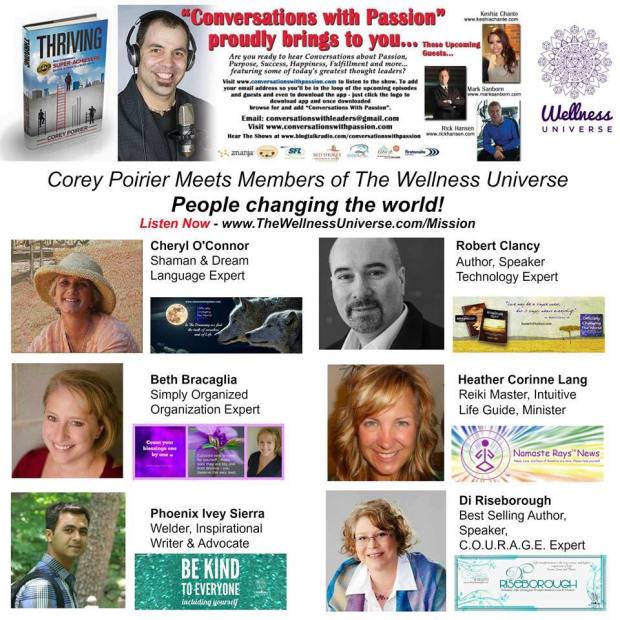
INTERVIEW WITH COREY POIRIER – CONVERSATIONS WITH PASSION!

Hi folks, if you missed the Interview I and other very inspiring members of The Wellness Universe participated in, you can have a listen here.  Radio Interview with Corey Poirier

Many thanks to Corey and The Wellness Universe founders and members for all they are doing and bringing into the world.

Love and Peace to all – Cheers, C.

Copyright. C. O’Connor.

Grab your free copy of my Dreamwork Booklet at http://bit.ly/CheocoNews when you sign up for my monthly Newsletter.

*´☾☆☽`*•

#Cheryl O’Connor.
#Holistic #Counsellor, Author & Writer.

* Cognitive & Body Based Counselling.
* Creative & Artistic Therapies.
* Specialising in #Dream #Analysis/#Conscious #Dreaming & #Shamanic Journeying.
* #Reiki/#Seichim Treatments & Attunements.
* Isis #Meditation.

Website @ http://www.cheocoenterprises.com

My book The Promise, Skype & Email Consultations Available – bit.ly/Cheocoshop

Facebook: http://bit.ly/FBCheoco
Online Shop: http://bit.ly/Cheocoshop
LinkedIn: http://bit.ly/linkedincheryloconnor
Pinterest: http://bit.ly/pinterestcheryloconnor
Google+: http://bit.ly/Googlepluscheryloconnor

Proud member of The Wellness Universe: www.thewellnessuniverse.com #WUVIP

Image credit: Pixabay.