“Dreamtime lover comes to me, helping me to clearly see all I truly need to know— your love for me you always show.
Guiding me to do what’s right, giving me strength and insight. Physically separate but living as One, teaching me what needs to be done.
Knowing our love only grows and can never end, as you assist me gradually to my Self mend.”
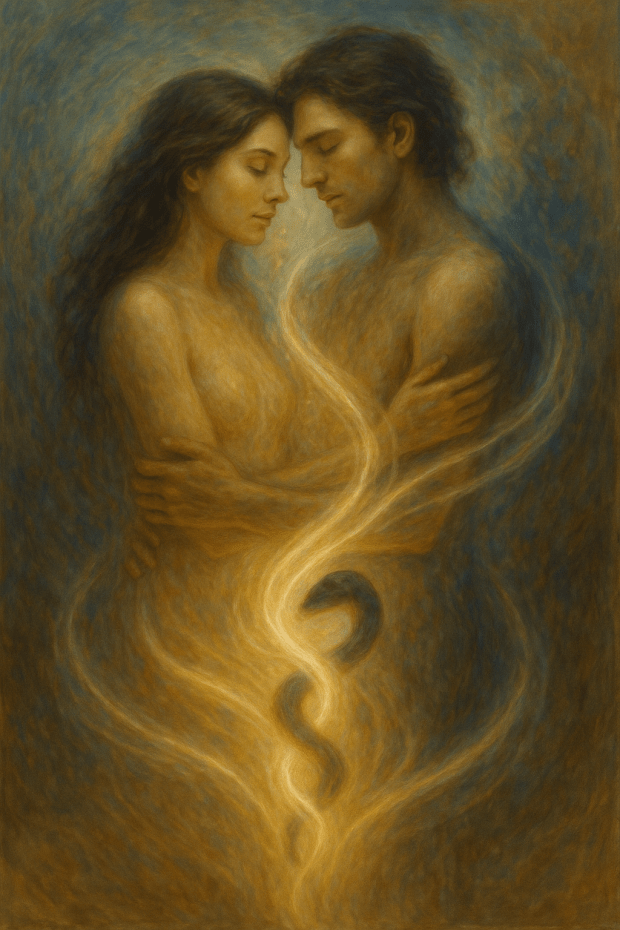
Have you ever woken with your body humming, breath quickened, heart strangely full? A dream so vivid, it left you aching—or glowing—with something you couldn’t quite name?
So many whisper it quietly: “I had the most intense dream last night… but I can’t tell you. It’s too much.”
But I say, tell me everything. Because these dreams? They are sacred. They’re not just about sex. They are about energy. Integration. Memory. Reclamation.
We give this energy so many names: sexual energy, creative energy, Kundalini, God, Goddess, Great Spirit, Divine Union, Reiki, Seichim, Universal Life Force. But they are all rivers feeding the same source – the wild current of life itself. And its most ecstatic, alchemical expression? Orgasm. There’s a reason we cry out “Oh God” in those moments of deep pleasure. It’s not blasphemy. It’s a soul-deep remembering.
In dreams, anything becomes possible. We may find ourselves in the arms of a stranger, a past lover, someone we’ve never touched in waking life, but who feels as familiar as our own breath. Sometimes we merge with spirit beings, ancestors, archetypes. The forms may be surreal, symbolic, or shapeshifting, because dream lovers aren’t always literal, they’re invitations.
Invitations to reunite with soul threads. To embody the Lover, the Serpent, the Priestess, the Healer. To meet ourselves in forms we’ve long silenced or disowned. Often, it’s not about the person at all, but what they represent. Power. Passion. Tenderness. Permission. The dream body remembers what the waking mind forgets.
And let’s name the deeper truth now: soul-level communion is real. These dreams don’t always stay contained in the psyche. Sometimes, they’re shared experiences. If you’re thinking of someone with strong emotion, longing, desire, even grief, that thought becomes energy. It moves. It reaches. And if the other is attuned to you, they may feel it. Not as a conscious thought, but as a subtle frequency. A stirring in the night. A dream they can’t quite shake.
This is the intelligence of the soul field. Where time and space dissolve. Where lovers remember each other through the veil.
These dreams often arrive during times of emotional or energetic opening. When we’re grieving, creatively blocked, repressing desire, or navigating a threshold, these dreams come as messengers. They bring healing. They activate dormant parts of the body. They offer closure, clarity, confirmation. They reignite our connection to joy, to power, to the sacred yes of aliveness.
Even dream-orgasms, yes, they’re real, can be profoundly healing. Especially if touch, pleasure, or intimacy has been absent in waking life. And yet so many carry shame. They wake from these dreams wondering, “What’s wrong with me?” Especially if the imagery was strange, forbidden, or “inappropriate.” But erotic dreams don’t come to shame us, they come to liberate us.
We’ve all dreamt of partners we wouldn’t choose in the light of day, same-sex lovers, celebrities, even people from our past we’d rather forget. But dreams are symbolic. They’re the soul’s poetry. They speak in images, sensations, and metaphor. And they ask us not to judge, but to listen.
What part of me does this represent? What wants to be felt, healed, or reintegrated? What am I being invited to remember?
Erotic dreams are not just about sex. They’re about wholeness. They’re about power reclaimed. They’re about love, sometimes for another, often for the self. And sometimes, they are simply about joy. And that, too, is sacred. So next time your dream lover comes bearing fire, welcome them. Feel what wants to be felt. Honour what wants to be healed. And if you wake with tears, a sigh, or a sweet ache that lingers into the day, know this:
It wasn’t just a dream. It was a remembering.
📚 Further Reading & Exploration
Robert Moss – Conscious Dreaming On dream travel, soul connection, and shared dreaming experiences.
Barbara Brennan – Hands of Light A classic text on energy fields, cords, and how emotion/thought affects others.
Anodea Judith – Wheels of Life A deep dive into chakras, creative/sexual energy, and inner integration.
Toko-pa Turner – Belonging: Remembering Ourselves Home On the sacred art of dreamwork and returning to the soul’s truth.
Clarissa Pinkola Estés – Women Who Run With the Wolves Archetypal stories that explore feminine psyche, longing, and reclamation.
Mantak Chia – The Multi-Orgasmic Man/Woman Taoist teachings on sexual energy as sacred and transformative force.
Rupert Sheldrake – Morphic Resonance A scientific view of non-local connection and shared fields of experience.
🌕 Ever had a dream that left your soul stirred and your body buzzing? I’d love to hear. Drop a note in the comments or share this with someone who dreams in symbols too.
“Dreamtime visions speak to me of the truth within,
Wisdom, Healing & Knowledge of Self to me they bring,
Helping me to know the true essence of my Soul,
enabling me to consciously experience
I AM …. One with the Whole.”
There is a life force running through all things. Some call it God, Spirit, Nature, Love, or Universal Energy. The name is less important than the feeling it brings and the healing it makes possible. When we remember this force, we begin to remember who we truly are.
For me, this energy first introduced itself through Reiki and later deepened with Seichim—two distinct yet connected frequencies of the same sacred current. Reiki is often associated with the Japanese lineage, while Seichim flows from Ancient Egypt, through the teachings of Sekhem and the energy of the fierce and compassionate goddesses Sekhmet and Kwan Yin.
Where Reiki is the wave flowing in, Seichim is the wave flowing out. Together, they form a complete cycle of energetic restoration.
A Multi-Layered Being
This healing work finds deep resonance with the Anthroposophical perspective of Rudolf Steiner, which sees the human being as a fourfold being:
Physical Body: The visible body, a map of our accumulated experiences and emotions.
Etheric Body (Energy Body): The life or breath body, responsible for vitality, healing, and rhythm. It thrives on sleep, air, water, nutrition, and nature.
Astral Body: The seat of memory and emotion. When the etheric is weakened, the astral can push through into the physical and cause dis-ease.
Core Self or “I AM”: The indwelling essence of who we truly are – divine, wise, and whole. This is not a “higher” self-perched on some pedestal, but the deepest truth of our being, right here, embodied. The notion of a “higher” self can often reinforce hierarchical thinking rooted in outdated paradigms. In truth, we are not reaching upward, we are remembering inward.
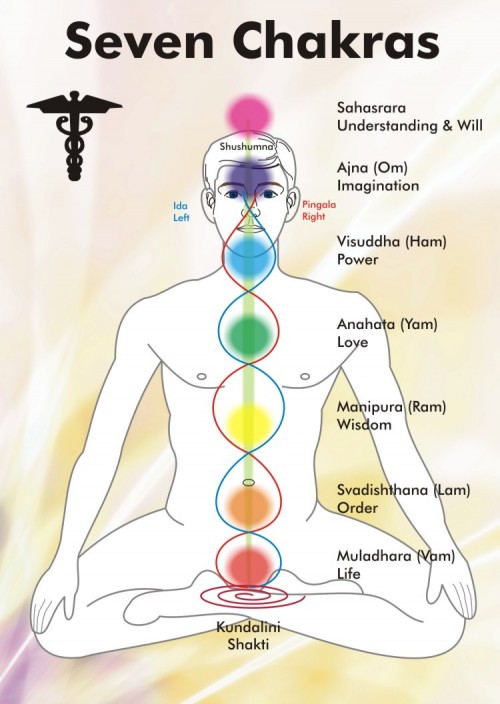
Further expanded by Barbara Brennan, this system includes seven energetic layers beyond the physical—each interpenetrating the other:
Physical Body
Etheric Body
Emotional Body
Mental Body
Astral Body
Etheric Template
Celestial Body
Ketheric Template
Each is linked to a chakra and vibrates at a unique frequency. Some healers also experience more than the standard seven chakras.
Blockages, Breath and the Map of the Body
In Reiki, Seichim, and Body-Based Counselling alike, imbalance and illness are seen to originate from energetic blockages—areas where life force energy cannot flow due to past trauma, grief, fear, suppressed emotions, or limiting beliefs. These imprints are stored in the subtle layers surrounding and entering the body.
When breath and awareness are consciously brought into these wounded areas, subconscious memories surface, and with them, release. In this process comes healing, insight, and a return to flow.
Brennan observed, “Illness is a result of imbalance, and imbalance is a result of forgetting who you are.” Others such as Baginski and Sharamon see symptoms as messages needing to be heard, accepted, and integrated before true healing can occur.
While approaches like CBT (Cognitive Behavioural Therapy) may assist some individuals in reframing thoughts and behaviours, they often stay in the mental realm. Deep transformation, however, often requires feeling, not just thinking. Jamie Sams says to feel is to heal. When emotion is acknowledged and expressed, the energy that has been held or suppressed is free to move again.
The Healing Power of Breath
When our bodies become stressed from pressure or anxiety, the adrenal glands release adrenaline. This hormone increases our heart rate to prepare for a fight-or-flight response. While this is a natural survival mechanism, it has side effects—particularly on the breath.
When we are anxious, our breathing becomes shallow. This reduces oxygen intake and can lead to fatigue, panic attacks, emotional distress, headaches, muscle tension, and even exacerbate conditions like PTSD.
Breath is life. It delivers oxygen to our cells and removes carbon dioxide, a key toxin. You can live without food or water for a time—but without oxygen, only minutes. Breath is also how we move life force energy. When pain is present, intentional breath can ease it. As infants and children, we naturally breathed into our bellies. But over time, many of us begin to breathe only into the upper chest, especially under stress.
Chest breathing results in irregular, rapid breaths. This reduces oxygen flow and limits the body’s ability to exhale toxins. The result? Fatigue, anxiety, and disconnection. The good news is: this pattern can be unlearned.
The Benefits of Cyclic Deep Breathing
Stimulates the lymphatic system, aiding detox and healing.
Strengthens immunity by supporting the body’s self-healing capacity.
Balances brain hemispheres and calms the nervous system.
Reduces anxiety and helps regulate emotional response.
Can be practiced anywhere, at any time, with no tools required.
A Gentle Word on Limitations
If you have asthma or another respiratory condition, cyclic breathing may not be appropriate. Please seek medical advice before practicing.
What Is Cyclic Breathing?
Cyclic breathing is a technique to calm the body and mind during times of stress, anxiety, or fear. One simple and accessible method is based on the Ho‘oponopono rhythm:
Sit comfortably, feet on the ground. Place your hands on your lap or your belly.
Notice your breath, just as it is.
Then begin to breathe in for a count of seven.
Hold for a count of seven.
Exhale for a count of seven.
Hold again for seven.
This is one round. Repeat it seven times.
You may also modify the count to suit your capacity. For example:
Inhale for 3, hold for 3, exhale for 3, hold for 3.
Or: Inhale for 3, hold for 3, exhale for 5, hold for 5.
Breathe slowly and gently, always staying within your comfort zone.
With consistent practice, abdominal breathing becomes natural again. You’ll notice your belly rising and falling as you breathe—just as it did when you were a child.
To support this, try practicing three times a day, or as needed. Repetition is key. Studies suggest it takes around 21 to 30 days to form a new habit. But the benefit is lasting: your body begins to remember the way home.
Enter, Exit, Behold: The Body Speaks
Body-Based Counselling draws on these same principles, using methods that access subconscious information directly through the body. Artistic therapies such as:
Clay work
Watercolour painting
Movement and gesture
Colour exploration
These tools bypass the analytical mind. Through simple yet profound methods like Enter, Exit, Behold, clients can step into a bodily sensation or pain, observe what wisdom it carries, and exit with the insight and resource needed for integration, without being overwhelmed or re-traumatised by the original emotion.
This process allows even unspoken or inexpressible emotions to be seen, shaped, and shifted. Pain takes form in clay. Breath is freed through movement. Colour returns to drawings that once looked lifeless. The intangible becomes tangible. Healing begins.
Real Lives, Real Healing
Here are a few examples that reflect the potency of these approaches:
A woman preparing for breast surgery received six sessions while also working with a naturopath. Just before the operation, scans revealed that the lumps had vanished.
A pregnant woman, leaking fluid after a medical procedure, came to me in a vision asking for help. I sent healing and saw the hole in the sac close. Two weeks later, she had stabilised.
A newborn boy with lung issues was hospitalised. After a brief hands-on healing session, he was released the next day. He later grew into a healthy twelve-year-old.
I lived with knee pain for seventeen years after a traumatic accident. Following my Reiki and Seichim attunement, I released grief I didn’t even know I was carrying. The pain disappeared.
The Counsellor’s Role
Just like with energy healing, true transformation in counselling comes when the client is ready and willing. The counsellor or practitioner simply creates a safe and sacred space, offers guidance, and teaches tools. But the work, the choice, the healing, comes from within.
Permission is essential. Unless a person asks, the energy cannot flow to them. Healing respects free will. When someone is ready and willing to receive, the field opens. Our role is to hold the space — not to push or fix, but to witness and support.
We do not fix. We empower. We do not impose. We invite.
Signs of Change
Change reveals itself in many ways: a client enters hunched, disconnected, anxious. After the session, they stand taller, breathe deeper, feel lighter. Art becomes more vibrant. Clay forms soften. Colour returns to the canvas. Their posture changes. So does their presence.
That is healing. That is remembering.
“The energy knows the way. All it needs is your yes.”
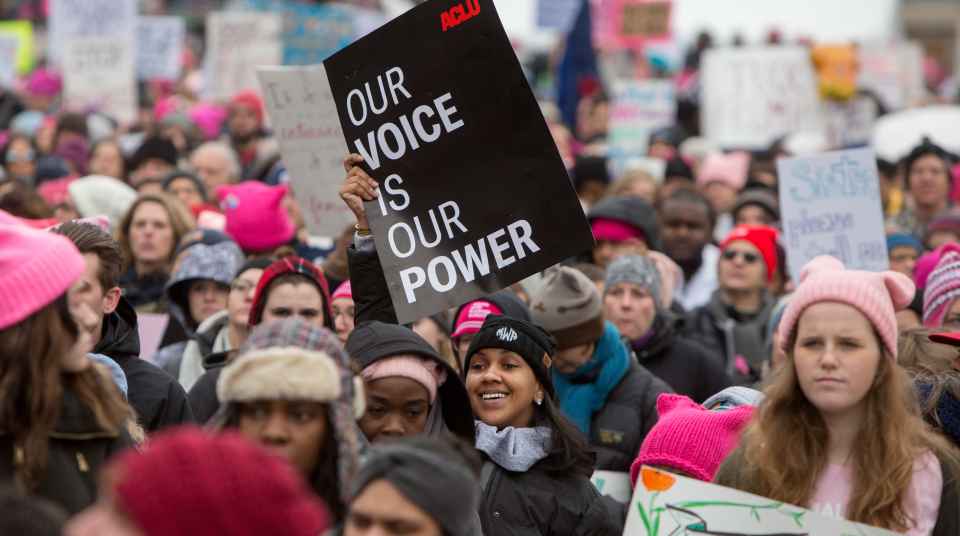
Social struggles throughout history have been instrumental in implementing human rights legislation, changing existing laws, and shaping societal thinking about personal freedoms. One of the longest and most contested of these struggles is the fight for women’s reproductive and contraceptive rights. The debate surrounding women’s autonomy over their bodies and their right to access abortion services has persisted for centuries, driven by ethnocentric, patriarchal, and religious moral perceptions, as well as by gendered stereotypes and legislative control.
The issue of abortion rights has repeatedly highlighted the tension between personal autonomy and state, religious, and medical authority. Despite advancements in women’s rights movements and international human rights frameworks, such as the Universal Declaration of Human Rights (United Nations n.d.a) and the Convention on the Elimination of All Forms of Discrimination against Women (CEDAW) (UN Women 2000-2009), barriers to reproductive freedom remain entrenched in many societies. The historical and ongoing struggle for reproductive rights, particularly the right to safe and legal abortion, reveals the enduring power dynamics that seek to control women’s bodies and choices, and demonstrates that achieving genuine gender equality remains an unfinished global challenge.
The Overturning of Roe v. Wade: A Landmark Moment
Women’s autonomy over their bodies has caused an ongoing heated societal debate for centuries. The latest major event occurred in 2022 with the overruling of the 1973 Roe v. Wade decision by the United States Supreme Court on 24 June 2022 (Clough 2022; Lewandowska 2022). The outcome of Roe v. Wade was that the “Fourteenth Amendment’s concept of personal liberty and restrictions upon state action . . . is broad enough to encompass a woman’s decision whether or not to terminate a pregnancy” (Roe v. Wade 1973, at 153). Abortion could now occur in other circumstances (Ehrlich 2018; Ginsberg 1985). Previous law stated termination could only occur if a woman were pregnant due to rape or incest, where there were fetal anomalies, or where the mother’s life was at risk (Ehrlich 2018; Ginsberg 1985).
The overruling of the Roe v. Wade precedent in 2022 has global implications concerning women’s health. It is an attack on human reproductive rights as it removes “the constitutional right to bodily autonomy from over half the United States population” (Clough 2022, p.160; Lewandowska 2022; Cherminsky 2022; The Lancet 2022). As Clough (2022, p.160) states, “it serves as a stark reminder of the need to defend human rights; it is not enough to assume that, once granted, they cannot be taken away.”
Historical Context: Slavery and Early Abortion Legislation
To understand the abortion debate, changes to legislation, and the struggle for women to access abortion services, we need to revisit the 1800s when white people owned Black slaves and relied upon slaves for cheap labour and economic growth (Murray 2021). The prohibition of the importation of slaves into America in January of 1808 (Murray 2021) resulted in slave owners concerning themselves with the “reproductive capacities of enslaved women” because the source of their labour and economy now needed to be procured from slaves’ children (Murray 2021, p.2034). Enslaved women were aware that any child they bore was not rightfully theirs and could be sold (Murray 2021). Therefore, women used various techniques to inhibit conception or abort their unborn child (Murray 2021).
As a consequence, “slave owners sought to deter and punish efforts to prevent or terminate pregnancies” (Murray 2021, p. 2035). Abortion began to be criminalised, and legislation was passed that banned the distribution of contraceptives and abortifacients, which had not been banned prior to the aforementioned 1808 legislation (Murray 2021; Siegal 1992).
Medical Campaigns and the Criminalisation of Abortion
The campaign to enact anti-abortion legislation was primarily organised by white male physicians who considered contraceptive information provided to all women and actions by female Black and Indigenous women as dangerous (Goodwin 2020; Joffe, Weitz & Stacey 2004). Further, these physicians perceived abortions, if allowed to continue, as a disruption of the American social order of motherhood, family, and white dominance due to birth rates amongst white women decreasing (Beisel & Kay 2004; Murray 2021; Ehrlich 2018).
In 1857, Dr. Horatio Storer, a “Harvard-educated gynaecologist,” spoke at a “meeting of the Suffolk District Medical Society” (Ehrlich 2018, p. 182). He addressed the issue of an “alarming frequency of induced abortions among respectable Protestant women…” (Ehrlich 2018, p. 182). Storer convinced “the Boston medical society and the then recently founded American Medical Association (AMA) to establish investigative committees to look into ‘criminal abortion’ to suppress what he perceived to be ‘the slaughter of countless children now perpetuated in our midst’” (Ehrlich 2018, p. 182). Storer believed women’s physiological makeup rendered “her incapable of self-management” (Ehrlich 2018, p.185).
The AMA’s campaign to criminalise abortion was based on “a paternalistic and racialized code of white-male moral authority over women’s reproductive bodies” (Ehrlich 2018, p.183). The campaign resulted in abortion becoming a statutory crime in all states of America by the end of the nineteenth century unless certification by a doctor occurred that the procedure would “save the life of the pregnant woman” (Ehrlich 2019, p.183). Abortion laws now existed that mirrored eugenic concerns regarding controlling reproductive rights due to fear-based perceptions that white women were not producing offspring as rapidly as immigrants and non-whites (Murray 2021; Ehrlich 2018).
Contemporary Efforts to Restrict Abortion Rights
The racially motivated and gendered paternalistic and religious views regarding abortion reveal the true impetus for criminalisation and explain, to some degree, why efforts still remain globally by men to legally control women’s bodies and choices as per the following examples:
2017 America: “Unprecedented attacks on reproductive health rights” resulted in 19 states adopting “63 new restrictions on abortion rights, service provision, and patient access” (Espey, Dennis & Landy 2018, p. 67).
2018 Argentina: A bill to decriminalize and legalize abortion was debated in Congress for the first time but did not pass through the Senate (Sutton 2020, p.1).
Access to abortion in America since 1976 has undergone further restrictions with increased waiting periods, biased counselling, and a mandate regarding parental involvement for minors (Joffe, Weitz & Stacey 2004; Grossman et al. 2014a; Grossman et al. 2014b; Minkoff, Diaz-Tello & Paulk 2021; Askola 2018).
Texas, May 2013 to November 2013: A decrease by half in the facilities where medical abortion was available (Grossman et al. 2014a; Grossman et al. 2014b).
Australia: While surgical abortion has been provided as a health service “since the early 1970s,” medical abortion utilising Mifepristone “was deliberately obstructed” by the Federal Government via legislation concerning its authority over pharmaceutical drug importation, and it was not until 2006 that the legislative restriction was removed (Baird 2015, p.169). It took until 2012 for Mifepristone to be approved by the Australian Federal Government as a commercial import, and it was not until 2013 that it became a listed subsidised medicine (Baird 2015).
Reproductive Healthcare and Rights in Queensland: A Complex Landscape
Reproductive healthcare in Queensland is shaped by a complex interplay of legal, ethical, and social factors. The state has seen significant changes, particularly in the areas of abortion rights, fertility treatments, and workplace reproductive rights. These issues reflect broader societal debates around personal autonomy, healthcare access, and the role of government in regulating reproductive choices. However, despite legislative progress, significant barriers remain, especially for those in rural and remote areas.
Decriminalisation of Abortion
In Queensland in 2018 a pivotal step occurred in recognising reproductive autonomy, aligning the state with the broader Australian movement to treat abortion as a healthcare issue rather than a criminal matter (Storry, 2018). While the legal framework shifted, practical access to abortion services remains uneven. Women in rural and remote areas face considerable obstacles, such as long distances to clinics, financial barriers, and a lack of available healthcare professionals (Sexual Health, 2022).
The Termination of Pregnancy in Queensland Post-Decriminalisation Study (2022) indicates that while decriminalisation aimed to improve access, stigma surrounding abortion remains a significant challenge. In smaller, more conservative communities, social pressures often prevent women from seeking services. According to Deveny (2023), these social and cultural factors, combined with logistical challenges, continue to hinder women’s access to reproductive health services.
Workplace Reproductive Rights
Workplace protections for pregnant employees have been a subject of continued evolution in Queensland. The state’s legislative changes concerning maternity leave, workplace discrimination, and the prevention of gender-based discrimination provide a more supportive framework for women. However, Deveny (2023) highlights that discrimination in the workplace remains a persistent issue, and women often face barriers to achieving full reproductive rights in the workplace, particularly in industries that are male-dominated or conservative.
The Queensland Government, under Premier David Crisafulli, has recently implemented a significant policy regarding abortion legislation. In December 2024, Premier Crisafulli introduced a parliamentary motion that effectively bans any changes to the state’s abortion laws until at least October 2028. This action was taken to uphold his election promise of no alterations to abortion laws and to prevent potential legislative challenges from within his own party. The motion passed despite opposition from the Labor Party, which voted against it, expressing frustration over the move (The Australian, 2024).
This policy has been met with criticism from various quarters. Opponents argue that it undermines the democratic process by restricting Members of Parliament from debating and introducing bills on the subject, thereby limiting legislative scrutiny and public discourse on reproductive rights (Courier-Mail, 2024).
Additionally, for a critical analysis of Premier Crisafulli’s decision to restrict parliamentary debate on abortion, you may find the article “The deeper issue behind Premier’s move to gag abortion” from The Courier-Mail insightful (Courier-Mail, 2024).
The decriminalisation of abortion in Queensland in 2018 marked a significant step in recognizing reproductive autonomy (Storry, 2018). However, practical access to abortion services remains uneven, with women in rural and remote areas facing considerable obstacles such as long distances, financial barriers, and a lack of healthcare professionals (Sexual Health, 2022).
Recent discussions in Queensland have also focused on the need for reproductive health leave to support women undergoing fertility treatments or coping with miscarriage (McKell Institute, 2024). The introduction of such leave would improve employee retention and reduce workplace discrimination, though it has not yet been widely implemented in Australia.
Regulation of IVF and Assisted Reproductive Technologies (ART)
In a related issue, the regulation of ART remains contentious in Queensland, particularly concerning ethical issues related to donor anonymity and the rights of donor-conceived children. The lack of a national donor registry has led to inconsistent standards and raised ethical questions about how embryos and donor information are handled (Messenger, 2024).
Global Influences and Local Impacts
Global trends in reproductive rights, such as the overturning of Roe v. Wade in the United States, have sparked concerns in Queensland about the potential erosion of local reproductive rights, especially in rural areas with entrenched conservative values (Murray, 2021). This highlights the need for continued vigilance in defending reproductive rights, both locally and globally (Clough, 2022).
International Implications: A Global Struggle
While the fight for reproductive rights is deeply embedded in Australia’s political landscape, the battle rages on beyond our borders, particularly in the United States. Under the current administration of Donald Trump, the reproductive rights of women have once again become a political battleground, mirroring the long history of male-driven control over women’s bodies.
In his first 100 days of a second term, Trump has enacted a series of controversial measures that significantly restrict access to reproductive healthcare. Among these, pardoning anti-abortion activists and reinstating the Mexico City Policy—which restricts foreign aid to organizations that provide or promote abortion—are just the beginning. These actions have ignited fierce opposition from reproductive rights groups who argue that such moves are an affront to women’s autonomy (Harrington, 2023; International Planned Parenthood Federation, 2023).
The administration’s decision to revoke policies supporting military travel for reproductive services and freeze critical funding for low-income patients, particularly affecting Title X clinics, reflects a deliberate rollback of essential healthcare provisions (Guttmacher Institute, 2023). Adding to the growing alarm, the Trump administration has been accused of failing to support families through comprehensive, family-friendly policies, while paradoxically championing pro-natalist stances (Smith, 2023).
Perhaps most concerning, however, is the increasing possibility of restrictions on abortion medications, such as mifepristone, which could have far-reaching consequences for women seeking access to safe and legal abortion care (American Medical Association, 2023). For many in the United States, these policies are a painful reminder of the historical attempts to control women’s reproductive choices. The echo of past struggles—of rights denied, and freedoms curbed—is unmistakable.
The response from American reproductive rights groups is growing louder, as they seek to not only protect access to healthcare but to remind the world of the consequences of turning back the clock on women’s bodily autonomy (Planned Parenthood, 2023). These developments serve as a stark reminder that the struggle for reproductive rights is ongoing, not just in the halls of power in Australia, but across the globe.
International Human Rights and the Struggle for Reproductive Rights
Beyond Debate: Reproductive Rights Are Human Rights
It is frankly incomprehensible that in the 21st century, women still have to fight for their reproductive rights. The fact that the United Nations had to establish a convention affirming these rights — as if women’s autonomy over their own bodies needed external validation — underscores how deeply ingrained patriarchal control remains. Under Article 12 of the Convention on the Elimination of All Forms of Discrimination Against Women (CEDAW 1979), all State Parties, including the United States, Australia, and Argentina, are obligated to ensure women have access to health services, including those related to family planning, on the basis of equality.
In conclusion, the very existence of a United Nations Convention on the Elimination of All Forms of Discrimination Against Women (CEDAW) raises a confronting question: why was such a Convention even necessary? Are women not human? Shouldn’t their rights be inherently protected as human rights? The answer lies in centuries of systemic inequality and the ongoing disregard for women’s autonomy, dignity, and agency.
Even today, despite many nations ratifying CEDAW, its principles are too often ignored or selectively applied. Unfortunately, many political leaders and pro-life groups continue to undermine women’s rights, placing personal beliefs and ideological agendas above the basic rights to health, autonomy, and equality. These groups and individuals are not the ones who will endure pregnancy, give birth, or raise a child. While some men may contribute to these responsibilities, the physical, emotional, and social realities of these experiences overwhelmingly fall to women. Those who seek to control women’s reproductive choices — including decisions around accessing termination services — have no place dictating healthcare policy or harassing women at clinics. It is particularly reprehensible when those women being harassed may not even be attending for a termination.
These ongoing struggles — where women’s voices are disregarded, silenced, or treated as secondary — make it painfully clear that, despite what should be a simple truth, women’s rights are still viewed by many as negotiable. The very fact that we need a global framework like CEDAW to attempt to safeguard these rights is a stark reminder of how far we have yet to go. Until all women are treated as equal, autonomous human beings — with full control over their bodies, lives, and choices — the fight for equality and dignity remains not just necessary, but urgent.
However, the lived reality is one where women’s reproductive autonomy is continuously undermined and politicised by politicians in positions of patriarchal governance, alongside pro-life advocates who, while not making the political decisions, relentlessly harass women who choose to terminate a pregnancy. These politicians, who will never bear the physical, emotional, social, or financial consequences of pregnancy and childbirth, continue to make decisions on behalf of women — often based on the influence of votes from pro-life groups whose members stalk and harass women seeking services, regardless of whether they are attending a clinic for a termination or another medical reason. This persistent disregard for women’s right to choose and control their own reproductive health must be recognised for what it is: a denial of basic human rights.
American Medical Association, 2023. Mifepristone Restrictions: The Impact on Women’s Health. [online] Available at: https://www.ama-assn.org/2023-mifepristone [Accessed 1 May 2025].
Baird, M. (2015) ‘Obstacles to abortion access in Australia: The case of Mifepristone’, Australian Health Review, 39(2), pp. 168-172.
Beisel, N., and Kay, A. (2004) ‘The social construction of abortion: Race, class, and the politics of women’s rights’, Gender and Society, 18(2), pp. 123-139.
Cherminsky, V. (2022) ‘The United States Supreme Court’s overturn of Roe v. Wade: A profound setback for women’s reproductive rights’, The Journal of Constitutional Law, 34(1), pp. 45-63.
Clough, M. (2022) ‘The end of Roe v. Wade: A world of reproductive injustice’, The Journal of Women’s Health, 31(1), pp. 156-162.
Ehrlich, J.S., (2018) ‘Abortion in America: The history of reproductive rights and their legislative battles’, Journal of Gender Studies, 29(2), pp. 180-195.
Espey, E., Dennis, A., and Landy, R. (2018) ‘Unprecedented attacks on reproductive health rights in the United States’, American Journal of Public Health, 108(1), pp. 67-72.
Goodwin, S. (2020) ‘The criminalization of reproductive autonomy: History and impact of anti-abortion legislation’, International Journal of Reproductive Rights, 5(1), pp. 112-118.
Ginsberg, A. (1985) ‘The impact of Roe v. Wade on the reproductive rights movement’, Reproductive Health Journal, 22(3), pp. 25-33.
Grossman, D., et al. (2014a) ‘The impact of restricted abortion access in Texas’, American Journal of Public Health, 104(3), pp. 466-472.
Grossman, D., et al. (2014b) ‘Effect of reduced abortion access in Texas: The influence of restrictions on reproductive healthcare’, Reproductive Health Matters, 22(44), pp. 78-85.
International Planned Parenthood Federation, 2023. Mexico City Policy: The Global Effects of Trump’s Abortion Restrictions. Available at: https://www.ippf.org/mexico-city-policy [Accessed 1 May 2025].
Joffe, C., Weitz, T., and Stacey, C. (2004) ‘Abortion access: The limits of legal reform’, Social Science & Medicine, 58(10), pp. 1991-2000.
Lewandowska, M. (2022) ‘The rise of reproductive injustice: A critique of Roe v. Wade’s overturn’, Global Feminist Review, 24(1), pp. 139-146.
Minkoff, H., Diaz-Tello, F., and Paulk, S. (2021) ‘Abortion laws: A global comparative analysis of reproductive health policies’, Journal of International Women’s Health, 38(2), pp. 210-220.
Murray, J. (2021) ‘The intersection of race, gender, and reproductive justice in 19th century America’, Women’s Studies Quarterly, 49(4), pp. 2030-2040.
Roe v. Wade (1973) U.S. Supreme Court Case, 410 U.S. 113.
Siegal, R. (1992) ‘The erosion of abortion rights in America: The history and politics of anti-abortion movements’, American Political Science Review, 86(1), pp. 50-65.
Smith, D., 2023. Trump’s Pro-Natalist Agenda: The Contradiction in Family and Reproductive Policies. The New York Times. Available at: https://www.nytimes.com/2023/trump-pro-natalist [Accessed 1 May 2025].
Sutton, L. (2020) ‘Abortion law in Argentina: The fight for reproductive justice continues’, Journal of Latin American Politics, 41(2), pp. 1-8.
The Lancet (2022) ‘The implications of the end of Roe v. Wade for reproductive rights’, The Lancet, 399(10337), pp. 1609-1612.
Most people think of fairy tales as sweet bedtime stories for children, pleasant little fables to pass the time before sleep. But when we look beneath the surface, their layers of meaning open like a map, guiding us through the inner and outer landscapes of our lives.
The Forest and the Journey
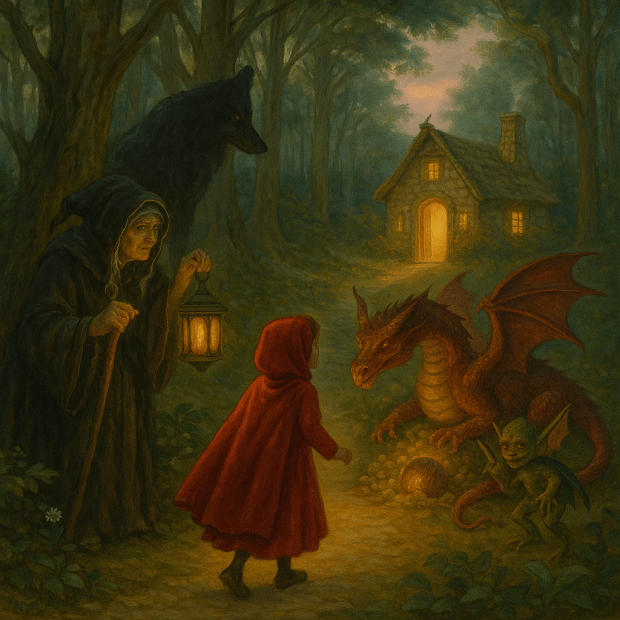
In almost every classic tale, the storyline begins the same way: a young soul leaves “home”, sometimes by choice, sometimes by circumstance, and ventures into the wider world. Along the way, they face trials and temptations: witches and wolves, dragons and goblins, wicked stepmothers and treacherous strangers. They may be imprisoned, lost in the forest, or lulled into a deep sleep.
The forest is one of the most enduring symbols in fairy tales. It is not simply scenery, but a living teacher. To enter the dark forest is to step into the unknown, leaving behind the familiar and the safe. It is here that old identities are stripped away, and we must learn to trust a deeper compass of soul. Every shadow and every clearing becomes a guide, showing us that what looks like confusion or danger is also the fertile ground of transformation. Rivers, storms, mountains, and caves serve the same role, thresholds that reshape us if we dare to enter.
Yet, just as often, help arrives, through animals, elemental beings, wise old helpers, or mysterious friends. And when they finally “return home,” they are not the same as when they left. For home is not a physical place at all, it is a return to one’s true self. The journey strips us bare, tests our faith, and teaches us who we really are.
It is important to remember these stories were never meant to be harmless diversions. Long before they were bound in books, fairy tales lived as oral traditions, told around firesides to transmit wisdom, warnings, and hope. They were teaching maps, guiding communities through danger, instinct, resilience, and transformation.
Villains, Helpers and Thresholds
And those so-called “villains”? I do not see them as villains at all. Patriarchy turned them into shadows, wolves, witches, dragons, fearsome figures to frighten us away from their power. But really, it is our own power they mirror back to us: instinct, intuition, raw life force, and the ability to transform. When we meet these figures within, we reclaim parts of ourselves long suppressed. The Witch becomes the Crone, carrying wisdom for thresholds and endings. The Wolf becomes a fierce protector of boundaries. And the Dragon? The Dragon is the guardian of our own inner treasure and power, waiting for us to grow strong enough to step forward and claim it.
Fairy tales also remind us of endings. Sometimes people leave our lives through choice, distance, or even death. As painful as this is, symbolically it may reflect a deeper truth: their energy is no longer aligned with where we are on our journey. In this way, every loss is also a threshold, one that asks us to meet more of ourselves, to grow into new awareness, and to walk forward carrying what was true in love.
Fairy tales remind us too that help often comes in overlooked forms. A talking bird, a humble servant, or a creature of the wild may hold the key to survival. The “simpleton,” mocked for being foolish, is often the one who succeeds where others fail, precisely because they trust what is small, quiet, or easily dismissed. These tales teach us that wisdom rarely arrives dressed in the power we expect. It slips in through the ordinary, reminding us that the sacred hides in plain sight.
Windows, Mirrors and Doorways
Windows, mirrors, and doorways are some of the ways life shows us these Selves. A window may let us see through to where another is truly coming from or reflect ourselves back depending on the angle of light. A mirror shows us our own reflection, sometimes sharply, sometimes kindly. And a doorway? That is the threshold another offers us into a new awareness. Often, whatever we see in another exists within us too, otherwise how could we see it? Some mirror to us where we are presently at and others where we have been at some point in time. Often, in any one interaction, all three roles are present at once. These are not accidents, they are guides.
The True Happily Ever After
Just like the characters in these tales, many of us spend years searching outside ourselves for happiness. We might long for “one true love” to sweep us away, believing they will complete us. And for a while, it might feel like they do. But no matter how romantic the promise, no person can be our everything, especially when we have yet to become that for ourselves.
This is where so many of us misunderstood the “happily ever after.” Disney did not exactly sell us a lie, rather, our culture mistranslated the deeper truth. Long before Disney, the tales themselves were pointing inward. The Prince and Princess were never really about someone else rescuing us. They are symbols of our own inner masculine and feminine. But growing up in a patriarchal system, we were taught to externalise everything: happiness, success, love, even salvation. No wonder so many felt or feel disillusioned when the promise did not hold.
When we look symbolically, the “kiss” that wakes the sleeping one is not about romance at all. It is about awakening, when our masculine energy of logic and clarity meets our feminine energy of intuition and creativity. In that inner union, something comes alive. Balance is restored. We no longer need someone else to complete us, though we may share life with another from a place of wholeness. This is the true happily ever after.
Every fairy tale also carries the rhythm of life itself, descent and return, death and rebirth, endings and beginnings. Sleeping Beauty is not just about a princess in slumber; it is about the necessity of rest and renewal before awakening to new life. Snow White’s glass coffin mirrors the suspended state we sometimes find ourselves in, when part of us has died but the rebirth has not yet arrived. To live consciously is to honour these cycles rather than resist them, recognising that every ending makes space for a new beginning.
The Hero Has Always Been Us
At the heart of it all, every fairy tale whispers the same truth: the hero has always been us. The dangers, helpers, and transformations we read about are mirrors of our own trials and triumphs. The quest is not about rescuing or being rescued, it is about remembering who we truly are. And in the end, to “return home” is to return to that true self, whole, awake, and fully alive.
When a child asks for a story, it may be the soul’s way of speaking, theirs, and yours. Children often choose the very tale that carries the medicine both need to hear. A bedtime request can be far more than whimsy; it can be a mirror of the family’s journey, a whisper of what the soul is trying to surface. In this way, our children become our teachers, reminding us of the truths we may have forgotten.
But we cannot hear these truths if our minds are always noisy. When we chatter constantly, whether in our heads or with our mouths, we block the whispers of Soul and nature wisdom. We need stillness. We need silence. As the saying goes: “When we speak, we only repeat what we know. When we listen, we may learn something new.”
For all of us, no matter our profession or path, this symbolic lens matters. We may find ourselves trapped in a “sleeping spell” of grief, stalked by a “wolf” of fear, or longing for the “helper” who reminds us of our strength and true nature. Fairy tales can be bridges, helping us name our inner landscapes in ways that ordinary language cannot.
The original tales of the Brothers Grimm or Hans Christian Andersen hold far more than quaint moral lessons. They speak to the courage, faith, and trust needed to walk through life’s dark forests and return with wisdom. And they remind us that when a child asks for a certain story, it may be speaking directly to your soul as much as theirs, holding a mirror to where you are on your own journey.
After all, the so-called “real world” is itself the greatest fairy tale of all, an unfolding adventure, full of shadows and helpers, mirrors and doorways, dragons and wolves, Crone wisdom and childlike wonder. And the ending? Well, that is always up to us.
•´☾☆☽`•
✨ Reflective Questions
Which “villain” or shadow figure, Wolf, Witch, Dragon, feels most alive for you right now? What part of your own power might they be guarding?
When was the last time you found yourself standing at a symbolic window, mirror, or doorway? What did it show you about yourself?
In what ways are you seeking “happily ever after” outside yourself, and how might you turn inward to find it instead?
Where in your life could stillness or silence help you hear what the story of your own soul is trying to say?
As the hero has always been you, what chapter of your journey are you living through right now?
•´☾☆☽`•
📚 Recommended Reading
On the Feminine, the Crone, and Women’s Stories
Women Who Run with the Wolves, Clarissa Pinkola Estés
Crones Don’t Whine: Concentrated Wisdom for Juicy Women, Jean Shinoda Bolen
The Crone: Woman of Age, Wisdom, and Power, Barbara G. Walker
On the Masculine & Feminine Archetypes
King, Warrior, Magician, Lover: Rediscovering the Archetypes of the Mature Masculine, Robert Moore & Douglas Gillette
The Heroine’s Journey, Maureen Murdock (a counterpart to Campbell’s Hero’s Journey)
The Dance of the Dissident Daughter, Sue Monk Kidd
On Fairy Tales & Symbolism
The Uses of Enchantment: The Meaning and Importance of Fairy Tales, Bruno Bettelheim
Iron John: A Book About Men, Robert Bly (draws from Grimm’s tales)
Baba Yaga’s Assistant, Marika McCoola (a modern take on the old witch archetype)
On Myth, Archetypes & Shadow Work
Man and His Symbols, Carl Jung
Owning Your Own Shadow: Understanding the Dark Side of the Psyche, Robert A. Johnson
The Hero with a Thousand Faces, Joseph Campbell
On Dragons, Treasure, and Inner Power
Facing the Dragon: Confronting Personal and Spiritual Grandiosity, Robert L. Moore
The Dragon’s Treasure: A Dreamer’s Guide to Inner Discovery, Tian Dayton
The Book of Dragons, Edith Nesbit (for a lighter, symbolic entry point)
On Silence, Listening & Stillness
The Sacred Embrace of Listening, Kay Lindahl
Silence: The Power of Quiet in a World Full of Noise, Thich Nhat Hanh
The Wisdom of the Enneagram, Don Richard Riso & Russ Hudson (includes silence as a transformative practice)




 Cheryl O'Connor