Energetic Healing

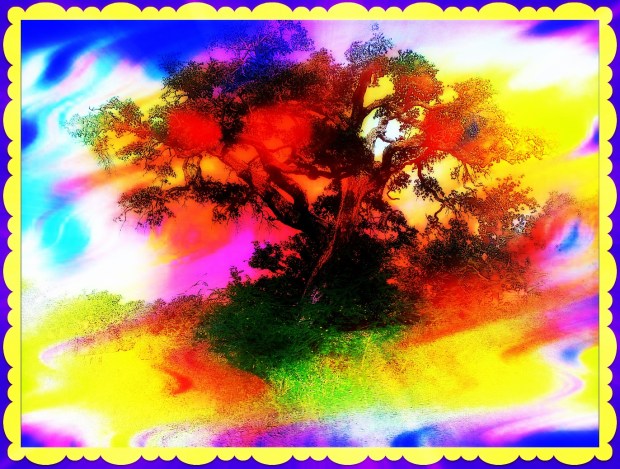
COLOUR ME A RAINBOW

“The farther you enter into the Truth

The deeper it is.”

Zen Master Bankei

 
Colours like everything else that appears in your life, which includes your dreams, for they are not separate to your so called waking reality, do so for a reason.

The colours of the rainbow correspond to the colours of the main seven energy centres within the body known as Chakras.  It can be helpful in understanding what your dreams are telling you to know what specific colours mean for you.

For example you may dream you are wearing yellow clothing/protection for your naked vulnerable body or Self. Clothing can be symbolic of the attitudes we present to the outside world and if that were the case for you – you would therefore know that your present attitude related not only to an issue with the corresponding chakra but also to the symbolism of yellow.  Depending on everything else that occurs in your experience this information would, at the very least, give you some clues to start working with.

Whilst only you can ever know what a specific symbol or colour means for you, as a very basic guideline I present the following for your information and consideration.

Red – Base Chakra – Being grounded, passionate, sensual.  Can symbolise blood – the life force that pumps around our bodies via our intake of oxygen and it can also relate to wounds and anger. It is said that wearing red and black can be a powerful message of assertiveness but it can also unknowingly to many trigger subconsciously another’s wounds creating re-actions.

Orange – Sacral Chakra – The colour of flamboyance, tolerance, change, confidence, emotional balance, striving, happiness and of being social.

Yellow – Solar Plexus – This colour stimulates mental discrimination, discipline, organisation and its’ healing energy works on fear and can symbolise fear.

Green – Heart Chakra – Healing, growth, expansion and harmony.

Blue – Throat Chakra – Communication, truth, compassion, patience, sensitivity and contemplation.  Can sometimes relate to needing to speak your truth.

Purple – Brow Chakra – The colour of inspiration, vision and turning into the inner worlds.

White – Crown Chakra – Spirituality, Spirit, purifying, divine love and wholeness.

Pink – Is said to be associated with love.

Black – Is said to relate to the depths of the Subconscious, which some see as being our own darkness.

So, if for example I were to come across a Red Belly Black Snake as I have many times and also did recently by way of a picture someone put up on Facebook – to me that would indicate that the healing (general symbolism for Snake in its most basic form) of a subconscious wound was on its way.

In relation to the Rainbow there is an old story that the first Rainbow appeared after the great flood that covered the Earth. It was said to be “God’s” message and promise that “he” would never destroy the Earth and its people again.   It is a symbol of hope and often when there has been rain, just as we too go through emotional releasing and storms in our life, we emerge from those with hope and the sun starts to shine again.

Then there are the pot of gold at the end of the Rainbow stories along with the Rainbow Serpent stories belonging to the Indigenous folk of Australia.  There is also the story about Teewah at Fraser Island here in Australia that relates to the Coloured Sands found there.

The Native Americans also have their own stories about the Rainbow as no doubt so too do other Indigenous cultures.

The use of colour can be very therapeutic revealing much to us in relation to blockages of energy that are occurring within our bodies when used either in water colour therapy or by using different coloured cloths to make an abstract picture of what is really going on inside us when words just don’t cut it. Visualisation of breathing in certain colours, when done in a cyclic breathing sequence, can assist clearing out blockages, releasing emotions and pain and bringing life force back into all parts of our bodies.

Advances in technology have shown us that photographs can be taken which clearly show the human aura as consisting of colours also.

There is much more to colour than many of us realise and it pays to pay attention to what colours you are drawn to and what they are really telling you.

Cheers, Cheryl.

Copyright C. O’Connor 2014.


•*´☾☆☽`*•

‪#‎Cheryl‬ O’Connor.
‪#‎Holistic‬ ‪#‎Counsellor‬, Author & Writer.

* Cognitive & Body Based Counselling.
* Creative & Artistic Therapies.
* Specialising in ‪#‎Dream‬ ‪#‎Analysis‬/‪#‎Conscious‬ ‪#‎Dreaming‬ & ‪#‎Shamanic‬ Journeying.
* ‪#‎Reiki‬/‪#‎Seichim‬ Treatments & Attunements.
* Isis ‪#‎Meditation‬.

Newsletter Subscription @ bit.ly/CheocoNews – All subscribers will receive a 10% discount on their first initial consultation for any of my services along with 10 pages of awesome tips and tricks to help you start deciphering the language of your Soul, your dreams, as well as the symbolism of what appears to you daily.

Website @ www.cheocoenterprises.com
My book The Promise, Skype & Email Consultations Available – bit.ly/Cheocoshop

FB: https://www.facebook.com/cheocoenterprises
Skype: cheryloconnor333

Twitter: Cheryl O’Connor@Cheoco99
Email: cheoco99@yahoo.com.au


Re-Membering the Self: Healing What Was Forgotten

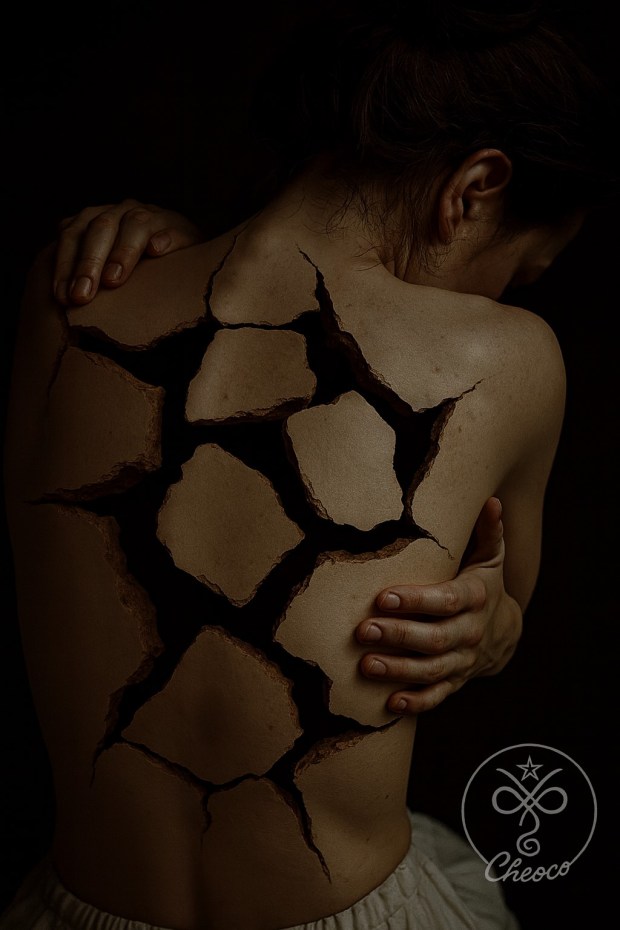
Have you ever felt like pieces of you are missing—like you walk through life with invisible gaps you can’t explain?

This is the quiet legacy of trauma. Our cultural conditioning, childhood wounds, and the unspoken energies of fear and abuse cause us to shut parts of ourselves away in order to survive. When the pain feels too much to bear, fragments of our being retreat into the subconscious, creating protective walls that shield us from further harm. These fragments remain hidden, but they continue to shape our lives—surfacing as re-actions instead of conscious responses.¹

We may find ourselves repeating patterns we do not want, pushing people away when we long for closeness, or filling inner holes with addictions, distractions, or relationships that never quite heal the emptiness. This is not because we are broken. It is because parts of us are waiting to come home.


The Body Remembers

Trauma is not just stored in memory—it is stored in the body.² ³ Muscles tighten, breathing shortens, the nervous system learns to expect danger. What could not be felt at the time becomes lodged in the cells of our being. Over the years, these unprocessed fragments may create illness or dis-ease—literally, a body not at ease with itself.

To become whole, we must re-member. This is more than recalling with the mind. It is bringing lost parts back into the membrane of our being, allowing ourselves to feel what was once too terrifying or overwhelming to feel. Only then can the energy move through the body and transform.


The Dreaming as Gateway

The Dreaming is one of the most powerful gateways for this re-membering. Some call it dreaming, astral travel, shamanic journeying, meditation, past life regression, or even moments of drift between sleep and waking.⁴ ⁵ All are expressions of the same expanded field of consciousness, where the boundaries of time dissolve and all is now.

Indigenous wisdom teaches that Dreaming is not confined to the past but is a living reality in which ancestors, land, and spirit continually speak.⁶ ⁷ Western depth psychology echoes this, recognising the dreamworld as the symbolic landscape of the psyche where hidden parts of the self may return.⁸ ⁹

Through The Dreaming, we gain access to the fragments of self split off by trauma. These encounters may appear as dream figures, symbolic landscapes, or re-enactments of old wounds. By engaging with them—through dream journaling, reflection, or guided processes—we can shift the patterns not only of this lifetime but also those carried across generations.¹⁰


Healing Across Time

We cannot change what happened in the past. But we can change how the past lives within us. When we meet a reactive trigger in daily life as if it were a dream symbol, we open the door to healing. Instead of repeating the same re-action, we can respond differently—re-writing the imprint, releasing the body’s grip, and restoring flow to the soul.

Transgenerational trauma research shows that unhealed wounds ripple down through families, shaping the lives of children and grandchildren.¹¹ Yet the reverse is also true: when one person chooses to re-member and transform their pain, the healing radiates outward, offering release to both ancestors and descendants. In this way, personal re-membering becomes collective re-membering.


Returning to Wholeness

As we call these parts home, the walls we built for protection soften. Instead of holes we try to fill, we discover fullness already within us. Instead of patterns that sabotage, we find space for conscious choice.

This is not easy work. It asks us to feel what we once ran from, to sit with grief, pain, fear, and sadness. But on the other side of the feeling lies integration. And with integration comes freedom—the freedom of being wholly ourselves.

We were never truly broken. We were only waiting to be whole again.


Reflection for You

Is there a dream, memory, or reactive moment that has been returning to you? Sit with it gently. Treat it as you would a dream symbol. Ask: What part of me is calling to come home? Then listen—not with the mind alone, but with the body and the heart.

Each fragment re-membered is life-force returned.


© Cheryl O’Connor, 2014 and 2025. All rights reserved.
Please do not reproduce without permission. Sharing with credit and a link is welcome.


References

  1. Herman, J. L. (1992). Trauma and recovery: The aftermath of violence—from domestic abuse to political terror. New York: Basic Books.

  2. Van der Kolk, B. A. (2014). The body keeps the score: Brain, mind, and body in the healing of trauma. New York: Viking.

  3. Ogden, P., & Fisher, J. (2015). Sensorimotor psychotherapy: Interventions for trauma and attachment. New York: W. W. Norton.

  4. Hillman, J. (1979). The dream and the underworld. New York: Harper & Row.

  5. Jung, C. G. (1960). The structure and dynamics of the psyche (Collected Works Vol. 8). Princeton, NJ: Princeton University Press.

  6. Rose, D. B. (1996). Nourishing terrains: Australian Aboriginal views of landscape and wilderness. Canberra: Australian Heritage Commission.

  7. Atkinson, J. (2002). Trauma trails, recreating song lines: The transgenerational effects of trauma in Indigenous Australia. North Melbourne: Spinifex Press.

  8. Yunkaporta, T. (2019). Sand talk: How Indigenous thinking can save the world. Melbourne: Text Publishing.

  9. Nakata, M. (2007). Disciplining the savages, savaging the disciplines. Canberra: Aboriginal Studies Press.

  10. Watkins, M., & Shulman, H. (2008). Toward psychologies of liberation. New York: Palgrave Macmillan.

  11. Danieli, Y. (Ed.). (1998). International handbook of multigenerational legacies of trauma. New York: Springer.