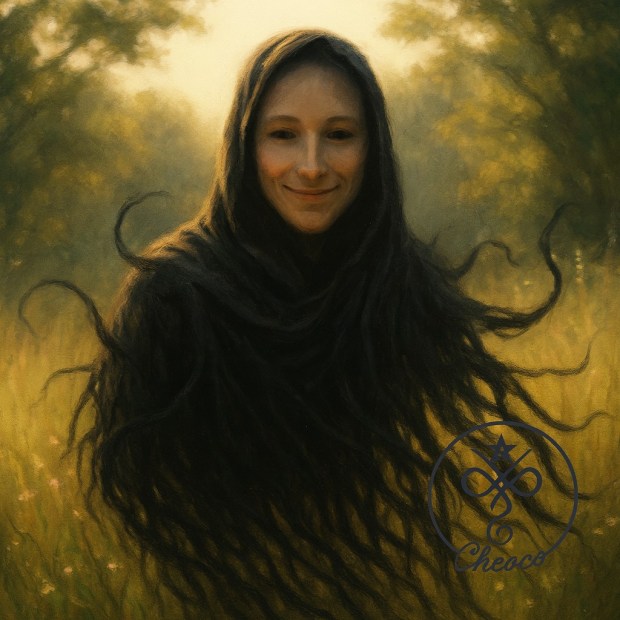
Relationships

Unmasking Dark Energies: Recognising and Protecting Against Deceptive Power

Introduction

Not all who appear charming, wise, or spiritual act with integrity. Just as there are people who radiate love, loyalty, and compassion, there are others who mask selfishness, jealousy, and manipulation beneath a false exterior. These individuals, energetically parasitic in nature, can have devastating effects on the lives they touch. Recognising them is the first step toward reclaiming personal power and preventing further harm.

Recognising Dark Energies

Deceptive energies often come disguised. They wear masks of charisma, spiritual insight, or generosity. They may seem attractive, popular, or even enlightened. Yet behind the façade lies a pattern of lies, cheating, emotional manipulation, and exploitation. Their tactics include:

  • Using sex disguised as love to drain energy and exert control.
  • Isolating victims from friends and family, much like narcissistic abusers.
  • Running emotionally hot and cold – one moment affectionate, the next distant or cruel.
  • Exploiting projects or causes “for humanity” as a cover for personal gain.

Like a wolf in sheep’s clothing, they cloak their true nature beneath charm and apparent kindness, only to exploit those who let down their guard. Others experience this energy as being caught in a spider’s web, where every struggle only strengthens the predator’s grip until the victim is drained of vitality.

These behaviours align with what psychologists describe as manipulative and narcissistic abuse patterns¹. Gaslighting – a deliberate attempt to confuse and destabilise another’s perception of reality – is also common, leaving victims doubting their own memories, intuition, and sanity².

The Spell Effect

Many describe their entanglement with such individuals as being under a spell, a magnetic pull that defies logic. This effect has been compared to “psychic vampirism,” where one feeds off another’s energy³. The victim may notice synchronicities, telepathic impressions, or dream visitations, further confusing the mind and heart. In extreme cases, this energetic exchange resembles possession, leaving victims behaving in uncharacteristic or destructive ways.

Energetically, these dynamics can be understood as “cording”- where psychic hooks are formed through desire, fear, depression, or trauma. Such cords can be consciously cut through ritual, meditation, or sound practices, but often require significant inner work and external support.

Consequences

The aftermath of such relationships can be devastating:

  • Emotional exhaustion, confusion, and despair.
  • Disrupted friendships or family ties.
  • Prolonged grief and “dark night of the soul” experiences⁴.
  • Physical or energetic symptoms such as lethargy, depression, or suicidal ideation.
  • Trauma stored in the body, manifesting as chronic pain, digestive issues, or immune dysfunction⁵.

For many, this period marks a breaking point that requires deep courage, inner work, and sometimes spiritual intervention to overcome. Survivors often describe the experience as “reality altering,” with long-term impacts on self-esteem and trust.

Psychological and Spiritual Dynamics

From a psychological standpoint, these relationships often involve trauma bonding, where cycles of abuse are interspersed with intermittent affection, creating a powerful chemical dependency in the brain. Victims become addicted to the highs and lows, confusing pain with passion and mistaking control for intimacy².

Spiritually, dark energies operate from a state disconnected from higher vibrational sources. Like the “Dementors” in Harry Potter, they survive by draining joy and light from others. Cross-cultural traditions also speak of such forces – beings that feed on fear, suffering, desire, or life force. Dion Fortune’s early writings on psychic self-defense highlight how such entities exploit weaknesses in the aura or energetic field⁶.

Breaking Free and Protection

Escaping the web of dark energies requires both practical and spiritual strategies:

  • Boundaries: Do not allow them into your home, especially your bedroom.
  • Cleansing: Smudge with sage, burn incense, rearrange living spaces, and discard or cleanse any gifts.
  • Salt baths and sunlight: Equal parts salt and bicarbonate baths followed by sun exposure for at least 20 minutes helps cleanse and restore energetic balance.
  • Cord-cutting rituals: Visualisations of severing unhealthy energetic ties can restore autonomy.
  • Sound and movement: Drumming, chanting, or shaking the body can break stagnant energy.
  • Avoid alcohol/drugs: These weaken the energetic field, making one more vulnerable.
  • Ceremony and Support: For some, traditional Indigenous ceremonies or other spiritual practices provide powerful release⁷.
  • Therapeutic support: Trauma-informed counselling, bodywork, or somatic therapies help integrate the psychological aftermath⁵.

Family and friends may notice red flags before the individual does. Listening to trusted voices can help break through the fog of manipulation. Supporting someone entangled in such dynamics requires patience, compassion, and non-judgement, pressuring them often pushes them deeper into the web.

Transformation and Gifts of Survival

Though shattering, these encounters often become profound initiations. Survivors report:

  • Heightened discernment, able to “spot” manipulative energy quickly.
  • Greater empathy for others caught in abusive dynamics.
  • A deeper connection to spiritual guidance and inner strength.
  • A renewed commitment to healthy relationships based on respect, honesty, and integrity.

This is the paradox: dark energies break us open, but in doing so they can also illuminate hidden wounds, pushing us toward healing and awakening. Once you have faced and recognised them, you carry the strength and discernment to never be deceived in the same way again. Awareness becomes protection, and protection becomes freedom.


References

  1. Brown, B. (2016). Disarming the narcissist: Surviving and thriving with the self-absorbed (2nd ed.). New Harbinger Publications.
  2. Forward, S. (1997). Emotional blackmail. HarperCollins.
  3. Masters, J. (2018). Energy vampires: How to deal with emotional vampires and energy drainers. CreateSpace Independent Publishing.
  4. May, G. G. (2004). The dark night of the soul: A psychiatrist explores the connection between darkness and spiritual growth. HarperOne.
  5. van der Kolk, B. (2014). The body keeps the score: Brain, mind, and body in the healing of trauma. Viking.
  6. Fortune, D. (2001). Psychic self-defense. Weiser Books. (Original work published 1930).
  7. Atkinson, J. (2002). Trauma trails: Recreating song lines. Spinifex Press.

Beyond the “Toxic” Label: Healing the Wounded Masculine and Feminine

For quite some time now I’ve found myself sitting with the word “toxic”, a word that’s everywhere when people talk about behaviour.

In particular the phrase: “toxic masculinity” has been bothering me. As too has the phrase “he/she is toxic”.

I see it spoken of often, but I have never liked it because it feels heavy, final… and wrong because I don’t see toxicity at the root of these behaviours. I see wounds. I see a distortion of a once-sacred energy that has been bent out of shape by fear, silence, and survival. And we all carry it, men and women alike.

When we label a person as being “toxic,” we risk closing the door on that person’s healing. We make it sound as though the essence of the person in and of itself is dangerous, rather than acknowledging that the person and their original energy has been wounded and misdirected. Distorted energy is not beyond repair, it can be realised, the sacred remembered and restored, and brought back into harmony.


The Feminine Energy

The feminine is the receptive, intuitive, and nurturing force. She is the part of us that listens before acting, feels before deciding, and values connection over conquest.

Feminine qualities include:

  • Intuition – sensing beyond logic
  • Receptivity – openness to ideas, emotions, and experiences
  • Creativity – birthing visions, art, or possibilities
  • Compassion – empathy and care for self and others
  • Flow – moving with life rather than forcing it

When the feminine becomes wounded or distorted, it may show up as:

  • Over-giving and self-sacrifice
  • Difficulty setting boundaries
  • Suppressing one’s own needs to keep the peace
  • Emotional manipulation or withdrawal

The Masculine Energy

The masculine is the active, structured, and directional force. He is the part of us that creates plans, builds systems, and protects what matters.

Masculine qualities include:

  • Action – decisive movement towards a goal
  • Structure – healthy boundaries and discipline
  • Focus – clarity of vision and sustained attention
  • Protection – creating safe containers for growth
  • Logic – reasoning and problem-solving

When the masculine becomes wounded or distorted, it may show up as:

  • Control and domination
  • Suppressing emotion or rejecting vulnerability
  • Overwork and constant striving without rest
  • Aggression without cause
  • Seeing relationships or the earth as resources to be used rather than honoured


Why We Need Both

Neither energy is “better” than the other. Too much masculine without feminine can lead to burnout, control, and emotional disconnection. Too much feminine without masculine can leave us ungrounded, directionless, or unable to act on our visions. Healthy integration is the goal, the masculine providing structure for the feminine to flow, and the feminine infusing the masculine with heart and meaning.


Steps Toward Rebalancing

  • If you’re running on overdrive (masculine-heavy):
    Slow down, rest, journal, spend unstructured time in nature, or create without a deadline.
  • If you’re feeling unmoored (feminine-heavy):
    Set a clear, achievable goal, make a plan, and take the first step.

Why Language Matters

The words we use shape the energy of the conversation. When we say “toxic masculinity,” we unintentionally code the entire masculine essence as harmful. But if we speak of wounded or distorted energy, we acknowledge the hurt without erasing the sacred form underneath.

This shift in language invites compassion for Self and others and from compassion, real change becomes possible.


Recommended Reading

  1. “King, Warrior, Magician, Lover” – Robert Moore & Douglas Gillette
    A map of masculine archetypes and how they can be healthy or distorted.
  2. “Women Who Run With the Wolves” – Clarissa Pinkola Estés
    Reclaiming the instinctual feminine through myth and story.
  3. “The Way of the Superior Man” – David Deida
    Masculine purpose, polarity, and presence for all genders.
  4. “The Heroine’s Journey” – Maureen Murdock
    Exploring the feminine quest and the return to self.
  5. “Warrior Goddess Training” – HeatherAsh Amara
    Blending inner strength with self-compassion.
  6. “Sacred Union” – Anaiya Sophia
    The alchemy of divine feminine and masculine energies.

Final Reflection

This conversation isn’t about criticising the masculine or glorifying the feminine, it’s about remembering that both are sacred, both can be wounded, and both are needed. By speaking of distortion instead of toxicity, we leave space for healing, for truth, and for a return to balance.


© Cheryl O’Connor, 2025. All rights reserved.
Please do not reproduce without permission. Sharing with credit and a link is welcome.

Disclaimer: The information shared in this article and chart is for awareness and self-reflection only. It is not intended as psychological, medical, or therapeutic advice. If you are experiencing distress, please seek support from a qualified professional.

Killer Stress: How Modern Life is Breaking Us

It seems fairly acceptable in our society these days to accept stress as “normal.” Technology designed to make life easier has, in fact, made life busier, with a constant flow of information, requests, and demands on our time. We live dictated by calendars, bank balances, and the ticking of the clock, numbers we react to as though they were threats.

More and more automated voice options on phones that fail to connect us to an actual human being add to our daily tension, offering less support and more frustration. Time for real food and deep connection shrinks as we all become… “so busy.”

Once, we wrote letters, posted them, and waited. Now, emails ping, and we feel a pressure to respond instantly. It’s not just a pace; it’s a mindset of urgency. Productivity is the new idol, and the pressure to outperform for profit isn’t just found in the workplace, it’s embedded in our nervous systems (Rosen, 2020).

We’re saturated with disasters, grief, and horror from every corner of the globe. Not only is this overwhelming, but our stress response is being constantly triggered by situations we can’t control (Sahakian et al., 2015). Gratitude for safety is real but so is the burden of helplessness. And the truth is: we can always turn it off. But often, we don’t.

The deeper issue is that when we do need to hibernate, retreat, rest, withdraw, we’re told we’re lazy, self-indulgent, or not resilient enough (Biron et al., 2012).

Even our own government has proposed raising the age at which people become eligible for support—further extending the years we’re expected to stay in the workforce. The message is clear: keep working, keep producing, keep pushing. And burnout? That’s just the cost of survival, apparently a cruel irony when burnout is already rampant.

Snappy voices, reactive outbursts, and social disengagement often stem from chronic stress. People aren’t present. They’re time-travelling, replaying the past or pre-living future disasters. And that lack of presence? That’s the real cost (Kabat-Zinn, 2005).

We are not machines. Yet we expect ourselves to operate like them. Even computers need a reboot. When was your last one?

The Myth of Multitasking

One of the greatest myths of modern life is that multitasking makes us more efficient. In reality, the human brain cannot focus on multiple complex tasks at once. We are constantly context-switching, splitting our attention and taxing our cognitive resources (Rosen, 2020). This increases errors, reduces memory recall, and heightens stress.

Multitasking is not mastery. It’s a nervous system constantly being yanked in different directions. No wonder we feel scattered.

Rest as Resistance

There is a growing movement that names rest not as a luxury, but as a form of resistance. Tricia Hersey, founder of The Nap Ministry, reminds us: “Rest is a spiritual practice. Rest is a form of resistance because it disrupts and pushes back against capitalism and white supremacy.”

We are not designed to be endlessly productive. We are cyclical beings, wired to ebb and flow, to rise and retreat. The feminine principle, whether expressed in any gendered body, calls for restoration, reflection, and radical slowness (Hersey, 2022).

Returning to Rhythm

There was a time when our rhythms followed the sun. When life was made, not consumed. When tribe, rest, music, growing, laughing, and storytelling were at the heart of our days.

What we now call “stress” was once a short-term survival response. Adrenaline kicks in when we’re under threat, giving us power to run or fight. It was never meant to be a way of life (McEwen, 2007). Fifteen minutes. That’s the optimal duration of a stress response before the body starts to take damage (Selye, 1976).

But when stress becomes constant? The effects show up in every system of the body: high blood pressure, anxiety, insomnia, digestive disorders, muscle pain, and emotional exhaustion. Stress is not just uncomfortable—it’s biologically destructive. And yet we carry on, until our bodies force us to stop (Sapolsky, 2004; van der Kolk, 2014).

Language That Triggers Stress

Even the language we use is steeped in nervous system activation. We’re “alarmed” out of bed. We hit “panic buttons.” We race to meet “deadlines.” We juggle tasks and “crash” by evening.

Words matter. They shape our perception and perception creates our reality. A slower, kinder vocabulary begins the rewiring process.

Pause Practices

To reclaim the present moment is an act of healing. Here are a few gentle ways to begin:

  1. Hand on Heart – Pause. Breathe. Feel the warmth of your own touch. You’re here.
  2. Barefoot Grounding – Stand on earth. Feel your soles reconnect with soil, sand, stone.
  3. Three Deep Breaths – Inhale through the nose. Exhale through the mouth. Let it go.
  4. Digital Sabbath – Choose one hour, one afternoon, or one day to unplug.

A Story Worth Remembering

There is a story in Women Who Run With the Wolves. You can find it on page 328. The story is called The Three Gold Hairs. It fits extremely well into the scenario of stress in our modern world. We become the old and withered dying man, lost in the dark forest of overwork. Until, finally, we remember. We are human beings, not human doings.

To nurture, to rest, to dream is not laziness. It’s medicine.

And like a steaming apple pie, fresh from the oven, everyone will want a piece of you. Just remember—leave some for yourself. And bake a new one before you run out.

With care,

Cheryl
© Cheryl O’Connor 2025. All rights reserved.

Please do not reproduce without permission. Sharing with credit and a link is welcome.


References

Biron, C., Brun, J. P., & Ivers, H. (2012). Extent and sources of occupational stress in university staff. Work, 42(4), 739–750. https://doi.org/10.3233/WOR-2012-1427

Ellis, A. (1994). Reason and emotion in psychotherapy. Carol Publishing Group.

Estés, C. P. (1992). Women who run with the wolves: Myths and stories of the wild woman archetype. Ballantine Books.

Hersey, T. (2022). Rest is resistance: A manifesto. Little, Brown Spark.

Kabat-Zinn, J. (2005). Coming to our senses: Healing ourselves and the world through mindfulness. Hyperion.

McEwen, B. S. (2007). Physiology and neurobiology of stress and adaptation: Central role of the brain. Physiological Reviews, 87(3), 873–904.

Rosen, L. D. (2020). The distracted mind: Ancient brains in a high-tech world. MIT Press.

Sahakian, B. J., et al. (2015). The impact of neuroscience on society: Cognitive enhancement in neuropsychiatric disorders and in healthy people. Philosophical Transactions of the Royal Society B, 370(1677), 20140214.

Sapolsky, R. M. (2004). Why zebras don’t get ulcers: The acclaimed guide to stress, stress-related diseases, and coping. Holt Paperbacks.

Selye, H. (1976). The stress of life (Rev. ed.). McGraw-Hill.

van der Kolk, B. (2014). The body keeps the score: Brain, mind, and body in the healing of trauma. Viking.

Holding Space for Grief: What Helps, What Hurts

Holding Space for Grief: What Helps, What Hurts

Grief shows up in many forms, after death, divorce, disappointment, or even the quiet loss of a future we thought we’d have. When someone we care about is hurting, it’s natural to want to help. But often, the words we reach for can do more harm than good.

Over the years, I’ve experienced my share of deep losses, and along the way, I’ve also heard a few spectacularly unhelpful comments. Well-meaning, perhaps. But misplaced. This article isn’t about judgement. It’s about awareness. If you’ve ever wondered what to say (or not say) to someone grieving, here are some gentle truths I’ve learned, rooted in lived experience, professional insight, and a whole lot of listening.

Grief Isn’t a Problem to Solve

When someone is grieving, whether from the death of a loved one or the breakdown of a meaningful relationship, the last thing they need is to be told to cheer up or get over it. These phrases might be common, but they’re far from kind.

Grief is not a mindset to be fixed. It’s a process that reflects love, attachment, and human depth. The more significant the loss, the longer the integration. And integration, not “getting over it”,is what healing truly looks like (Neimeyer, 2000; Kübler-Ross & Kessler, 2005). Because in truth, there is no “getting over” anything, not really. There is only getting through it, one breath, one memory, one moment at a time.

What Hurts: The Comments That Close the Heart

Here are a few things I’d gently suggest we retire from our vocabulary, especially when someone is hurting:

“Cheer up.” “You’ll just have to get over it.” “You’re just feeling sorry for yourself.” “Everything happens for a reason.” (Sometimes true, rarely helpful in the moment)

These comments, though sometimes offered with the intention of comfort, can feel invalidating and emotionally tone-deaf. They tend to shut people down rather than help them open up. They may even provoke anger, resentment, or withdrawal. As one person put it: “It made me want to give them a right hook.”

Why? Because when someone is grieving, they don’t need fixing. They need witnessing (Wolfelt, 2004).

What Helps: Listening, Presence, and Permission to Feel

Supporting someone in pain doesn’t require special training. You don’t need perfect words. You need your ears, to listen deeply without interruption or correction. Your presence, to let them know they’re not alone. Your arms, to offer a hug, if it’s welcome. That’s it.

Often, simply being with someone as they move through grief is the greatest gift you can give. When we speak our pain aloud, we begin to metabolise it. We don’t need answers, we need space. In fact, speaking allows a person to hear their own thoughts more clearly, and often, to reach their own realisations about what comes next. This is how true empowerment begins (Wolfelt, 2004; Neimeyer, 1999).

Grief Rewrites the Inner World

Grief often rewrites a person’s entire inner landscape. They may no longer feel like themselves. Their sleep may change, their appetite, their energy, their faith in others, or even in life itself. What looks like withdrawal might be someone simply trying to feel safe again in a world that no longer makes sense.

When we recognise that grief is not just emotional but cognitive, physiological, and spiritual, we can meet it with more compassion (Child and Youth Mental Health Service, 2009). Holding space isn’t just kindness, it’s allowing someone to reassemble their world without forcing a timeline.

Advice Isn’t Always Helpful, Even When It Comes From Love

Jumping in with advice, particularly when it’s not been asked for, can disempower the person who is grieving. Even if well-intentioned, it can feel like you’re steering their experience, rather than honouring it.

If you truly want to help someone move through pain, don’t rush to fix it. Don’t offer silver linings too quickly. Don’t confuse your discomfort with their need to be heard. Instead, you might try saying: “I’m here for you.” “This must be so hard, take your time.” “Would it help to talk, or would you prefer some quiet company?”

If they cry, hand them a tissue. Make a cuppa. Let them cry. Please don’t ask, “What’s wrong?”,because nothing is wrong. They’re grieving. They’re releasing. They’re healing (Beyond Blue, 2008).

Grief Isn’t Only About Death

It’s important to remember that grief doesn’t only follow death. It arises any time there is loss of identity, connection, or a sense of safety in the world. That includes: the end of relationships, the loss of a job or financial security, the death of a pet (which can be just as profound as losing a person), a major health diagnosis, moving homes or losing custody of children, the fallout from domestic violence, legal battles, or psychological trauma.

In family law especially, many people walk into a lawyer’s office having already lost so much, stability, trust, dreams for the future. What they need isn’t just legal advice. They need to feel seen as a whole human being.

Too often, lawyers are trained to focus solely on structure, precedent, and outcome. But when someone is living with the aftermath of emotional abuse, violence, or betrayal, those elements, while necessary, are not enough.

As someone who has worked across both legal and therapeutic systems, I offer this gentle reminder to those in the legal field: by the time someone reaches you, their world may have fallen apart. The trauma might not be visible, but it’s often sitting quietly in the room (Jigsaw Counselling, 2013).

You don’t need to be a counsellor. But you can be kind. You can listen just a little longer. You can avoid telling them to “move on” or “stay calm” before you’ve truly heard them out. You can refer them to trauma-informed professionals if they’re struggling to cope.

Your compassion may not be billable time, but it can be unforgettable. Trauma-informed presence matters more than polished technique. You don’t need to have the “right” words, you just need to be safe. Safety isn’t created by silence or solutions; it’s created by consistency, non-judgment, and allowing the person to be exactly where they are. For many, especially those experiencing PTSD, being heard without being redirected or doubted can be the most healing experience of all (Levine, 2010; van der Kolk, 2014).

Different People, Different Grief

Not everyone grieves the same way. Some cry openly, others go quiet. Some seek company, others solitude. Cultural background, personality, upbringing, and trauma history all shape how we move through loss. It’s important we don’t judge someone’s grief by how it looks. Stillness can hold oceans. And silence, sometimes, is survival (Walmsley, 2006).

Grief That Has No Name

Some grief isn’t obvious, like the grief of never having had what one needed. Or the grief that stacks silently after repeated change, instability, or systemic oppression. This is sometimes called disenfranchised grief or ambiguous loss, and it can be just as real and just as painful (Boss, 1999). We must create space for grief in all its forms, not just the ones that come with flowers and casseroles.

Let’s Talk About Bereavement Leave

It still stuns me that most workplace bereavement leave offers just three days, as if losing a child, partner, or parent is a brief interruption to your schedule, rather than a rupture to your entire existence. The expectation to return to “normal” so quickly speaks to how poorly grief is understood in our systems. It’s not just unfair, it’s cruel. Grievers need flexibility, support, and permission to be human. Anything less isn’t productivity, it’s trauma on top of trauma.

If You Are the One Grieving, Please Know This

You are not broken. You are not too sensitive. You are not behind. You are simply walking through the valley of loss. You don’t need to hurry. You don’t need to pretend. There is wisdom in your slowness. There is dignity in your pain. You are already healing, just by feeling.

Final Thoughts: Grief is Not a Detour, It’s a Doorway

We tend to treat grief like an interruption to normal life. But really, it’s a powerful, transformational part of it. So next time someone close to you is hurting, ask yourself: Can I be still enough to let them feel? Can I resist the urge to fix or judge? Can I offer presence, even when it’s messy?

In a world that often rushes past pain, being willing to stay, with honesty and heart, might be the most radical act of kindness we can offer.

Whether you are the one grieving, or the one standing beside someone in grief, thank you for caring. May we all become gentler with what we cannot see. And braver in how we hold one another through the sacred work of being human.


Written by Cheryl O’Connor (originally 2018, revised 2025)
Author | Artist | Holistic Counsellor | Social Worker
Exploring where structure meets soul , through law, healing, and symbolic art.


References

Beyond Blue. (2008). Grief, loss and depression. https://www.beyondblue.org.au
Boss, P. (1999). Ambiguous loss: Learning to live with unresolved grief. Harvard University Press.
Child and Youth Mental Health Service. (2009). Grief and loss fact sheet. Queensland Health.
Jigsaw Counselling. (2013). CHCCS426B Provide support and care relating to grief and loss assessment (V1).
Kübler-Ross, E., & Kessler, D. (2005). On grief and grieving. Scribner.
Levine, P. A. (2010). In an unspoken voice: How the body releases trauma and restores goodness. North Atlantic Books.
Neimeyer, R. A. (1999). Narrative strategies in grief therapy. Journal of Constructivist Psychology, 12(1), 65–85.
Neimeyer, R. A. (2000). Lessons of loss: A guide to coping. McGraw-Hill.
Walmsley, R. (2006). The grief workbook. Children, Youth and Women’s Health Service.
Wolfelt, A. D. (2004). Understanding your grief. Companion Press.
van der Kolk, B. (2014). The body keeps the score. Viking.


© Cheryl O’Connor (Cheoco) 2025. All rights reserved.
This article reflects personal experience, professional insight, and research-based knowledge.
Please share only with full credit and a link back to www.cheoco.com. Not intended as a substitute for professional advice.

Beyond the To-Do List

For many of us, simply being present, fully here, right now, is one of the greatest challenges we face. In Western culture especially, we’re conditioned to think in linear terms: past, present, future. We track what has been, plan what’s next, and often measure our lives by where we’re going and what we hope to achieve. We make lists, set goals, and feel comforted by having a plan. But underneath it all, we may be reacting not to what’s real, but to a story we’ve told ourselves about how things should go.

My mum, bless her, was the Queen of Organisation. With four children and a job, she had to be. Each of us had assigned chores, and our weeks were structured down to the minute. I grew up knowing exactly what I’d be doing, and when. While life still threw curveballs, I found the predictability comforting. When I became a mother myself, I quickly saw how being organised helped ease stress, and that habit carried over into my work life.

Over three decades in the legal industry only reinforced that rhythm. Planning ahead, meeting deadlines, staying in routine, all of it created a sense of order in what was often a stressful environment. But over time, the rhythm became a rut. I began to feel stuck, drained of joy, and quietly suffocated by the very structure that once kept me afloat. I also realised that when organisation becomes too rigid, it stops being helpful. It becomes control.

As I deepened in awareness, I started to sense that time, at least as we know it, might not actually exist. That all time is now. That things unfold not when we want them to, but when the energy aligns. And from that perspective, life became gentler. I stopped expecting things to go a certain way, and with that, emotional reactions softened. I found myself detaching, from outcomes, from expectations, from old habits of control.

I made fewer plans. “Going with the flow” evolved into being the flow. I became more spontaneous. I let things go if they weren’t working, and trusted that something better might be waiting to fall into place. The most I now plan is a basic outline, one day at a time. As for those job interview questions like, “Where do you see yourself in five years?”, I’ve come to see them as part of a cultural story that often robs us of presence, creativity, and possibility. How can we know what five years will bring? Sometimes, we don’t even know what the next five minutes will bring.

I learned the hard way: plans rarely go according to plan.

Now, if something I want to do just isn’t flowing, I don’t push it. If the energy is not aligned, I let it be. I’ve noticed how stressed people get when things don’t go “according to plan”, the frustration, the disappointment, the tension it can cause in relationships. But often, those delays or disruptions are gifts. Protection. Rearrangements. Or just not the right time yet. The puzzle pieces aren’t in place. And when they are, everything clicks.

I thought I had this all sorted. Skeletal plan? Check. Present moment awareness? Check. Calendar reminders so I didn’t forget the essentials?  Check. It was working beautifully, until one day when I found myself in a situation where communication had been unclear, and I didn’t know what I was “meant” to be doing next. I’d been told one thing, then it suddenly changed. I felt confused, unprepared, and frustrated.

Old habits kicked in: irritation, storytelling, the mental narrative of how it should have been communicated differently. And underneath it all, discomfort. My little comfort zone, small as it was, had been nudged.

Then came the gentle wisdom of another: Does it really matter what you are doing next?

In that moment, I had to laugh. Who was creating the confusion? The person who hadn’t communicated clearly? Or me, reacting to a story in my head, projecting into the future, and leaving the present moment behind?

It was such a simple lesson, offered in such an effective way: Just show up. Be present. Do what’s needed in the moment of now. Let go of the rest.

© Cheryl O’Connor, 2025. All rights reserved.
Please do not reproduce without permission. Sharing with credit and a link is welcome.

ADDICTION FROM A SHAMANIC VIEWPOINT

It is becoming clearer to many that addiction is a disease or illness, not a choice we consciously make that we should be punished for. God knows we punish ourselves and suffer enough in this life without “society” and law makers punishing us further simply because we are not well. A very long time ago I read that all disease could be seen as dis-ease i.e. not being at ease or at peace with ourselves. So is addiction to anything actually really just dis-ease? The roots of which lay in learned behaviour?

Addiction is, from my perception, certainly a symptom of a far deeper cause than that which lays on the behavioural, psychological and physiological surface.  Western medicine primarily always looks at symptoms and what can be seen, attempts to treat that solely usually with chemicals or surgery and rarely does it look for causes that to the naked or microscopic eye are unseen. Yet when we find and heal cause within ourselves of physical symptoms, dis-ease, or behaviour we do not find acceptable, would like to not be experiencing or are subconsciously participating in, the symptoms just simply no longer exist. From birth we are taught to seek outside ourselves for what we need to make us feel good – love, encouragement, nurturing, guidance, cuddles, belief in ourselves etc.

As the child of an alcoholic step-father and cigarette smoking mother their addictions became learned behaviour for me so it stood to reason that as they were the two main ways in which I was shown adults behaved and coped with whatever they were trying to cope with, that I would naturally follow in their footsteps. As a teenager from about 14 onwards after a rape situation occurred I began to consume cigarettes. Not long after when I left home due to the situation I was living in there, I began to consume alcohol and drugs to the point I damn near killed myself. Surviving on little food, drugs, cigarettes, coffee and alcohol was not at all healthy, nor was it a good mix, reducing my weight so dramatically after six months, the only clothes I could wear were size 16 children’s clothing and I was so unwell that not even my own mother recognised me.

I didn’t feel that anyone cared about me, so why should I care? What did it really matter whether I lived or not? All I wanted to do was have a good time and feel better. I did not want, at all, to feel the pain and sadness of not feeling loved, cared for, cared about or understood, of being hit, yelled at, controlled, nor the fear of the alcoholic induced, often physical, arguments and abuse I had been living with since about 6 years of age on a regular and totally unpredictable basis.

To say I, like so many people in this world, grew up in a dysfunctional environment is putting it mildly. My consumption of alcohol, drugs and cigarettes lessened for a short while after another whose love for me quite literally saved my life by showing me they were the only person in my life who did care which gave me the gift of hope and I once again started ingesting regular meals.   I then slid back into copious ingesting of drugs, alcohol and cigarettes whenever I got the opportunity to do so after I was involved in a fatal car accident at 17 in which the young man I had been living with for six months was killed. Back in those days there was no counselling available like there is now.

There was also no funeral and no grave for this young man who lost his life to a drunk driver at only 23 years of age. I was seriously injured and it took a good six months for me to learn how to walk again. The only words I heard at the time from my step-father were “Write down how much pain you are in each day so we can get more money.” The only people in my family who even said they were sorry I had been injured and this young man had died was my mother and one of my step-brothers.   For everyone else in my immediate circle it seemed to me to be a case of suck it up buttercup and just get on with your life.

Drugs, cigarettes and alcohol became my friends, they numbed me from feeling all that was going on inside me. They distracted me and they became my “pain killers”, my “feel good medicine” of choice because I simply had no knowledge of other coping skills I could utilise. The catch being, as all addicts know, is that once we start down this path our brains and our bodies tell us we need more and more “feel good medicine” and “pain killers” to maintain that feel good state of being, to actually cope and survive, to not feel all that pain, anger, grief and sadness living within us that is so very real and raw and it is a very slippery slope we travel until eventually we either kill our bodies or our lives fall apart so badly we hit rock bottom.

We have two choices if we actually do survive and hit rock bottom, continue as we have done and physically die, or trawl the depths and start to bounce back from what feels like the bottomless black hole we have been sucked into that also very much feels like a literal hell or nightmare there often seems to be no escaping from.   Thankfully I was one who chose to trawl the depths and bounce back when in 1992 at 28 I was again faced with my own impending physical death.

What I came to understand as I started to walk the path of the Shaman which was a path that at the time I had no clue I was even walking, was that I, like so many other folk in this world, was actually experiencing what in Shamanic terms is known as Soul loss.

Soul loss can best be described as us becoming like the walking dead, merely surviving, not living and thriving as was intended, simply because who we truly are is not fully present in our bodies.  Parts of us that have not wanted to feel grief, trauma, fear, shock, loss or pain have fragmented off into the subconscious abyss and in very simple terms it is like we are not fully at home in our bodies when we are ingesting substances or distracting ourselves with addictive behaviours or by external means in order to make us feel better or not feel our pain. It is literally like we have huge energetic holes in us, great gaping wounds that we defend, need others to fill, or don’t want to feel the pain of because they are so raw and we are so very vulnerable.

These energetic holes we have, we attempt to fill with external substances or means which consequentially then just make our bodies and our minds very sick indeed. We behave in ways not previously known to us once we start on the road of addiction and it is also not behaviour that those close to us know from us as being “normal”. How many times does the drunken or high person just not seem to be themselves? It is like we become totally different people, often aggressive, angry, totally uncaring and hurtful towards others simply because we are hurting and we just don’t give a damn. We become harmful to ourselves and others and we often have absolutely no memory the next day of our behaviour.

Our behaviour however is NOT us, it is a symptom or cover up if you like hiding whatever we have experienced or been conditioned to believe. How many times does the drunken or drugged person lash out in Jekyll and Hyde fashion?   You never really know what to expect but you just know that who you know that person to be is no longer present in the body in front of you.   This is because we are definitely NOT ourselves at all. Who we truly are is no longer contained in our bodies. What primarily happens with ingesting alcohol and drugs is that when who we truly are checks out of our bodies it’s like an empty house and other “darker” energies with perhaps not so good intentions take over.   This may seem like a very strange and far-fetched concept to many but perhaps for those who have lived it, seen it in others, you will know precisely what I am referring to.

So… how do we heal these gaps and holes we try to fill by external means? How do we stop this happening? How do we change our behaviour? How do we become fully present in our bodies and become whole, well and healthy again?   There is only one way I personally found and that was firstly to make a decision I didn’t want to be that way any longer given that I was so out of control at times, often very re-active, aggressive, defensive, angry, miserable, depressed and more times than not, suicidal.

I did not do the whole re-hab thing, nor did I do AA or have any other types of support in place similar to those, I just said enough when I was faced with my own impending physical death, for the fear of death at 28, which I no longer carry, put the wind up me, literally, and I prayed like I had never prayed in my life prior to be free of it all and to feel nothing but peace, love and acceptance within me.

What ensued was 10 solid years of feeling ever so much grief, trauma, pain, confusion and sadness as I firstly turned to alternative therapies to help heal my body because all the doctors I saw over a six month period all said there was nothing wrong with me – here have some Prozac, meanwhile my body was shutting down more and more each day.   I uncovered and discovered all my physical symptoms were due to constant abuse and unfelt emotions, which I also discovered did not just come from this lifetime but past lifetime experiences as well, all of which had resulted in symptoms associated with having a blocked small intestine and kidneys that were barely working.

I trusted all I was drawn to and underwent attunement to Reiki/Seichim, learnt how to work with my dreams, attended many courses, began walking, meditations and yoga, ate better, studied for two Diplomas in Counselling, one Holistic, one standard that also included some alternative modalities. I read all I could get my hands on, discovering along the way many fragmented parts of me, along with many gifts and skills I never even knew existed within me. Gradually my addictions abated but always there is work to be done.

Physical pains were always linked in with emotional pain, the true cause and source of which came to me either via dreaming or during meditations (which is really the same state of consciousness) and it truly was only in the fully feeling of ALL the emotions that bubbled up from within me and by integrating/re-membering i.e. bringing into being, the fragmented parts of me I re-connected with in The Dreaming, that eventually there was peace. I came to see that time did not exist as we know it to exist, that past definitely has an impact on the present until we heal it by fully feeling it and releasing it (shutting the door on it and just saying past is past, forget it and get on with your life, simply does not work) and that the emotions which came with memories or in the dreaming, meditations etc., were just energy passing through.

Rather than numbing those emotions, once felt and released, with each and every process of integration and release, a strength, love, acceptance, understanding and peace began filling me up like nothing I had ever experienced before. There is an old saying you may have heard of – The cup must be emptied before it can be filled.   This was certainly the case for me and I began to live by the motto which Jamie Sams brought into the world “To feel is to heal.”

Emotional pain is the LAST thing any of us want to feel – we do everything we can to avoid it yet it is only in feeling it, that we truly do heal it and are free of it. Was it easy work?   Definitely not.   Was it lonely work? It certainly was. Was it worth it? Without a doubt. For I learnt the hard way that no matter what I chose to ingest that was external to me, no matter how much I sought love and acceptance externally from others, no matter what I did to feel “better”, and no matter how “strong” I had been to just carry on Columbus and survive it all, the real strength came when I turned fully inward to find, eventually, all I needed was already inside me for me the love, peace, wisdom, knowing and acceptance I was seeking only came when I paid attention to what my dreams and daily life were showing me and what my memories and emotions were telling me about myself and about life. As I uncovered who I truly was I also discovered there would never be a need again for me to re-cover my Self.

To free ourselves from addiction is a huge undertaking as there is so much in this world we can become attached and addicted to. It is however achievable if we have the courage, faith and trust needed to turn inward, face our fears, grief, pain and trauma, feel it all fully and be free of it once and for all. Many of us are so busy telling our stories, which whilst important, does not enable us to actually feel the emotion contained in those stories for our stories come from our heads.

No-one can do this work for us, it is something we all must do for ourselves for it is only in doing for Self that we become more Self-aware, more Self responsible, heal and become more Self empowered. It is not at all selfish to do this work for it brings about self-centeredness, balance, peace, love, acceptance, respect for all life and an awareness of our wholeness with all life, like nothing else we have ever experienced can, all of which is then reflected back to us in the world.

The choice whether we do this work or not is entirely ours to make. We can keep going as we have been or we can quite literally turn our whole world and reality around by coming from the inside out and in doing so move out of the nightmare of externalism, blame, victim mentality, attack, defence and addiction.

Much love and peace to all.

Cheers, Cheryl.

Copyright. C. O’Connor.

Grab your free copy of my Dreamwork Booklet at http://bit.ly/CheocoNews when you sign up for my monthly Newsletter.

*´☾☆☽`*•

#Cheryl O’Connor.
#Holistic #Counsellor, Author & Writer.

* Cognitive & Body Based Counselling.
* Creative & Artistic Therapies.
* Specialising in #Dream #Analysis/#Conscious #Dreaming & #Shamanic Journeying.
* #Reiki/#Seichim Treatments & Attunements.
* Isis #Meditation.

Website @ http://www.cheocoenterprises.com

My book The Promise, Skype & Email Consultations Available – bit.ly/Cheocoshop

Facebook: http://bit.ly/FBCheoco
Online Shop: http://bit.ly/Cheocoshop
LinkedIn: http://bit.ly/linkedincheryloconnor
Pinterest: http://bit.ly/pinterestcheryloconnor
Google+: http://bit.ly/Googlepluscheryloconnor

Proud member of The Wellness Universe: www.thewellnessuniverse.com #WUVIP

Image credit: Pixabay.

MIRROR MIRROR ON THE WALL

One of the most powerful words any of us can ever learn to use when we are communicating with others, besides no, is I.

For some folk that may seem an odd thing to say as it could be read that I am referring to being selfish – far from it.  There is a massive difference between being selfish and being self-centred and self-empowered.

What I have noticed consistently in my life, as I have observed interactions occurring between myself and others and between others, is that whenever “you” statements occur in a conversation as in “you have”, “you do”, “you do not”, “you are”, “you need to”, “you should” or “you must” etc., we are not coming from a space of Self-centred response, empowerment, love, peace or balance.

Ten times out of ten we are actually in the midst of a totally non thought about re-action (re-acting out an old subconscious behavioural pattern) as we busily, rudely, loudly and usually quite angrily fly off the handle and into another, not at all aware that we are projecting our own shadow and that which we do not see, or perhaps don’t want to see, hear or take responsibility for, within ourselves or about ourselves, onto another.

Whenever I hear “you” this or that, either from another or coming out of my own mouth or head in an attacking way my warning system rings a very loud alarm that screams like the robot from Lost in Space – Warning, Warning, Warning, Danger Will Robinson, Danger and the word “projection” blasts into my awareness. (Yes I know I am showing my age.)

One of the greatest challenges I personally face every single day are my own reality checks I feel compelled to make in relation to what I put out for others to read or not read, their choice, in terms of posters or articles.  If I personally am not living the truth of what I am putting out in my interactions behind the scenes – I want to know about it because often the folk closest to me in my life see me clearer than I can see myself.

I therefore have several folk who help me keep a check on that because I have specifically asked them to point that kind of thing out to me as it is so very easy to create words that others can resonate with, relate to, be motivated or inspired by but if my interactions with others behind the scenes of those posters or articles are not congruent with the words I am putting out, they hold no value to me, or you, the reader, whatsoever.

They would just be hollow meaningless hypocritical jibber jabber at the core. They would have no depth, truth or substance and would not be coming from a space of integrity, they would just be nothing but noise created to add to an already often very noisy world wide web full of information, opinions, stories, perceptions, re-actions and responses.

When we become self-aware enough to stop using “you” and come instead from a space of Self-centred peace, a desire to understand, response and love, in a balanced way and therefore state instead “I think”, “I feel”, “it appears to me”, “I am”, “from my perception”, “for me” etc., we ARE taking full responsibility for whatever is going on for us, within us, emotionally or cognitively. We are NOT projecting our own “stuff” onto anyone else, nor are we are blaming others for our own experience.   We are also not coming from a space of attack or defence, but a state of Self-aware empowered response.

Often when folk attack, for whatever reasons they are justifying in their own heads with whatever story they have created for themselves and fully believe, it is not only hurtful, it can sometimes be downright spiteful or misleading and it can often get very ugly very quickly, for the one attacked, quite rightly, feels a need to defend, explain, justify, attack back etc., and the result then often is a situation where more misunderstanding occurs due to intensifying energy building up and going back and forth in defence/attack/attack/defence style a bit like a tennis volley that just gets louder, more re-active and quicker as it gains momentum.

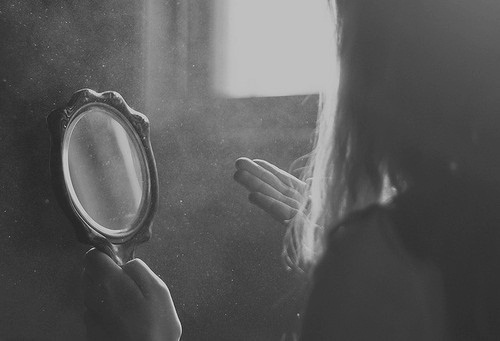
If we automatically re-act and attack or re-act to an attack and put ourselves in a situation upon being attacked where we do defend, justify and attack back we are just feeding a fire – yet when we remain silent that fire has no oxygen as such to keep it burning. It usually just dies down, for it runs out of the fuel (energy) needed to feed it and keep it burning and in the dying down you or I, or the person who was coming from the space of “you”, can, if they choose to, take a look at themselves in the mirror they were projecting themselves onto that is now non-responsive and just reflecting themselves back to themselves fully for them to clearly see and hear themselves.   This then becomes a huge gift for the attacking or blaming person to take a long hard look at their own projections, insecurities, justifications, stories, fears and emotional re-actions should they choose to do so.

A very useful thing I work on keeping in mind, which I have been working on for years and no it doesn’t always happen in all situations, is to NOT respond automatically to anything at all when I am feeling a strong emotional re-action to what has been projected with a “you” attack or via an emotional re-action I myself may have that I am projecting. I’ve found it is far more revealing when I stop and ask myself – What is this REALLY about? Why am I feeling this way? With every answer that comes to me I question it further and further until I find the gift in it for me to learn from.  I have also often found that those answers will come by way of a sleeping dream.

I always find there is a nugget of truth and a gift I am able to see in the mirror hanging on the wall in front of me who, from my perception, has been attacking me or who I have subconsciously been projecting my own stuff onto. Sometimes that nugget of truth has been an article such as this one, a poster I have created or that I have realised I needed to create better boundaries, respect my Self more, see clearer the wounds another is carrying, or the truth about another their projections are revealing.  Sometimes I need to take a closer look at my own wounds, distance myself from folk until they do look at their stuff and come back later or work through my own stuff alone, see how my words or actions have impacted on another or if need be walk totally away from another for this life time so they can deal with their own stuff that I no longer have the time, patience or energy to deal with if I am constantly met with rudeness and barriers when trying to sort an issue out.

This non-reactive business and learning to come from a space of response rather than automatic re-action has taken me a LOT of years’ work to get more of a handle on as up until not so long ago the not so peaceful warrior in me would come to the fore if warranted with a sword and shred an attacker to pieces verbally in one form or another.  That part of me has been known to be quite lethal and often folk have not known what’s hit them when I do allow that part of me to emerge and take flight when I feel I have been pushed too far or another has pushed someone else too far who I care about.

Perhaps as I am getting older I am actually getting wiser and whilst I have known for a long time how very much I enjoy peace and quiet without all the drama of youth and re-active projections coming from myself or at me from people of all ages, I am seeing another dimension to that old phrase – Silence is golden.  In so many situations I am seeing silence holds way more power, peace, learning and gifts than bringing out my warrior’s sword via an emotionally re-active tongue or mind,  expressed in person or via a keyboard.

My grandmother, bless her, in her attempts to get me to see this truth over the years I was growing up whilst she was still alive, when I would be ranting and raving about something or the other would often say to me – You’ll catch more flies with honey than you will with vinegar Cheryl.   Funny thing about that was she wasn’t always known for her diplomacy and tact and vinegar was often her unconsciously chosen medicine to dish out to others if she felt it was warranted.

I think though, whilst I have and never will qualify for the role of a diplomat, for a spade is a spade to me, not a bloodied pitch fork wrapped up in a bow, and I have an inbuilt tendency to just say it how I see it,  I finally understand exactly what she was saying.

For me at the moment vinegar has its place in my pantry and may still at times be necessary to use but I am finding more and more that honey experienced in Self-Centred, Self Aware and Self Empowered silence and peace is far sweeter, more fruitful and makes life way more enjoyable, palatable and digestible.
Cheers, Cheryl.  

Copyright. C. O’Connor.

Grab your free copy of my Dreamwork Booklet at http://bit.ly/CheocoNews when you sign up for my monthly Newsletter.

*´☾☆☽`*•

#Cheryl O’Connor.
#Holistic #Counsellor, Author & Writer.

* Cognitive & Body Based Counselling.
* Creative & Artistic Therapies.
* Specialising in #Dream #Analysis/#Conscious #Dreaming & #Shamanic Journeying.
* #Reiki/#Seichim Treatments & Attunements.
* Isis #Meditation.

Website @ http://www.cheocoenterprises.com

My book The Promise, Skype & Email Consultations Available – bit.ly/Cheocoshop

Facebook: http://bit.ly/FBCheoco
Online Shop: http://bit.ly/Cheocoshop
LinkedIn: http://bit.ly/linkedincheryloconnor
Pinterest: http://bit.ly/pinterestcheryloconnor
Google+: http://bit.ly/Googlepluscheryloconnor

Proud member of The Wellness Universe: www.thewellnessuniverse.com #WUVIP

Image credit: Pixabay.

Re-Membering the Self: Healing What Was Forgotten

Have you ever felt like pieces of you are missing—like you walk through life with invisible gaps you can’t explain?

This is the quiet legacy of trauma. Our cultural conditioning, childhood wounds, and the unspoken energies of fear and abuse cause us to shut parts of ourselves away in order to survive. When the pain feels too much to bear, fragments of our being retreat into the subconscious, creating protective walls that shield us from further harm. These fragments remain hidden, but they continue to shape our lives—surfacing as re-actions instead of conscious responses.¹

We may find ourselves repeating patterns we do not want, pushing people away when we long for closeness, or filling inner holes with addictions, distractions, or relationships that never quite heal the emptiness. This is not because we are broken. It is because parts of us are waiting to come home.


The Body Remembers

Trauma is not just stored in memory—it is stored in the body.² ³ Muscles tighten, breathing shortens, the nervous system learns to expect danger. What could not be felt at the time becomes lodged in the cells of our being. Over the years, these unprocessed fragments may create illness or dis-ease—literally, a body not at ease with itself.

To become whole, we must re-member. This is more than recalling with the mind. It is bringing lost parts back into the membrane of our being, allowing ourselves to feel what was once too terrifying or overwhelming to feel. Only then can the energy move through the body and transform.


The Dreaming as Gateway

The Dreaming is one of the most powerful gateways for this re-membering. Some call it dreaming, astral travel, shamanic journeying, meditation, past life regression, or even moments of drift between sleep and waking.⁴ ⁵ All are expressions of the same expanded field of consciousness, where the boundaries of time dissolve and all is now.

Indigenous wisdom teaches that Dreaming is not confined to the past but is a living reality in which ancestors, land, and spirit continually speak.⁶ ⁷ Western depth psychology echoes this, recognising the dreamworld as the symbolic landscape of the psyche where hidden parts of the self may return.⁸ ⁹

Through The Dreaming, we gain access to the fragments of self split off by trauma. These encounters may appear as dream figures, symbolic landscapes, or re-enactments of old wounds. By engaging with them—through dream journaling, reflection, or guided processes—we can shift the patterns not only of this lifetime but also those carried across generations.¹⁰


Healing Across Time

We cannot change what happened in the past. But we can change how the past lives within us. When we meet a reactive trigger in daily life as if it were a dream symbol, we open the door to healing. Instead of repeating the same re-action, we can respond differently—re-writing the imprint, releasing the body’s grip, and restoring flow to the soul.

Transgenerational trauma research shows that unhealed wounds ripple down through families, shaping the lives of children and grandchildren.¹¹ Yet the reverse is also true: when one person chooses to re-member and transform their pain, the healing radiates outward, offering release to both ancestors and descendants. In this way, personal re-membering becomes collective re-membering.


Returning to Wholeness

As we call these parts home, the walls we built for protection soften. Instead of holes we try to fill, we discover fullness already within us. Instead of patterns that sabotage, we find space for conscious choice.

This is not easy work. It asks us to feel what we once ran from, to sit with grief, pain, fear, and sadness. But on the other side of the feeling lies integration. And with integration comes freedom—the freedom of being wholly ourselves.

We were never truly broken. We were only waiting to be whole again.


Reflection for You

Is there a dream, memory, or reactive moment that has been returning to you? Sit with it gently. Treat it as you would a dream symbol. Ask: What part of me is calling to come home? Then listen—not with the mind alone, but with the body and the heart.

Each fragment re-membered is life-force returned.


© Cheryl O’Connor, 2014 and 2025. All rights reserved.
Please do not reproduce without permission. Sharing with credit and a link is welcome.


References

  1. Herman, J. L. (1992). Trauma and recovery: The aftermath of violence—from domestic abuse to political terror. New York: Basic Books.

  2. Van der Kolk, B. A. (2014). The body keeps the score: Brain, mind, and body in the healing of trauma. New York: Viking.

  3. Ogden, P., & Fisher, J. (2015). Sensorimotor psychotherapy: Interventions for trauma and attachment. New York: W. W. Norton.

  4. Hillman, J. (1979). The dream and the underworld. New York: Harper & Row.

  5. Jung, C. G. (1960). The structure and dynamics of the psyche (Collected Works Vol. 8). Princeton, NJ: Princeton University Press.

  6. Rose, D. B. (1996). Nourishing terrains: Australian Aboriginal views of landscape and wilderness. Canberra: Australian Heritage Commission.

  7. Atkinson, J. (2002). Trauma trails, recreating song lines: The transgenerational effects of trauma in Indigenous Australia. North Melbourne: Spinifex Press.

  8. Yunkaporta, T. (2019). Sand talk: How Indigenous thinking can save the world. Melbourne: Text Publishing.

  9. Nakata, M. (2007). Disciplining the savages, savaging the disciplines. Canberra: Aboriginal Studies Press.

  10. Watkins, M., & Shulman, H. (2008). Toward psychologies of liberation. New York: Palgrave Macmillan.

  11. Danieli, Y. (Ed.). (1998). International handbook of multigenerational legacies of trauma. New York: Springer.

LIFE AS A DREAM

“Everything that comes to me
is a reflection of Self so I see
that as within, so too without
leaving me with no doubt
of the work on Self that must be done
in order for Humanity to be consciously One.

Judging none, accepting all,
surrendering to the rise and fall,
fully feeling the pain inside,
from myself I can never hide,
and as I become One with my Soul
I begin to realise my only role
is to love and respect all that’s around me
but firstly love and respect for myself there must be.”

It was during a time of non-dreaming when I was needing answers and none were forthcoming by their usual method of delivery i.e. dreaming, that one day I thought I wonder what would happen if I started treating things, people, events and animals that crossed my path just as I would a dream. Would the answers I was seeking then come to me?

So with great curiosity I made a decision to start looking at life in that way whenever I had a re-action (re-acting out an old subconscious behavioural pattern I didn’t particularly like or experiencing intense emotions i.e. what folk normally refer to as a reaction rather than a response) or with whatever I encountered, bird, reptile, beast, the wind and whatever direction it was coming from, people who crossed my path, traffic lights, slogans and signs that “spoke” to me, numbers, rooms, street names, clouds that formed very definite shapes, types of trees – essentially everything that occurred or crossed my path in my so called “waking” reality in this physical realm of logical and rational thinking.

If for example a water pipe broke, a light bulb went out, a glass smashed, a door became stuck, if I got a red light run or a green light run etc., etc., I treated all exactly as I would a dream i.e. as an aspect of Self just as I would a “sleeping” dream when I woke up each morning. I would use the method I have developed for working with a dream, for always the present situation, our questions and feelings about it and the answer to any question or pondering we have during our waking reality will be revealed in dreaming. The good majority of us though, have lost the knowledge of how dreams speak to us and in fact how life truly speaks to us.

What I discovered amazed and excited me for when I started bringing the personal symbolic meanings I had spent a great deal of time getting to know, which I used in my dream analysis, along with my way of working with a dream, into my daily life, my experiences clearly showed me I was essentially in fact living one huge dream of my own creation whether “awake” or “asleep”.

Ever since I have therefore treated ALL that crosses my path as a symbolic aspect of my Self whenever I have needed to make a decision about which path to take at crossroads; to assist with just “knowing” whether something was right for me or not; or whenever there has been anything I haven’t quite understood which I do need to see and understand. It takes time to actually get the hang of this but if a person starts practising it a whole new awareness can open up and it truly will amaze.

The reality and biggest bonus for all being that folk don’t necessarily need to experience dreaming in what we term “sleep” in order to understand the deeper meanings behind the veil of illusion of everyday so called “waking” life that dreaming gives us.

When we start to look at daily life symbolically, as we would a dream, we find situations which arise are taken less personally and the ability can be gained to see a little deeper into the issue i.e. what it is teaching us about ourselves and the action we need to take, or not take, in relation to it.

We soon come to realise that messages for our personal growth, use and guidance are abundant and this is especially true when we are dealing with challenges (not problems) I personally believe, as John Lennon once said, “There are no problems, only solutions.” Challenges if you like, that we set up for ourselves to find creative solutions to, to test our skills, knowledge and growth and whether or not we have actually healed a wound that would normally create a re-action, as opposed to a response.

Often we will learn something and for a time it is only a theory that just makes perfect sense to us and resonates with us, then we will experience it i.e. we are given the chance and opportunity to put that theory into practice. Some lessons true, take longer to sink in than others, many refer to those repetitive lessons as mistakes or if they experience something that isn’t pleasant those too are seen as mistakes rather than just the learning curves that they are and folk will often throw a negative connotation on them but we will repeat something several times in various different scenarios until yep we now not only “know” it, as in the theory of it, but more importantly we have experienced it, integrated it and we now understand it and can apply it in our lives. As an example I can share for many many years I appeared to attract abusive behaviour by others, once I stopped abusing myself the reflection of that no longer appeared in others.

How many times do we encounter people who we feel treat us badly? We are often faced with situations that bring up emotions such as anger, frustration, sadness and disappointment. We, or the other person, are often left feeling the intensity of our emotions. Sometimes we confront the person and try to sort out the difficulty, other times we don’t. Often the issue is never mentioned again as we try to pretend nothing has happened yet we feel an invisible barrier with these folk, or we simply avoid the person who we think has caused our distress or discomfort. We often take “offence” to something another has done or said and therein lays a very interesting word. “Offence” when I play with it I get “A fence” – i.e. a barrier put up so strongly that no-one can get through it.

Many of us were never taught and still have not mastered effective communication skills or good confrontational skills. Most of us run a mile rather than confront another about any discomfort we may be experiencing due to what another has said, done or not done. Our whole conditioning in our western culture has been one of competition, of win or lose, of right and wrong, of my way or the highway, yet with effective communication skills and good confrontational skills it does not need to be this way. Interactions can move from discomfort, strong emotion or attack and blame scenarios to one of clear boundaries, assertive and effective communication, self-confidence and mutual respect with a desire to understand where each other is coming from by asking questions, by being curious, rather than judging, accusing, assuming, blaming, shaming, attempting to “make” another feel guilty or creating a fence.

Once we begin to look at absolutely everything and everyone who crosses our path as being a symbolic aspect of Self/part of Self we start to feel acceptance and gratitude for whatever comes our way, although granted we certainly may not feel that when the event that has triggered our own subconscious distress and re-active behaviour first occurs!

It is however OUR distress to deal with. No-one can “make” another feel anything – they are OUR feelings, no-one else’s. Learning and understanding what I perceive to be the lost language of dreams can help us all enormously for it is one of our greatest allies, providing a wealth of healing, knowledge and wisdom accessible to every single person on the planet freely and frequently.

Everywhere we go, everything we hear, everything we overhear, everyone we meet and every single situation we encounter has a deeper meaning when treated symbolically. Messages are EVERYWHERE yet we rarely see them, let alone give thanks for them or the priceless gifts they and others bring into our lives. We are usually too busy rushing here or there and realistically where are we all really rushing to? Many say “I’m getting there” where exactly is “there”?

Often folk are so busy talking about a situation, feeling we are hard done by, or rehashing events that have upset us over and over in our minds to stop and be still enough to truly listen and see the truth of what is really occurring.

Often we struggle and suffer through our experiences, judging, blaming, resenting, accusing, making assumptions and trying to figure out why another has behaved the way they have, yet rarely do we even ask them why or ask what is going on for them. More times than not most folk will discuss the issue with someone else, with both assuming or trying to guess why another has done or said whatever they have done or said to supposedly cause another distress or upset.

Sometimes we even go so far as to not even speak to those who we feel caused our distress. Our ingrained subconscious conditioning is to continually project ourselves onto others blaming them for whatever happens in OUR lives and whatever emotions WE feel.

Every single experience we have had or do have in life we have created at a deeper level for ourselves. Each one of us has been given “free will” and once we truly get this we have learnt to accept FULL responsibility for everything that has and does occur in our lives.

One of the quickest, most beautiful and easiest empowering words any of us can ever use is “I”. I feel, I think, I am wondering, I need to, I should, I must, I will, rather than using words like “you make me”, “you think I”, “you need to”, “you should/shouldn’t”, “you must/mustn’t”, “you don’t” etc.

So many times the use of “you” lands up in an argument with raised voices and intense emotions coming to the surface. It seems to me that often when we don’t feel heard or understood we automatically raise our voice perhaps in a subconscious effort to be heard yet it is not the volume attached to what we need to say that is creating the misunderstanding in most situations – saying something louder doesn’t make it any better understood, it just leads to the other person raising their voice also. It is rather synchronistic that as I am typing this in the background I can hear a classic “YOU”, “YOU”, “YOU” argument which is occurring quite loudly on the television which another in the Bat Cave has turned on.

The moment we use the word you in front of any other word, more particularly when we are experiencing strong emotional re-actions or discomfort, we are projecting onto another person and we will automatically create a barrier between that person and our Self.

Whereas if we replace “you” with “I” we neither give our own personal power away, nor our Self responsibility, nor will another throw up an invisible barrier that “you” smacks them in the face with as being a personal attack on them, which then pushes them into a space of instant defence caused by offence, and further away.

There is a nursery rhyme I am sure many will remember which on the surface means diddly squat really and yet it holds great and profound wisdom:-

“Row Row Row your boat
Gently down the stream
Merrily, Merrily, Merrily, Merrily
Life is but a Dream!”

When looked at symbolically this rhyme holds far greater meaning than we generally give it credit for, for realistically most of us give it no credit and perhaps think of it as a cute but silly little nursery rhyme young children seem to have enjoyed hearing and singing over time.

Essentially a boat is a vessel that journeys on top of and through water. Our bodies are the vessels we journey through life in. Water is generally symbolic of our emotions. Therefore symbolically speaking the boat represents us and how we could be handling the emotions we travel through, if we all truly realised Life is But a Dream, of our own creation.

Cheers, Cheryl.

© Cheryl O’Connor 2014.

•*´☾☆☽`*•

‪#‎Cheryl‬ O’Connor.
‪#‎Holistic‬ ‪#‎Counsellor‬, Author & Writer.

* Cognitive & Body Based Counselling.
* Creative & Artistic Therapies.
* Specialising in ‪#‎Dream‬ ‪#‎Analysis‬/‪#‎Conscious‬ ‪#‎Dreaming‬ & ‪#‎Shamanic‬ Journeying.
* ‪#‎Reiki‬/‪#‎Seichim‬ Treatments & Attunements.
* Isis ‪#‎Meditation‬.

Newsletter Subscription @ bit.ly/CheocoNews – All subscribers will receive a 10% discount on their first initial consultation for any of my services along with 10 pages of awesome tips and tricks to help you start deciphering the language of your Soul, your dreams, as well as the symbolism of what appears to you daily.

Website @ www.cheocoenterprises.com
My book The Promise, Skype & Email Consultations Available – bit.ly/Cheocoshop

FB: https://www.facebook.com/cheocoenterprises
Skype: cheryloconnor333

Twitter: Cheryl O’Connor@Cheoco99
Email: cheoco99@yahoo.com.au

THE WISDOM HIDDEN IN FAIRY TALES


More Than Bedtime Stories

Most people think of fairy tales as sweet bedtime stories for children, pleasant little fables to pass the time before sleep. But when we look beneath the surface, their layers of meaning open like a map, guiding us through the inner and outer landscapes of our lives.

The Forest and the Journey

In almost every classic tale, the storyline begins the same way: a young soul leaves “home”, sometimes by choice, sometimes by circumstance, and ventures into the wider world. Along the way, they face trials and temptations: witches and wolves, dragons and goblins, wicked stepmothers and treacherous strangers. They may be imprisoned, lost in the forest, or lulled into a deep sleep.

The forest is one of the most enduring symbols in fairy tales. It is not simply scenery, but a living teacher. To enter the dark forest is to step into the unknown, leaving behind the familiar and the safe. It is here that old identities are stripped away, and we must learn to trust a deeper compass of soul. Every shadow and every clearing becomes a guide, showing us that what looks like confusion or danger is also the fertile ground of transformation. Rivers, storms, mountains, and caves serve the same role, thresholds that reshape us if we dare to enter.

Yet, just as often, help arrives, through animals, elemental beings, wise old helpers, or mysterious friends. And when they finally “return home,” they are not the same as when they left. For home is not a physical place at all, it is a return to one’s true self. The journey strips us bare, tests our faith, and teaches us who we really are.

It is important to remember these stories were never meant to be harmless diversions. Long before they were bound in books, fairy tales lived as oral traditions, told around firesides to transmit wisdom, warnings, and hope. They were teaching maps, guiding communities through danger, instinct, resilience, and transformation.

Villains, Helpers and Thresholds

And those so-called “villains”? I do not see them as villains at all. Patriarchy turned them into shadows, wolves, witches, dragons, fearsome figures to frighten us away from their power. But really, it is our own power they mirror back to us: instinct, intuition, raw life force, and the ability to transform. When we meet these figures within, we reclaim parts of ourselves long suppressed. The Witch becomes the Crone, carrying wisdom for thresholds and endings. The Wolf becomes a fierce protector of boundaries. And the Dragon? The Dragon is the guardian of our own inner treasure and power, waiting for us to grow strong enough to step forward and claim it.

Fairy tales also remind us of endings. Sometimes people leave our lives through choice, distance, or even death. As painful as this is, symbolically it may reflect a deeper truth: their energy is no longer aligned with where we are on our journey. In this way, every loss is also a threshold, one that asks us to meet more of ourselves, to grow into new awareness, and to walk forward carrying what was true in love.

Fairy tales remind us too that help often comes in overlooked forms. A talking bird, a humble servant, or a creature of the wild may hold the key to survival. The “simpleton,” mocked for being foolish, is often the one who succeeds where others fail, precisely because they trust what is small, quiet, or easily dismissed. These tales teach us that wisdom rarely arrives dressed in the power we expect. It slips in through the ordinary, reminding us that the sacred hides in plain sight.

Windows, Mirrors and Doorways

Windows, mirrors, and doorways are some of the ways life shows us these Selves. A window may let us see through to where another is truly coming from or reflect ourselves back depending on the angle of light. A mirror shows us our own reflection, sometimes sharply, sometimes kindly. And a doorway? That is the threshold another offers us into a new awareness. Often, whatever we see in another exists within us too, otherwise how could we see it? Some mirror to us where we are presently at and others where we have been at some point in time. Often, in any one interaction, all three roles are present at once. These are not accidents, they are guides.

The True Happily Ever After

Just like the characters in these tales, many of us spend years searching outside ourselves for happiness. We might long for “one true love” to sweep us away, believing they will complete us. And for a while, it might feel like they do. But no matter how romantic the promise, no person can be our everything, especially when we have yet to become that for ourselves.

This is where so many of us misunderstood the “happily ever after.” Disney did not exactly sell us a lie, rather, our culture mistranslated the deeper truth. Long before Disney, the tales themselves were pointing inward. The Prince and Princess were never really about someone else rescuing us. They are symbols of our own inner masculine and feminine. But growing up in a patriarchal system, we were taught to externalise everything: happiness, success, love, even salvation. No wonder so many felt or feel disillusioned when the promise did not hold.

When we look symbolically, the “kiss” that wakes the sleeping one is not about romance at all. It is about awakening, when our masculine energy of logic and clarity meets our feminine energy of intuition and creativity. In that inner union, something comes alive. Balance is restored. We no longer need someone else to complete us, though we may share life with another from a place of wholeness. This is the true happily ever after.

Every fairy tale also carries the rhythm of life itself, descent and return, death and rebirth, endings and beginnings. Sleeping Beauty is not just about a princess in slumber; it is about the necessity of rest and renewal before awakening to new life. Snow White’s glass coffin mirrors the suspended state we sometimes find ourselves in, when part of us has died but the rebirth has not yet arrived. To live consciously is to honour these cycles rather than resist them, recognising that every ending makes space for a new beginning.

The Hero Has Always Been Us

At the heart of it all, every fairy tale whispers the same truth: the hero has always been us. The dangers, helpers, and transformations we read about are mirrors of our own trials and triumphs. The quest is not about rescuing or being rescued, it is about remembering who we truly are. And in the end, to “return home” is to return to that true self, whole, awake, and fully alive.

When a child asks for a story, it may be the soul’s way of speaking, theirs, and yours. Children often choose the very tale that carries the medicine both need to hear. A bedtime request can be far more than whimsy; it can be a mirror of the family’s journey, a whisper of what the soul is trying to surface. In this way, our children become our teachers, reminding us of the truths we may have forgotten.

But we cannot hear these truths if our minds are always noisy. When we chatter constantly, whether in our heads or with our mouths, we block the whispers of Soul and nature wisdom. We need stillness. We need silence. As the saying goes: “When we speak, we only repeat what we know. When we listen, we may learn something new.”

For all of us, no matter our profession or path, this symbolic lens matters. We may find ourselves trapped in a “sleeping spell” of grief, stalked by a “wolf” of fear, or longing for the “helper” who reminds us of our strength and true nature. Fairy tales can be bridges, helping us name our inner landscapes in ways that ordinary language cannot.

The original tales of the Brothers Grimm or Hans Christian Andersen hold far more than quaint moral lessons. They speak to the courage, faith, and trust needed to walk through life’s dark forests and return with wisdom. And they remind us that when a child asks for a certain story, it may be speaking directly to your soul as much as theirs, holding a mirror to where you are on your own journey.

After all, the so-called “real world” is itself the greatest fairy tale of all, an unfolding adventure, full of shadows and helpers, mirrors and doorways, dragons and wolves, Crone wisdom and childlike wonder. And the ending? Well, that is always up to us.

´☾☆☽`

✨ Reflective Questions

  • Which “villain” or shadow figure, Wolf, Witch, Dragon, feels most alive for you right now? What part of your own power might they be guarding?

  • When was the last time you found yourself standing at a symbolic window, mirror, or doorway? What did it show you about yourself?

  • In what ways are you seeking “happily ever after” outside yourself, and how might you turn inward to find it instead?

  • Where in your life could stillness or silence help you hear what the story of your own soul is trying to say?

  • As the hero has always been you, what chapter of your journey are you living through right now?

´☾☆☽`

📚 Recommended Reading

On the Feminine, the Crone, and Women’s Stories

  • Women Who Run with the Wolves, Clarissa Pinkola Estés

  • Crones Don’t Whine: Concentrated Wisdom for Juicy Women, Jean Shinoda Bolen

  • The Crone: Woman of Age, Wisdom, and Power, Barbara G. Walker

On the Masculine & Feminine Archetypes

  • King, Warrior, Magician, Lover: Rediscovering the Archetypes of the Mature Masculine, Robert Moore & Douglas Gillette

  • The Heroine’s Journey, Maureen Murdock (a counterpart to Campbell’s Hero’s Journey)

  • The Dance of the Dissident Daughter, Sue Monk Kidd

On Fairy Tales & Symbolism

  • The Uses of Enchantment: The Meaning and Importance of Fairy Tales, Bruno Bettelheim

  • Iron John: A Book About Men, Robert Bly (draws from Grimm’s tales)

  • Baba Yaga’s Assistant, Marika McCoola (a modern take on the old witch archetype)

On Myth, Archetypes & Shadow Work

  • Man and His Symbols, Carl Jung

  • Owning Your Own Shadow: Understanding the Dark Side of the Psyche, Robert A. Johnson

  • The Hero with a Thousand Faces, Joseph Campbell

On Dragons, Treasure, and Inner Power

  • Facing the Dragon: Confronting Personal and Spiritual Grandiosity, Robert L. Moore

  • The Dragon’s Treasure: A Dreamer’s Guide to Inner Discovery, Tian Dayton

  • The Book of Dragons, Edith Nesbit (for a lighter, symbolic entry point)

On Silence, Listening & Stillness

  • The Sacred Embrace of Listening, Kay Lindahl

  • Silence: The Power of Quiet in a World Full of Noise, Thich Nhat Hanh

  • The Wisdom of the Enneagram, Don Richard Riso & Russ Hudson (includes silence as a transformative practice)


© Cheryl O’Connor, 1995, 2014 and 2025. All rights reserved.
Please do not reproduce without permission. Sharing with credit and a link is welcome.

´☾☆☽`